
/
/

I make a lot of cheese.
At the time of writing this, I’ve stopped putting ‘make cheese’ in my planner on the days I’ll be making it, because I’m making it every day! At some point in the season this will slow down (sadly), but for now, my head, heart, and stomach are full of cheese and very happy.
One thing that does change from day to day is the amount of cheese that I make: depending on whether I’m making yoghurt as well, how much we are drinking, whether I’m making a recipe that uses a lot of milk, and whether we have any milk left from the day beforehand, I have different amounts of milk to work with from day to day.
Scaling cheese recipes to fit the amount of milk you have is quite simple, and once you have the hang of it, you don’t have to do much maths, and it just comes together intuitively, like scaling a family meal up or down to feed more or less guests. This is how I do it:
To figure out how much cheese culture to use, first get the recipe you’re using, and then divide the total culture amount by the amount of litres (quarts) of milk. For example, for a typical natural cheese recipe, I’d use 60ml (1/4 cup) of kefir or other homemade liquid culture for 4 litres (1 gallon) milk, so I’d divide this into 4, and end up with 15ml, or 1 tablespoon of liquid culture per litre (quart) of milk. Now, simply multiply that by however many litres or quarts you want to use, and you have the right amount of culture.
With packaged cultures, for small batch cheesemaking the amounts are really really tiny, and it’s pretty much impossible to measure by weight. But if you have a set of tiny measuring spoons and know how much culture to use per gallon of milk, then you’ll easily be able to scale this up or down.
If you’re finding that your cheese is getting too acidic in the timeframe you’re working with, simply reduce the amount of culture. Or, if you’re finding it’s not culturing quickly enough, simply use a bit more.
Different brands of rennet have different dosage rates. ‘1 tablet’ of rennet could refer to an extra-strong tablet that treats 50 litres (12.5 gallons) of milk, or to a small-batch tablet that treats 4 litres (1 gallon) of milk, or to something entirely different. Liquid and powdered rennets also vary in dosage amounts.
To figure out your standard dose of rennet, first check on your jar or bottle of rennet. For example, my liquid rennet says “use 0.5ml per litre of milk”, my extra strong tablets say “use 1 tablet per 50 litres (12.5 gallons) milk” and my small batch tablets say “use 1 tablet per 4 litres (1 gallon) of milk”. These amounts are the standard dose for those particular rennets for cheeses made from cow and goat milk.
To figure out how much of this rennet to use for different batch sizes, simply get your standard rennet dose amount from the packet, and if it’s the 50 litre or 4 litre example above, divide it up further, so 1/8 of the extra-strong 50 litre tablet treats 6 litres (6 quarts) milk, or 1/4 of the 1 gallon one treats 1 litre (1 quart) milk, or 5ml (1 teaspoon) of the liquid one treats 10 litres (10 quarts) milk.
And just as you would for culture, multiply (or divide) this number to work with whatever amount of milk you have.
So now you have your standard rennet dose figured out. If you’re making a recipe using significantly less rennet (e.g. chèvre) or extra rennet (e.g. Parmesan or Alpine), simply adjust the dosage to suit the recipe.
I observe my cheeses through the seasons. Sometimes there are less solids in the milk, and I end up with smaller cheese yields, so I might use a 4 litre tablet of rennet to culture 5 or 6 litres of milk, other times, if it’s winter and I want to make a hard cheese, I might use a 4 litre tablet to culture 2 to 3 litres (2 to 3 quarts) of goat milk.
Like culture, the rennet amount is not set in stone, and you can tinker around with the amount of rennet to figure out what makes the kinds of cheeses that you most like.

Sheep milk needs less rennet than cow and goat milk. To convert any recipe to use sheep milk instead, simply halve the standard dose of rennet.
I have done both brine salting and dry salting, and I find dry salting to be so much simpler.
To adjust a cheese recipe with dry salting, there are three things to consider:
As with the other natural cheesemaking ingredients, the amount of salt that you want to use will also depend on personal tastes, and on the results you are after. Alpine cheeses purposely use less salt, feta uses more. Experience will also play a role: if you’re getting “cats fur” fungus and other unwanted surface moulds, try using more salt next time. If you’re not getting the bloomy white moulds that you want and are getting blue moulds appearing straight away, try cutting back on the salt.

Making your own home dairy products was once an everyday essential skill – and it still is. It builds real resilience, cuts food costs, and gives you truly nourishing food no matter what’s happening in the wider world.
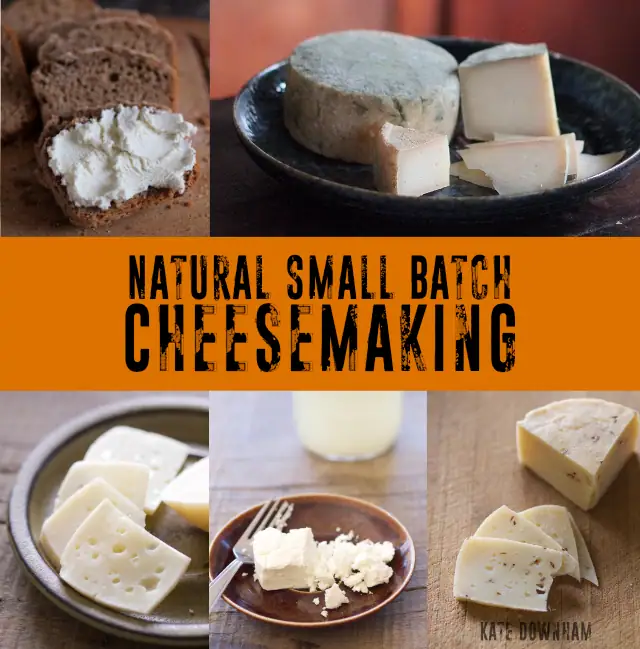
Wherever you are, you can make delicious, natural cheeses in your own kitchen. Start with just one litre (or one quart) of milk and scale up or down as needed. Natural Small Batch Cheesemaking is written for homesteaders, farmers, and anyone who loves real cheese.
• Work with any type of milk and adapt to seasonal conditions
• Make rennet at home
• Keep it budget-friendly: use tools you already own and press cheese without a cheese press
• Understand every step – the “why” as well as the “how”
• Age cheeses successfully on or off the grid
• Turn leftover whey into a homestead resource
• Master easy small-batch recipes for cheeses, plus make your own yoghurt, kefir, sour cream, butter, and ice cream
• Troubleshoot when things don’t go to plan
• Build true dairy self-reliance with flexible, affordable techniques from a successful off-grid cheesemaker
Ready to go deeper and make cheese with confidence?
Grab your copy of Natural Small Batch Cheesemaking today ↓

Join The Nourishing Hearthfire for real food recipes, traditional skills, and monthly inspiration for your hearth and homestead.
We respect your inbox. Unsubscribe anytime.

Kate Downham has been growing, preserving, and cooking real food since 2007. She is the author of four books on homestead skills: A Year in an Off-Grid Kitchen, Natural Small Batch Cheesemaking, Backyard Dairy Goats, and Sourdough Without Fail.
Off-grid with her family of nine in the Tasmanian forest, Kate milks her own goats, makes all their cheese, mills all her own grain, and bakes fresh sourdough bread daily.

I cannot find a place to actually subscribe to your lovely blog. Even searching “newsletter” brings up nothing. Please subscribe me!
Also, the “Buy me a coffee” button links to nothing…

Thank you.
The mailing list and the buy a coffee thing are hosted by the same place, so I wonder if they were having a tech glitch at the time when you looked.
I will double check the coffee link and make sure it’s fine. It should direct to this one: https://hearth-and-soil.kit.com/products/buy-me-a-coffee – does that work for you?
Right down the very bottom of every page there is an email field and a subscribe button, and also on the sidebar there’s an email field and a ‘yes, send me ebooks’ button, both of those will subscribe you to the list.
I’ve manually added your email to the newsletter, so you should receive an “important: confirm your subscription” email from me, and once you click that link it will add you to the newsletter.






The Nourishing Hearthfire is reader-supported and mostly ad-free
Leave a Reply