
/
/

I’ve been getting some questions about the phytic acid in whole grains and sourdough, and thought it would be a good idea to go into detail about how this works, and why you don’t need to be alarmed about it.
Along with a bunch of good stuff that is not in refined flours, phytic acid is present in whole grains. If phytic acid is not broken down by the phytase enzyme by soaking, sprouting, or fermenting, it can bind to the iron, zinc, magnesium, and calcium in the grain, making it so these nutrients in the grain are not absorbed by your body when you eat the grain.
During sourdough fermentation, the enzyme phytase is activated. Phytase breaks down phytic acid. As sourdough ferments and gets more acidic, phytase is more active. Phytase converts phytic acid into phosphorus, making it beneficial for bone health.
Phytic acid also has anti-inflammatory properties, and helps to stabilise blood sugar.
A longer sourdough fermentation will reduce the phytic acid by up to 90%, compared to less than 30% for yeast breads, and less than 50% for soaking whole grains. Sprouting will reduce phytic acid in similar amounts to sourdough fermentation.
In A Year in an Off-Grid Kitchen I wrote about my approach to this issue: if you are relying on a lot of grains and not eating much in the way of mineral-rich foods such as bone broth, red meat, and dairy, it’s probably best to always soak, sprout, or ferment your grains and legumes. If you are eating plenty of nutrient-dense animal foods, then you can get away with baking unsoaked whole grain cookies, muffins, and other treats every now and then.
I have not bought flour for over seven years, I also don’t have the setup to reliably dehydrate sprouted grains, so if we want to make a favourite recipe that isn’t soaked or fermented, we just make it from the fresh milled flour that we mill ourselves in our home grain mill, enjoy it, and that is that.
For our bread, which we eat every day, we make 100% whole grain sourdough.
The amount of phytic acid in fresh milled flour is exactly the same as the amount of phytic acid in store-bought whole grain flour. Everything I discuss in this article about fermentation, soaking, and sprouting works whether you are using fresh milled flour or store-bought flour.
Fresh milled flour does contain more enzymes than old flour though, so you may find that fermenting, sprouting, and soaking are even more effective in breaking down the phytic acid in fresh milled flour, and that you’ll get lower amounts of phytic acid in the finished bread. If you’d like to learn more about fresh milled flour and sourdough, I’ve written a post about how to make a sourdough starter with fresh milled flour.
• Slow down your fermentation. Reduce the temperature or the amount of starter in a recipe, to make fermentation take longer.
• Cold proofing (also called retarding) is probably the most reliable way to reduce phytic acid, because the phytase enzyme is more active in the acidic environment of fermented dough. To cold proof, simply follow your recipe up until it’s time to proof the dough, then move it to a place below 8ºC (46ºF) for up to 24 hours. Make sure to cover it with something airtight if you’re proofing it in a fridge.
• You can also retard the dough during bulk fermentation. This may not be quite as effective as cold proofing, but it will still make a big difference, and can be a great way to make bread if you want to mix the dough at night and then have dough that’s ready to bake any time the next day.
• Using larger amounts of sourdough pre-ferment will start the dough off more acidic, so although the bulk fermentation time is faster than it is for a loaf with only a tiny amount of starter, the increased acidity at the start of fermentation means that phytase is more active from the very start.
• Add some rye flour. Rye is high in phytase.
• Just bake sourdough! I use pre-ferments, cold proofing, and cold fermentation at different times of the year, in order to make recipe timings that work with my schedule in seasonal conditions.
• Try making some sourdough discard recipes. Many discard recipes such as pancakes can be made with whole grain sourdough starter instead of flour, making the most nutritious pancakes, muffins, and other treats.
The phytic acid in the whole grains is binding to the minerals in the whole grains. These minerals aren’t present in white flour, so you’re not getting any nutritional benefit by using white flour instead of whole grains.
Whole grains store beautifully for many years, whereas flour of any sort has a much shorter shelf life. If you dream of growing your own grain one day, or if you want to be more prepared, it’s worth getting comfortable baking with 100% whole grain flours now.
Reduce phytic acid in whole grains the easy way with my free cookbook of fermented flour recipes.

Whole Grain sourdough book
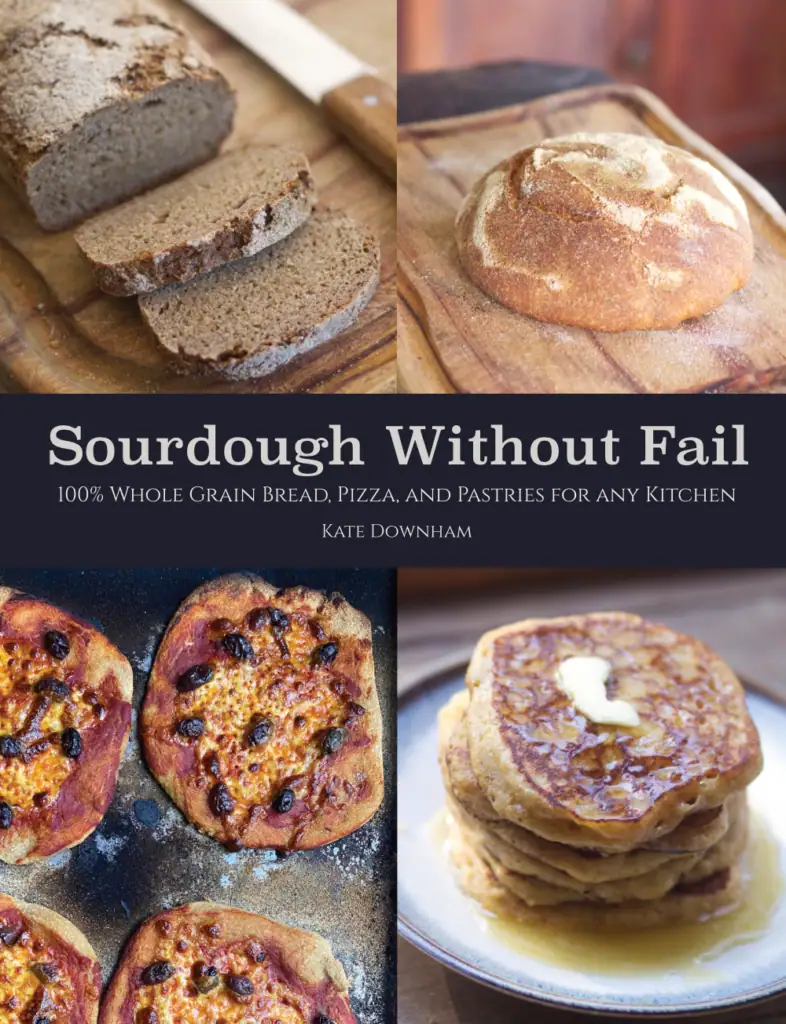
Baking great sourdough doesn’t have to be complicated or time-consuming. Whether you’re using fresh milled flour or store-bought flour, you can make delicious bread, pizza, and more in your own kitchen.
Sourdough Without Fail is written for real home bakers and homesteaders who want recipes and methods that work in real-life conditions.


Join The Nourishing Hearthfire for real food recipes, traditional skills, and monthly inspiration for your hearth and homestead.
We respect your inbox. Unsubscribe anytime.

Kate Downham has been growing, preserving, and cooking real food since 2007. She is the author of four books on homestead skills: A Year in an Off-Grid Kitchen, Natural Small Batch Cheesemaking, Backyard Dairy Goats, and Sourdough Without Fail.
Off-grid with her family of nine in the Tasmanian forest, Kate milks her own goats, makes all their cheese, mills all her own grain, and bakes fresh sourdough bread daily.










The Nourishing Hearthfire is reader-supported and mostly ad-free
Leave a Reply