
/
/
If you’re new to sourdough, you may be wondering which baking timeline makes the best bread. The answer is “it depends”.
It depends on your schedule, your goals, your lifestyle, and the temperatures in your kitchen.
At the end of the day, baking needs to fit in with your life, not the other way around. In this post I’ll discuss all the different considerations that go into different sourdough timelines, and why I use different schedules at different times of year.

Same day recipes can be an excellent choice if you know you’re at home all day and want to bake. The timeline is simple – just get it fermenting in the morning, shape and proof it when it’s ready (the amount of starter and the room temperature will determine how long this takes). Proof, then bake.
Whether a same day timeline will work for you or not ultimately depends on how much sourdough starter you keep on hand (and if you can feed it up in advance). If, like me, you only keep a tiny amount of starter on hand, you’ll need to bulk it up before beginning a same day recipe. You’ll also need to do this if you store your starter in the fridge.
If your kitchen in warm, and the seed starter percentage in your feed is reasonably high, you may be able to get away with feeding your starter first thing in the morning, making your dough ~5 hours later if the starter is ready then, and then baking at night. If your kitchen is cool, you will probably need to do this bulk-up feed the night before.
If you prefer to keep a larger amount of starter on hand, you don’t need to worry about doing a bulk up feed, and same day recipes become more simple.
In cool room temperatures, the same day sourdough timeline may not work as planned. Same day recipes generally work perfectly for me in the warmer months of the year, but in winter, to make sure that I’m not waiting up late at night for it to proof, I will often cold-proof these recipes, or I will do a cold bulk fermentation overnight instead.
Proofing in the fridge (or in a room below 8ºC (46ºF)) can be done with any same-day dough. If you’re working with a fridge, you probably want to allow your dough to proof at room temperature for 30 to 60 minutes before moving to the fridge.
Also when working with fridges, you will want to make sure you dough is sealed inside an airtight container or reusable zip lock bag, to prevent the cold dry fridge air from forming a crust on your dough.
Cool-proofed doughs are easier to score, and hold their shape better when being transferred from basket to dutch oven. Many bakers prefer to use this method for these reasons.
Sometimes you may have intended to make a same day recipe, but it is fermenting slower than expected. Rather than staying up late at night proofing and baking, you can instead cold proof it, and then bake it any time the next day, so you can definitely use cold proofing as a last-minute recipe change rather than something that you are doing intentionally.
Cold proofing overnight is also a quick way to increase the flavour of a same day recipe. If you have a recipe that you love to make, but would prefer a bit more sourdough flavour to it, simply cold proof it overnight, and it will develop a more complex flavour.
If you are aiming to reduce phytic acid as much as possible from whole grain flour, as I discussed on my blog post here, cold proofing is probably the most reliable way to do this.
Overnight recipes can also be the same dough that you’d use for a same-day recipe, but sometimes these recipes will use a smaller amount of starter. I love to bake these recipes in winter: I start the dough with warm water, do all the stretching and folding at night, and then ferment it in an unheated room. The next day, the dough is ready to shape and bake at any time of the day.
With a fridge, you can do this method at any time of year to help your schedule. Simple mix, rest, stretch and fold, then ferment for an hour or two at room temperature (doing more stretches and folds if you like), and then put it in an airtight container in the fridge. You can then relax, because no matter what kind of crazy day you are having the following day, you can just bring your dough out, shape, proof, and bake it when you have time.
Because the dough is cold, it will generally take a bit longer to proof than a room temperature fermented dough.
The breads I make the most often usually begin with an overnight pre-ferment (also called a levain), where a portion of the recipe’s flour and water are mixed together with a tiny amount of starter and then fermented overnight. I find this is what works best for my schedule. The amount of starter in the pre-ferment gets changed through the year – more in winter, less in summer.
In the morning, you remove a small amount of the pre-ferment to use as your next day’s starter, then add the rest of the recipe ingredients to the pre-ferment bowl to make your dough. Because you’ve already pre-fermented 12% to 50% of the flour, the bulk fermentation happens quite quickly, and in winter using larger amounts of pre-fermented flour makes for a dough that ferments reliably during the day even in cool temperatures.
The benefits of this approach are that you can keep a tiny amount of starter on hand, and the starter you use doesn’t have to be in the best condition because the pre-ferment basically works as a starter refreshment. You also don’t have to think about feeding your starter as a separate chore – in the morning, simply remove the same amount of the mixture as the starter you originally added, and use that to begin your next pre-ferment.
If you are working with a very warm room temperature, you can choose to do a 3 to 5 hour pre-ferment in place of the overnight one. For shorter timing, you will usually want to use more starter than you would for an overnight pre-ferment, to ensure that the pre-ferment ripens quickly.
Like same-day recipes, pre-ferment recipes can be modified by doing an overnight cold fermentation or cold proofing. For best results, do this with breads that use smaller amounts of preferment, as the 50% pre-ferment loaves can ferment a little too quickly!

| Aspect | Same Day Recipes | Overnight Cold Ferment | Pre-Ferment (Levain) Recipes |
|---|---|---|---|
| Starter Amount Required | Higher | Lower | Very small |
| Best Season | Warmer months | Any time (especially winter) | All year (adjust starter % seasonally) |
| Timing | Morning mix → evening bake | Evening mix → next day bake | Evening preferment → morning mix→ baking time depends on pre-ferment % |
| Flexibility | Good if home all day | High: bake when convenient | High: in-built starter maintanence and more flexibility with bulk fermentation time |
| Flavour Development | Milder | Increased by cold ferment | Complex due to preferment |
| Best For | Predictable warm kitchen days | Busy schedules, winter baking | Consistent results, minimal starter use |
| Cold Proof Option | Yes | Possible | Yes (best with smaller % preferment) |

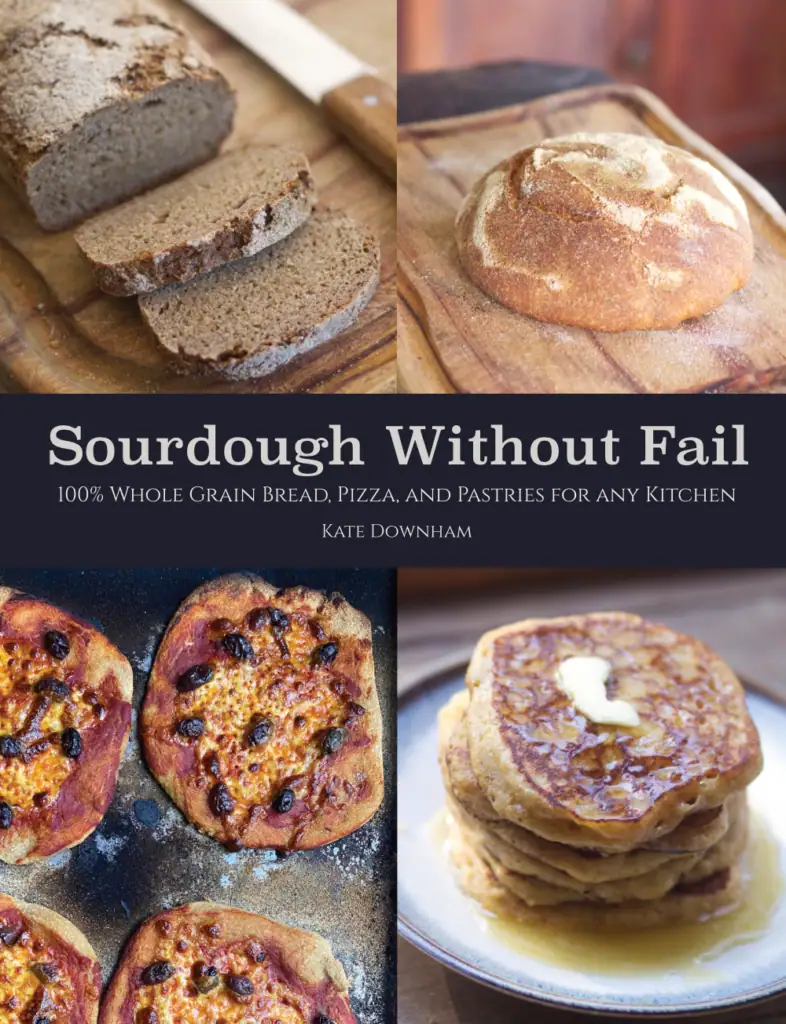
Whole Grain sourdough book
Baking great sourdough doesn’t have to be complicated or time-consuming. Whether you’re using fresh milled flour or store-bought flour, you can make delicious bread, pizza, and more in your own kitchen.
Sourdough Without Fail is written for real home bakers and homesteaders who want recipes and methods that work in real-life conditions.

Join my Floury Friday email list and get instant access to delicious sourdough discard recipes plus weekly emails with sourdough recipes and tips.

Join The Nourishing Hearthfire for real food recipes, traditional skills, and monthly inspiration for your hearth and homestead.
We respect your inbox. Unsubscribe anytime.

Kate Downham has been growing, preserving, and cooking real food since 2007. She is the author of four books on homestead skills: A Year in an Off-Grid Kitchen, Natural Small Batch Cheesemaking, Backyard Dairy Goats, and Sourdough Without Fail.
Off-grid with her family of nine in the Tasmanian forest, Kate milks her own goats, makes all their cheese, mills all her own grain, and bakes fresh sourdough bread daily.









The Nourishing Hearthfire is reader-supported and mostly ad-free
Leave a Reply