
/
/

In this post I’ll be sharing a lovely soft sandwich bread recipe from Sourdough Without Fail that earned these comments from the recipe testing team:
“The crust and crumb are as soft as store-bought white bread. I can’t believe whole wheat could turn out bread like this!”
And
“Agree! It’s amazing. Hands-down my favorite recipe that I’ve tested. The flavor is good and the texture moist and a bit chewy — very satisfying”
After the recipe I’ll also be sharing a bit more about how to scald flour, and how to convert your favourite recipes to use scalded flour and tangzhong.
The secret to this frugal sourdough sandwich bread is the milk-scalding method. Sometimes called ’tangzhong’, this method of putting milk and flour in a saucepan and heating it while stirring brings softness and keeping qualities into the bread, without needing any expensive butter, oil, or honey.
Most sandwich breads, including my pain de mie use butter or oil and honey or sugar to add softness, keeping qualities, and a slightly-sweet taste. If you bake a lot of bread, these expensive ingredients can quickly add up.
When I first tested out the tangzhong method for this bread I was amazed at the texture! It makes the fluffiest, softest crumb, without any butter, oil, honey, or eggs. The texture is so similar to store-bought sandwich bread, it’s almost hard to believe that it’s healthy and homemade.
This bread is pretty amazing. The special tangzhong milk scalding process brings extra hydration, strength, and keeping qualities to the loaf, while the generous amount of milk makes it soft, slightly sweet, with a lovely golden crust, all without any butter or honey.
For the flour scald (tangzhong):
37g (4 ½ Tbsp) whole wheat flour
150g (½ cup + 2 Tbsp) milk
For the final dough:
100g (scant ½ cup) ripe sourdough starter at 100% hydration
All of the milk-scalded flour
362g (2 ¾ cups) whole wheat flour
75g (⅓ cup) milk
225g (scant 1 cup) water
8g (2 ½ tsp) salt
Put the flour in a saucepan and add the milk, a little at a time, stirring it in with a fork thoroughly each time to prevent lumps from forming. Move the saucepan to the stove over medium heat. Stir constantly with a wooden spoon for a few minutes until it gets very very thick and bubbles if you stop stirring for a few seconds. Remove from the heat, and allow it to cool until you can hold your wrist in it for more than a few seconds.
Add all the ingredients, including the cooled milk scald, to a bowl and thoroughly mix with your hands until evenly combined and no traces of flour remain.
Allow to sit for around 20 minutes, then do a series of stretch and folds.
Ferment for around 4 hours in a warm room, or overnight in a cooler room, optionally doing another two sets of rests, stretch and folds early on in the fermentation. When it’s fermented it should feel a little airy and have increased in size.
Divide the dough if you’re making more than one loaf, and shape into pan loaves.
Proof in greased loaf pans for around two hours, or until risen somewhat.
Preheat the oven to 190ºC (375ºF).
Place the loaves in the oven with a cookie sheet over the top and bake for 50 minutes, then remove the cookie sheet and bake for another 10 to 20 minutes, until golden-brown, firm, and slightly shrunken in from the edge of the pan.

Divide the dough into six pieces. Gently place each piece on a floured cookie sheet, stretching out slightly if needed, to form a very flat roll, around 1.5cm (⅔”) high. Proof for an hour or two, then bake for around 30 minutes at 190ºC (375ºF).
This recipe works beautifully with whole wheat, but you can also make this using emmer, Khorasan, einkorn, or spelt. If you’re using einkorn, reduce the amount of milk by around 45g (3 Tbsp) per loaf.


Scalding flour is the art of getting flour to absorb boiling water, effectively cooking the flour and gelatinising its starch before baking begins.
Scalding flour helps to create an open, soft, bendy, custardy crumb. This technique brings more water into the flour, which makes the loaves keep for longer. This is a great technique to use if you want to get bigger holes in 100% whole grain breads, if you want a very soft and flexible crumb for sausages and sandwiches, or if you want to make bread that stays fresh for longer.
The scalding process gelatinises the starch in the flour, which adds strength to the dough, so it is an excellent way to get a more open crumb from flours low in gluten, such as rye and barley.
You can experiment with adding scalded flour to any bread with scalding as little as 2% of the flour from the recipe, or up to 20%. Scald your flour with between one and four times its weight in water or milk, so for 100g of wheat or rye flour, use 100g to 200g water, or use 160g to 400g water for 100g barley, polenta, or oats.
The tangzhong method uses more milk than a normal scalded wheat flour recipe. To make tangzhong, use roughly four times the flour weight in milk, for example 50g flour to 200g milk.
One method of making scalded flour is to cook it up in a saucepan, adding cold water or milk with the flour and whisking as it heats up and thickens. When done with milk, this method is often called tangzhong.
Another method for scalding flour is to put your flour for scalding in a stainless steel bowl and pour boiling water on it, quickly mixing it in.
The saucepan method is more time consuming, but some bakers claim it makes for stronger bread, as the scald gets heated to a higher temperature. You may need to use more water or milk with the saucepan method.
The bowl method is quicker and easier, with less cleanup needed, but the flour won’t get scalded unless the water is really rapidly boiling and is transferred from pot to flour before it begins to cool down, so you will need to work very quickly if you are using this method.
I normally use the bowl method, measuring out the right amount of water, bringing it to a rolling boil, and then pouring and mixing it into the flour very quickly. For the above recipe, I take the extra time to heat the milk and flour on the stove for the tangzhong method, because the results are worth it.
When you’re converting a recipe to a scalded flour recipe, reduce the amount of flour in the rest of the recipe by however much you used in the scald, and reduce the amount of water in the rest of the recipe by half the amount of the scald water, so, for example, if you used 240g (1 cup) water in the scald, reduce the amount of water in the rest of the dough by 120g (½ cup).


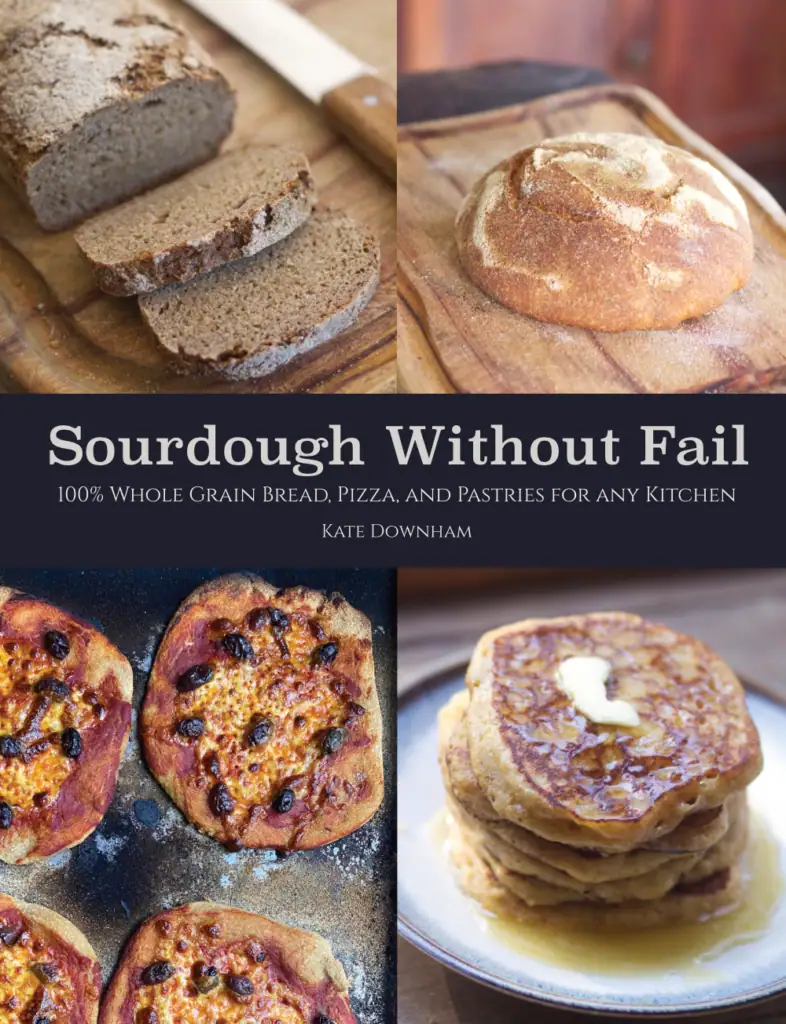
Fresh milled flour sourdough book
Baking great sourdough doesn’t have to be complicated or time-consuming. Whether you’re using fresh milled flour or store-bought flour, you can make delicious bread, pizza, and more in your own kitchen.
Sourdough Without Fail is written for real home bakers and homesteaders who want recipes and methods that work in real-life conditions.


Join The Nourishing Hearthfire for real food recipes, traditional skills, and monthly inspiration for your hearth and homestead.
We respect your inbox. Unsubscribe anytime.

Kate Downham has been growing, preserving, and cooking real food since 2007. She is the author of four books on homestead skills: A Year in an Off-Grid Kitchen, Natural Small Batch Cheesemaking, Backyard Dairy Goats, and Sourdough Without Fail.
Off-grid with her family of nine in the Tasmanian forest, Kate milks her own goats, makes all their cheese, mills all her own grain, and bakes fresh sourdough bread daily.


Lovely soft and bendy sandwich bread.






The Nourishing Hearthfire is reader-supported and mostly ad-free
Leave a Reply