Skip to content
  • Home
  • Books
  • Blog
  • Recipes
  • Self Sufficiency
  • Sourdough
  • Cheesemaking
  • Free Resources

The Nourishing Hearthfire

/

How to Make Mozzarella Cheese at Home Without Citric Acid or Microwaves (Easy Vinegar Method)

Home » cheesemaking

katedownham

·

Apr 27, 2026

·

Natural Cheesemaking, All blog posts, Homestead Recipes
homemade goat mozzarella on pizza, how to make mozzarella cheese at home without citric acid or microwaves
Homemade mozzarella is perfect for pizza
Jump to recipe

The difference between fast mozzarella and traditional mozzarella


In this recipe I’ll be talking about fast mozzarella, which is a simple way to make stretchy and delicious pizza cheese at home. Traditional mozzarella is even more delicious, but involves slowly culturing the cheese until it reaches the right acidity, and the timeframe for this can be a bit slow and tricky to work with. With fast mozzarella, the milk is acidified by adding some kind of acid (vinegar, in the case of my recipe), which cuts out all the waiting and makes this cheese doable even for the busiest home cheesemakers. Fast mozzarella is a great recipe for beginners.

Table of Contents

  • Where most fast mozzarella cheese recipes go wrong
  • A couple of important notes
  • How to serve homemade fast mozzarella cheese
  • How to store homemade mozzarella
  • Working with rennet (and how to avoid GMO rennet)
  • Which kind of milk do I use for homemade mozzarella?
  • Equipment for making mozzarella cheese at home
  • Mozzarella cheese recipe
  • FAQ
  • Ready to take your cheesemaking skills to the next level?

Where most fast mozzarella cheese recipes go wrong

When I started making cheese 12 years ago there wasn’t much information around. The only mozzarella recipe I’d seen said to use diluted citric acid, and recommended using a microwave to stretch the curds.

I wondered “why would I dilute citric acid when I could just use vinegar instead?”, and figured out the right amount of vinegar to use. The microwave instructions were easy to replace as well – just heat it up in whey on the stove.

These days I make mozzarella every week. Some weeks I put more effort in than others, but always, we get delicious homemade cheese for pizza.

This is a small batch recipe, it will make enough cheese for one or two large pizzas. Feel free to adjust it depending on how much milk you have. I usually make double or triple this amount, depending on how much milk is coming in.

I’ve made this with cow milk, goat milk, and sheep milk, and it’s always lovely. Halve the amount of rennet if you’re using sheep milk.

A couple of important notes

  • Vinegar added to hot milk results in ricotta, so be sure to add the vinegar to your milk for mozzarella when cold or at room temperature.
  • This recipe makes enough mozzarella for one or two large pizzas. Feel free to double or triple the recipe to make more. Mozzarella freezes well too, so feel free to make extra to store.

How to serve homemade fast mozzarella cheese

This recipe makes the perfect pizza cheese, and is also excellent for cheese on toast, or anywhere that you want hot melted cheese. You can either grate it and sprinkle it on pizza (it’s best to let it cool down completely before grating), or you can cut it into pieces when it’s still warm or when it’s cold.

How to store homemade mozzarella

This cheese freezes beautifully. I make lots of it when our animals are in milk, and freeze it for when we don’t have enough milk for cheesemaking. For best results with freezing, allow your cheese to dry in a colander for several hours, so that the surface is no longer wet, then place in zip-lock bags and freeze. Mozzarella treated in this way can also be kept in an airtight container in the fridge for a few days.

Working with rennet (and how to avoid GMO rennet)

Different types and brands of rennet can vary in their strength. Before beginning this recipe, first look at the dosage information on your rennet packet, and make sure you are using the correct dosage for the amount of milk. I recommend animal rennet in powdered form as my first choice (Walcoren is a good brand), but liquid animal rennet, and microbial rennet are also good choices. I avoid fermented chymosin rennet (sometimes called “vegetarian rennet” or “vegetable rennet”) because it is genetically modifi

Which kind of milk do I use for homemade mozzarella?

I have the best results with raw milk, the fresher, the better. Pasteurised milk can be used for mozzarella, but avoid Ultra-pasteurised (UHT) milk. The fresher the milk you use, the higher the cheese yield.

Equipment for making mozzarella cheese at home

Pot with at least 2 litre (2 quart) capacity
Thermometer (optional)
Knife for cutting curds
Colander
Bowl for catching whey
Slotted spoon

A second spoon, either metal or wooden

Mozzarella cheese recipe

homemade goat mozzarella on pizza, how to make mozzarella cheese at home without citric acid or microwaves

Homemade Mozzarella Cheese (Easy Vinegar Method)

Kate Downham
The quick and beginner-friendly way of making mozzarella cheese at home with natural ingredients
Print Recipe Pin Recipe
Prep Time 10 minutes mins
Cook Time 1 hour hr
Total Time 1 hour hr 10 minutes mins
Cuisine Italian
Servings 200 grams

Equipment

  • 1 stainless steel pot at least 2 litres (2 quarts) in size
  • thermometer optional
  • knife
  • colander
  • bowl for catching whey
  • 2 spoons if you have a slotted spoon, use this for one of them

Ingredients
  

  • 2 litres (quarts) milk
  • 60 ml cider vinegar or lemon juice (1/4 cup)
  • rennet standard dose for 2 litres milk (see headnotes)
  • 2 Tbsp salt (unrefined and without additives) (30ml)

Instructions
 

  • **Add vinegar to milk, then warm it.**
    Gently stir the vinegar into the milk before the heating begins. Heat the milk gently on the stove, while stirring often to a lukewarm temperature of around 32ºC (90ºF).
  • **2. Add rennet**
    Dissolve the rennet in around 1/4 cup of water, stir it constantly and then quickly and thoroughly mix it through all the milk for a minute or two in an up and down motion. Stir for two minutes, then leave the pot alone for 5 minutes.
  • **3. Cut curds**
    Check to see if a curd has formed (this usually takes around 5 to 10 minutes). When the curd forms and breaks cleanly, cut it into one inch cubes.
  • **4. Heat and stir**
    Put the pot back on the heat and heat it to around 43ºC (110ºF) while stirring the curds. Remove it from the heat and continue to stir the curds for two to five minutes, until they are slightly springy when pressed.
  • **5. Drain**
    Drain the curds into a colander, catching the whey with a bowl underneath and then putting it back in the pot.
  • **6. Heat whey**
    Add 2 tablespoons salt to the whey and heat it until it reaches a temperature of at least 175ºF (80ºC) but is not boiling.
  • **7. Stretch **
    Take handfuls of the drained curd, place on the slotted spoon, and lower into the hot whey for a few seconds, then use the slotted spoon with a second spoon to stretch and knead the
    curd several times, to develop strings, lowering it back into the whey in between kneads and stretches, before forming into a ball shape.
    The amount of stretching to give it is completely up to you – sometimes I barely stretch at all (see the note below for more on this), other times I stretch until my hands are quite far apart with a long string of mozzarella stretching between them, which is closer in mind to what the mozzarella purists want, but a bit more time consuming to achieve.
    The two important things about stretching are firstly, that it really does not matter that much, your cheese will be tasty and edible whether it stretches or not, and secondly not to break it. Allow it to soften enough before you start stretching, and it starts looking like it’s about to break and you want to keep stretching, put it back in the whey before trying again.
    If it isn’t stretchy enough for you and keeps wanting to break, try to put it in the hot whey for a bit longer before stretching again, or increasing the whey temperature. At some times of the seasonal milk cycle, mozzarella just doesn’t stretch as well; it will still taste great though.
    Continue the heating and stretching for the rest of the curds, draining them as you go.

FAQ

Can I use lemon juice instead of vinegar?

Yes! The recipe works equally well with apple cider vinegar or lemon juice. Just use the same amount (60 ml / ¼ cup for 2 litres of milk).

Does this mozzarella freeze well?

It can. After stretching, let the cheese drain in a colander for several hours until the surface is no longer wet, then place in zip-lock bags and freeze. It will keep for months and is perfect for when you have extra milk.

What’s the difference between fast mozzarella and traditional mozzarella?

Fast mozzarella (this recipe) acidifies the milk instantly with vinegar or lemon juice, so there’s no waiting or culturing. Traditional mozzarella is cultured slowly until it reaches the right acidity on its own — it tastes even more delicious but takes longer and can be trickier to time.

Why do I add the vinegar to cold milk?

Vinegar added to hot milk makes ricotta instead of mozzarella. Always stir the vinegar into the milk while it’s still cold or at room temperature before you start heating.

Can I use pasteurised milk?

Yes – raw milk gives the best results and highest yield, but pasteurised (non-UHT) milk works fine. Avoid ultra-pasteurised/UHT milk.

What if my mozzarella won’t stretch?

It’s still perfectly edible and tastes great! Some batches (especially at certain times in the milk season) don’t stretch as much. Just give the curds longer in the hot whey or raise the whey temperature a little. The more you practise, the easier it gets.

Can I just stretch my whole batch of mozzarella at once instead of breaking it up?

Yes, you definitely can. You will need to leave it sitting in the whey, off the heat, for longer, to allow the mass to get hot all the way through, and you won’t get it stretched as thinly, but if you are really busy you can definitely do this and still get great cheese.

natural cheesemaking homemade cheeses on a plate

Ready to take your cheesemaking skills to the next level?

Making your own home dairy products was once an everyday essential skill – and it still is. It builds real resilience, cuts food costs, and gives you truly nourishing food no matter what’s happening in the wider world.

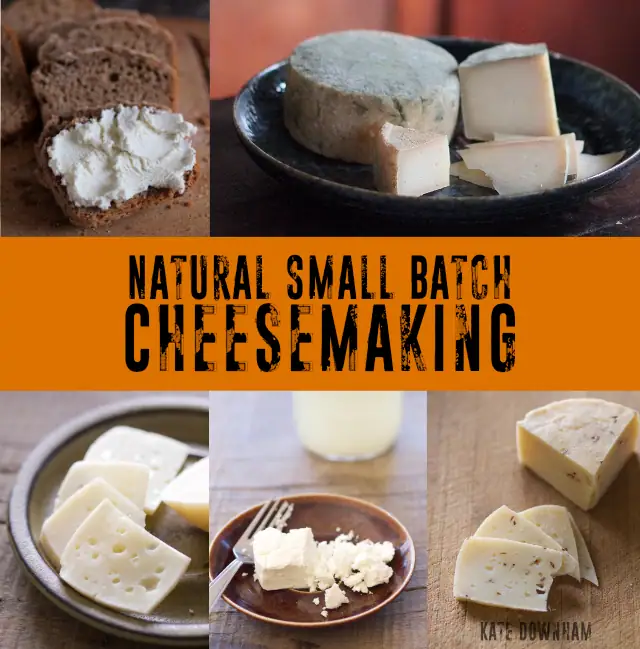
Wherever you are, you can make delicious, natural cheeses in your own kitchen. Start with just one litre (or one quart) of milk and scale up or down as needed. Natural Small Batch Cheesemaking is written for homesteaders, farmers, and anyone who loves real cheese.

• Work with any type of milk and adapt to seasonal conditions
• Make rennet at home
• Keep it budget-friendly: use tools you already own and press cheese without a cheese press
• Understand every step – the “why” as well as the “how”
• Age cheeses successfully on or off the grid
• Turn leftover whey into a homestead resource
• Master easy small-batch recipes for cheeses, plus make your own yoghurt, kefir, sour cream, butter, and ice cream
• Troubleshoot when things don’t go to plan
• Build true dairy self-reliance with flexible, affordable techniques from a successful off-grid cheesemaker

Ready to go deeper and make cheese with confidence?
Grab your copy of Natural Small Batch Cheesemaking today ↓

Yes I want to improve my cheesemaking!

Like this:

Like Loading…
  • Share using Native toolsShareCopied to clipboard
Kate Downham off grid homesteader

About Kate Downham

Kate Downham has been growing, preserving, and cooking real food since 2007. She is the author of four books on homestead skills: A Year in an Off-Grid Kitchen, Natural Small Batch Cheesemaking, Backyard Dairy Goats, and Sourdough Without Fail.

Off-grid with her family of nine in the Tasmanian forest, Kate milks her own goats, makes all their cheese, mills all her own grain, and bakes fresh sourdough bread daily.

Learn more about Kate’s books →

Related posts

  • Creating a cheesemaking book for the rest of us: Natural Small Batch Cheesemaking
  • Magic Overnight Sourdough Pizza Dough Recipe with Fresh Milled Flour
  • Natural Cheesemaking: How to Make and Use Your Own Cheese Culturesnatural cheesemaking homemade cheeses on a plate

Leave a Reply Cancel reply

Your email address will not be published. Required fields are marked *

Recipe Rating


8 different homesteading ebook covers

My books

Sourdough without fail: 100% whole grain sourdough breads, pizza, and pastries for any kitchen fresh milled flour sourdough book cover
a year in an off grid kitchen by kate downham off grid homesteading book cover
natural small batch cheesemaking natural cheesemaking book cover
backyard dairy goats homesteading book cover

More Resources for Off-Grid Living

off grid solar dehydrator
garden master course
diy wood fired pizza oven
the $50 and up underground house
natural swimming pools

Categories

  • All blog posts
  • Homestead Recipes
  • Natural Cheesemaking
  • Self Sufficiency & Homesteading
  • Whole Grain Sourdough Baking

Recent Posts

  • Magic Overnight Sourdough Pizza Dough Recipe with Fresh Milled FlourMay 26, 2026
  • Cooking year-round on a wood cookstove: the dream, the reality, and the practicalities of relying on our own firewood and being off the gas gridMay 20, 2026
  • 100% Whole Grain Fresh Milled Flour Sourdough Bread for Beginners: A Step-by-Step GuideMay 4, 2026
  • Easy 100% Whole Grain Sourdough Cinnamon Raisin Bread (honey-sweetened, and works with fresh milled flour & ancient grains)May 4, 2026
  • Natural Cheesemaking: How to Make and Use Your Own Cheese CulturesMay 2, 2026

The Nourishing Hearthfire is reader-supported and mostly ad-free

Buy me a coffee

Search

  • Home
  • Books
  • Blog
  • Recipes
  • Self Sufficiency
  • Sourdough
  • Cheesemaking
  • Free Homestead Resources

© 2026 Kate Downham – The Nourishing Hearthfire. This blog is licensed under a Creative Commons Attribution-NonCommercial-ShareAlike 4.0 International License.

Join The Nourishing Hearthfire mailing list for thoughtful monthly emails and free ebooks
Find us on forums and social media

Permies: Permaculture and Homesteading Forums

Instagram

Facebook

X

Goodreads

About

Contact

Privacy Policy

Terms and Disclaimer

The Nourishing Hearthfire

%d