Skip to content
  • Home
  • Books
  • Blog
  • Recipes
  • Self Sufficiency
  • Sourdough
  • Cheesemaking
  • Free Resources

The Nourishing Hearthfire

/

Magic Overnight Sourdough Pizza Dough Recipe with Fresh Milled Flour

Home » sourdough

katedownham

·

May 26, 2026

·

Whole Grain Sourdough Baking, All blog posts, Homestead Recipes
overnight sourdough pizza dough recipe with fresh milled flour baked with olives and mozzarella on top
Jump to Recipe

Table of Contents

  • The magic of this sourdough pizza dough recipe
  • Ingredient notes
    • Sourdough starter
    • Flour options
    • Water
    • Salt
  • The benefits of mini pizzas
  • How to shape sourdough pizza
    • A faster way to shape mini pizzas
  • How to bake sourdough pizza
  • How I bake four trays of pizza in a small wood cookstove oven
  • Sourdough Pizza Dough Recipe
    • Ingredients
    • Method
      • Mix, rest, stretch, fold
      • Ferment (same day, or overnight)
      • Divide, shape, and rest
      • Bake
  • Frequently Asked Questions
  • Want more sourdough?

The magic of this sourdough pizza dough recipe

What makes this sourdough pizza crust magic is its flexibility. You can make this same dough, and depending on your schedule, there are three different timelines you can work with:

  • You can make this as a simple same-day pizza dough instead of overnight – if your kitchen is warm it will take around six hours to ferment, or a bit longer if it’s cold.
  • To develop more flavour, and have a more flexible schedule, instead of making this as a same-day sourdough pizza dough recipe, it can also be fermented in a cool place overnight, and then shaped the next day (or any time in the next few days, if you are keeping it in a fridge).
  • Alternatively, you can ferment the dough at room temperature, as you would for a same-day dough, and then shape it into balls and keep those in a sealed container in the fridge for up to a week. This method will make for the quickest possible pizzas on busy nights – simply grab some dough from the fridge, stretch it, cover it in toppings, and bake.

The flavour of this dough is also what makes it magic… If you rest it overnight in the fridge, it develops the most delicious sourdough flavour that goes so well with many kinds of pizza toppings. The overnight ferment also helps to break down phytic acid, making the dough more nutritious and easy to digest.

Ingredient notes

Sourdough starter

Because this is a straight sourdough dough, rather than a pre-ferment (levain) dough, please make sure that your starter is bubbly and ripe (but not over-fermented) for this recipe. If you don’t already have a sourdough starter, you can find my recipe for sourdough starter here.

Flour options

• Use plain whole wheat flour, emmer, or khorasan without making any changes to the recipe.

• For 100% spelt pizza dough, reduce the amount of water in the dough by 38g (2 1/2 Tbsp).

• For 100% einkorn pizza dough, reduce the amount of water in the dough by 80g (5 1/3 Tbsp).

Water

For best results, use wrist-warm water. This is especially important if you’re making this as an overnight dough, as you’ll need to get the dough rapidly fermenting during the first hour or so

Salt

I use fine Himalayan salt, but you can use any kind of finely-ground salt.

sourdough pizza dough recipe with fresh milled flour, baked with olives and mozzarella

The benefits of mini pizzas

If you will be baking on cookie sheets rather than directly on pizza stones, mini pizzas, such as the ones in my pizza photos, can make a lot of sense.
Even if you are baking directly on a hot hearth, a smaller pizza is easier to shape and transfer than a larger one, which is why many home baking books will have instructions for 12” (30cm) pizzas rather than anything larger.

The mini pizzas I make are around 4 1⁄2” (11cm) in size. Mini pizzas are easier to shape, and they make a more efficient use of cookie sheets. Cutting baked mini pizzas is very simple with a normal kitchen knife. Mini pizza slices are easier to eat with one hand, and if you’ve put too many toppings on, there is less risk of the end of the slice sagging and dropping your toppings everywhere.

When making mini pizzas, there’s enough pizzas so that everyone can have one or two pizzas of their own, and can choose their own toppings.

How to shape sourdough pizza

  1. Divide your dough into pieces roughly the same size. I find it easiest to make small pizzas, fitting four to a large cookie sheet, the dough pieces for these small pizzas work out to be around 200g (7oz) each. For a 12” pizza, use around 400g (14oz) dough per pizza.
  2. Quickly build tension in each piece of dough, stretching to create a ball, as if you were shaping a tiny boule loaf. Coat all over with flour and leave, seam-side down, in a bowl to rest for at least 15 minutes, preferably an hour or more.
  3. Flour some cookie sheets, or a pizza peel. Once your dough has rested, gently stretch it into a pizza. I initially stretch it into a flat shape, and then stretch it further and further using the weight of the dough to weigh it down, while I circle my hands quickly around the edges – often this is more a process of letting the weight of the dough stretch itself while I turn it to make the stretching happen evenly. There is an art to making it not tear, and most of that art is due to working quickly, and shaping a small amount at a time, going around the circle more than once if needed, to make sure it’s evenly stretched. The more pizzas you make, the more you’ll get the hang of this process and be able to do it quickly.
    Another way to stretch pizza is to keep it horizontal, and keeping your hands underneath the pizza, stretch it out a little at a time, avoiding making any part of the dough too thin. This method usually leads to a slightly thicker edge and thinner inside. I like crispy thin crusts so I usually stretch the edges out a little more to thin them.
    If your dough has overfermented, or has not strengthened enough, it will be trickier to shape in the air, and you may have to gently shape it into place on the pan. Avoid pressing it into the pan, as this can make it stick.
    Pizzas don’t have to be a perfect circle. If the dough balls I’ve made have ended up bigger than usual, I will often stretch them into rectangles to get them as thin as possible and take up as much space on the cookie sheet as possible. Pizza will still taste the same whether it is a circle or not.
    Sometimes the dough breaks when stretching. You can either re-shape it into a ball and leave it for baking another day, or gently patch the hole once it’s on the tray by squeezing the dough together with your fingers.
shaping sourdough pizza dough
balls of pizza dough for a sourdough pizza dough recipe
stretching sourdough pizza dough balls into pizzas
stretching sourdough pizza dough

A faster way to shape mini pizzas

  1. Sometimes I don’t have the time to wait for balls of pizza dough to rest, so I shape them in a different way – this way is best suited to mini pizzas, and combines perfectly with this overnight sourdough pizza dough, because you can just forget about your dough overnight, and then bring it out any time over the next few days to quickly shape and bake.
  2. Gently divide the dough into as many mini pizzas as you want to make. The dough balls will be around 200g (7oz) each, but there’s no need to weigh them, just roughly divide it with your hands.
  3. Take a piece of dough, round the edges with your hands, and then squash it with your palms into a flat round. Gently stretch the pizza, quickly turning it around with your fingers to let the weight of the dough do some of the shaping while gently stretching from the centre of the circle to the outside.
  4. When it’s as thin as you’d like, place it on a floured baking sheet and repeat for the other pieces of dough.

How to bake sourdough pizza

Baking great whole grain sourdough pizza has more to do with working with the idiosyncrasies of an individual oven rather than following exact instructions.

Some ovens will bake hotter on one side and cooler on another. Some ovens will give heat from the top, or heat from the bottom. Others will be fan forced, with heat going all around.

Some ovens won’t get as hot as some pizza enthusiasts recommend, but you can still make great pizza in these if you give it a little more time.The key to finding out what works for your oven is to observe your oven, try different tricks, and see what works for you. The key things to remember for using a home oven are that you want to bake pizza as hot as possible, and that for the best crispy crusts, it’s best to have some kind of thermal mass in the oven such as a pizza stone and to cook your pizza (or your tray of pizza) on that surface.

Pizza was originally made in wood-fired ovens when the fire was still burning and the temperature was extremely hot, around 370ºC (700ºF). The pizzas were cooked directly on the hot hearth, relying mainly on conductive heat to cook the pizza from the base upwards, while also using some of the radiant heat coming down from the top of the oven to get the cheese bubbling.

To make pizza in a home oven, try to get the oven as hot as you possibly can without burning the house down. Preheat a pizza stone in the oven while it heats up, and allow as much time as possible to heat up – if you are using a very thick stone, then the oven air temperature will get hot before the stone is fully heated, and the thermostat is based on air temperature, not stone temperature, so allow the oven to stay hot for at least half an hour longer, to ensure that the stone is fully heated through.

Generally, it’s a lot easier to bake one pizza (or one tray of pizzas) at a time – to do this, just preheat your oven with a pizza stone on a rack roughly in the middle of the oven, put your pizza on the stone, and your pizza will probably cook well.

If you are finding that the base is cooked to perfection but the cheese isn’t getting lovely browned bits on top, if your oven has a ‘broil’ setting, you can put this on for the last couple of minutes of cooking, or you can move your pizza towards the top of the oven. If you don’t get great results from cooking in the middle of the oven, experiment and find which spot in the oven works best for you.

In general, I find that aiming to cook the crust really well (I like mine very crispy and almost burnt at the edges), the cheese and toppings end up getting well- cooked in the process. If you prefer a softer crust, you may need to experiment with getting more top-down heat to your pizza with the ‘broil’ setting or with the rack in the top third of the oven instead of in the middle.

To bake more than one tray of pizzas at a time, there are two different approaches: The first is, that if you have more than one oven rack and more than one pizza stone, you can bake on multiple stones at once. If you’re not baking directly on the stone surface, you can just use a cheap paving tile or any kind of stone that will stand up to high heat, rather than needing a food-safe pizza stone, so using multiple stones is not too far-fetched an idea in this case.

To bake several trays using just one stone, you will need to bake on cookie sheets, and move these cookie sheets around in the oven, so that each pan gets some time on the stone. In an oven heated to 220ºC to 250ºC (430ºF to 483ºF), I aim to get each pan on the stone for around 7 minutes, and this combined with the rest of the time that the pan gets in different parts of the oven gives the pizza a crispy crust and cooks it through completely.

If my oven is being slow and the temperature is a bit lower, I allow ten to fifteen minutes on the stone for each tray. This is what works for me on my woodstove oven, different timings and tricks will work with different ovens.

How I bake four trays of pizza in a small wood cookstove oven


I start by baking 3 cookie sheet trays filled with pizza. One begins on the cast iron base of the oven (my equivalent of a pizza stone), one is in the centre of the oven, and the other is in between these two.


After around 7 minutes, I move the trays around, putting the bottom tray up the top, the top tray in the middle, and the middle tray on the bottom, while also turning the trays around as one side of my oven is hotter than the other.


After around 7 more minutes, I move the trays again, to give the third tray some time at the bottom of the woodstove. At this time, I add the fourth tray of pizza to the oven. The first three trays usually take another 7 minutes if the oven is very hot, or 15 minutes if the oven has dropped to 200ºC (390ºF). The last tray is ready by the time we’ve finished eating the first three trays of pizza.

putting toppings on sourdough pizza dough
sourdough pizzas with sauce, salami, dandelion greens, and mozzarella, ready to bake
sourdough mini pizzas after baking in a wood cookstove oven

Sourdough Pizza Dough Recipe

Ingredients

Makes 8 mini pizzas, or 5 x 12” (30cm) pizzas
100g (6 Tbsp) ripe sourdough starter at 100% hydration
925g (7 cups + 2 Tbsp) whole wheat flour (or alternative, see above)
700g (scant 3 cups) warm water
15g (4.5 tsp) salt

Method

Mix, rest, stretch, fold

Combine all the ingredients in a bowl and mix with your hands until no traces of flour remain. Set aside for ten to thirty minutes, then do a series of stretch and folds. Leave for a few more minutes, then do another series of stretch and folds. For best results, repeat this resting, stretching, and folding two more times, or simply rest the dough for 40-60 minutes at room temperature instead.

Ferment (same day, or overnight)

Leave to ferment until it has increased in size and feels puffy and airy when poked. This will take around six hours at 22ºC (72ºF), or longer if it’s colder. You can also ferment this overnight between 8ºC and 12ºC (46ºF and 54ºF), or you can ferment it at room temperature for two hours before moving it to a covered bowl in the fridge for up to two days.

Divide, shape, and rest

Divide the dough into as many pizzas as you wish to make. Shape each piece as if you were shaping a boule, cover completely with flour, then return to the bowl to rest for at least half an hour. At this stage, you can also move the dough balls to a covered container in the fridge to cold proof for up to a couple of days.

If you’re short on time and want pizza sooner, you can just stretch the dough into shape without bothering with shaping it into balls, as discussed earlier.

Bake

Preheat the oven to as hot as it will go. If you are using a pizza stone, put it in the oven to preheat.

Dust flour over some cookie sheets or a pizza peel.

Prepare your toppings.

Once the oven is hot enough, take each ball of dough and gently stretch it evenly on all sides, turning the dough around in your hands and letting the weight of the dough do the stretching for you as much as possible. Stretch it as thinly as you like, being careful not to tear the dough (if it does tear, you can patch it up later). Place on the floured cookie sheet or pizza peel and repeat for the rest of the dough.

Cover with your favourite pizza toppings, then place the whole pan on a pizza stone or other source of thermal mass, or just put it on an oven shelf if you don’t mind a less-crispy pizza.

Allow to bake until everything is cooked through – this will depend on the oven temperature, how many trays you are baking, whether you used a pizza stone, whether you are baking directly on a pizza stone or on the cookie sheet itself, how much you’ve loaded up the base with toppings, and whether you have to rotate your pans around in the oven so that they each get a turn on the pizza stone.

For 3 trays at 220ºC (430ºF) to 250ºC (483ºF) I allow around 20 minutes in total, if I were baking just one pan, it would probably take around 10 minutes, or even less time if I were baking directly on a pizza stone.


Kate Downham

Magic Overnight Sourdough Pizza Dough Recipe with Fresh Milled Flour

An easy and flexible sourdough pizza dough from 100% whole grain fresh milled flour
Print Recipe Pin Recipe
Prep Time 10 minutes mins
Cook Time 10 minutes mins
Fermenting time 12 hours hrs
Servings: 4 people
Course: Main Course
Cuisine: Italian
Ingredients Method

Ingredients
  

  • 100 g ripe sourdough starter at 100% hydration (6 Tbsp)
  • 925 g whole wheat flour (or alternative, see notes) (7 cups + 2 Tbsp)
  • 700 g warm water (scant 3 cups)
  • 15 g salt (4 1/2 tsp)

Method
 

Mix, rest, stretch, fold
  1. Combine all the ingredients in a bowl and mix with your hands until no traces of flour remain. Set aside for ten to thirty minutes, then do a series of stretch and folds. Leave for a few more minutes, then do another series of stretch and folds. For best results, repeat this resting, stretching, and folding two more times, or simply rest the dough for 40-60 minutes at room temperature instead.
Ferment
  1. Leave to ferment until it has increased in size and feels puffy and airy when poked. This will take around six hours at 22ºC (72ºF), or longer if it’s colder. You can also ferment this overnight between 8ºC and 12ºC (46ºF and 54ºF), or you can ferment it at room temperature for two hours before moving it to a covered bowl in the fridge for up to two days.
Divide, shape, and rest
  1. Divide the dough into as many pizzas as you wish to make. Shape each piece as if you were shaping a boule, cover completely with flour, then return to the bowl to rest for at least half an hour. At this stage, you can also move the dough balls to a covered container in the fridge to cold proof for up to a couple of days.If you're short on time and want pizza sooner, you can just stretch the dough into shape without bothering with shaping it into balls, as discussed earlier.
Bake
  1. Preheat the oven to as hot as it will go. If you are using a pizza stone, put it in the oven to preheat.
    Dust flour over some cookie sheets or a pizza peel.
    Prepare your toppings.
    Once the oven is hot enough, take each ball of dough and gently stretch it evenly on all sides, turning the dough around in your hands and letting the weight of the dough do the stretching for you as much as possible. Stretch it as thinly as you like, being careful not to tear the dough (if it does tear, you can patch it up later). Place on the floured cookie sheet or pizza peel and repeat for the rest of the dough.
    Cover with your favourite pizza toppings, then place the whole pan on a pizza stone or other source of thermal mass, or just put it on an oven shelf if you don’t mind a less-crispy pizza.
    Allow to bake until everything is cooked through – this will depend on the oven temperature, how many trays you are baking, whether you used a pizza stone, whether you are baking directly on a pizza stone or on the cookie sheet itself, how much you’ve loaded up the base with toppings, and whether you have to rotate your pans around in the oven so that they each get a turn on the pizza stone.
    For 3 trays at 220ºC (430ºF) to 250ºC (483ºF) I allow around 20 minutes in total, if I were baking just one pan, it would probably take around 10 minutes, or even less time if I were baking directly on a pizza stone.

Frequently Asked Questions

Can I make this sourdough pizza dough the same day? Yes! In a warm kitchen (around 22°C / 72°F) the dough will take about 6 hours to ferment. You can also do a shorter room-temperature ferment and then refrigerate the dough balls for later use.
How long can I keep the dough in the fridge? You can ferment the dough overnight in a cool place (8–12°C), or ferment it at room temperature for a couple of hours and then refrigerate the finished dough or shaped balls for up to one week. This is perfect for quick weeknight pizzas.
What flour can I use? The recipe works beautifully with 100% whole wheat, emmer, or khorasan flour with no changes. For 100% spelt, reduce water by 38g. For 100% einkorn, reduce water by 80g. Fresh-milled whole grain flour gives the best flavour and nutrition.
Why use wrist-warm water? Warm water helps the dough start fermenting quickly, which is especially important for the overnight method so the dough is very active in the first hour.
Do I need a sourdough starter? Can I use commercial yeast instead? This is a straight sourdough recipe (no added commercial yeast). You need an active, bubbly, ripe 100% hydration starter. You can find my sourdough starter recipe here.
Why make mini pizzas? Mini pizzas (≈11 cm / 4½ inches) are much easier to shape and transfer, especially on cookie sheets. They bake more evenly, are easier to serve, and everyone can choose their own toppings.
My dough is tearing when I stretch it. What should I do? Let the dough rest longer (15–60 minutes), handle it gently, and use the weight of the dough to stretch itself. Small holes can be patched once on the tray. Over-fermented or weak dough is harder to stretch.
Do I need a pizza stone? A pizza stone (or any thermal mass like a baking steel or unglazed tile) gives the crispiest crust. You can still make excellent pizza on cookie sheets, especially if you rotate them and give each tray time on the stone.
How do I bake multiple trays in a regular home oven? Preheat the oven as hot as possible. Bake on cookie sheets and rotate the trays so each spends time directly on the hot stone. In a 220–250°C oven, give each tray about 7–10 minutes on the stone.
How do you bake four trays in a wood cookstove oven? Start with three trays (one on the base, one in the middle, one in between). Rotate their positions every 7 minutes. Add the fourth tray after the second rotation. Total bake time is roughly 20–30 minutes depending on oven temperature.
Is this dough good for thin-crust or thick-crust pizza? It works for both. Stretch it thinner for crispy thin crusts or leave it slightly thicker for a more chewy base.

Want more sourdough?

Free sourdough discard cookbook

    We respect your privacy. Unsubscribe at anytime.
    Built with Kit

    Like this:

    Like Loading…
    • Share using Native toolsShareCopied to clipboard
    Kate Downham off grid homesteader

    About Kate Downham

    Kate Downham has been growing, preserving, and cooking real food since 2007. She is the author of four books on homestead skills: A Year in an Off-Grid Kitchen, Natural Small Batch Cheesemaking, Backyard Dairy Goats, and Sourdough Without Fail.

    Off-grid with her family of nine in the Tasmanian forest, Kate milks her own goats, makes all their cheese, mills all her own grain, and bakes fresh sourdough bread daily.

    Learn more about Kate’s books →

    Related posts

    • Easy 100% Whole Grain Sourdough Cinnamon Raisin Bread (honey-sweetened, and works with fresh milled flour & ancient grains)
    • 100% Whole Grain Fresh Milled Flour Sourdough Bread for Beginners: A Step-by-Step Guidefresh milled flour sourdough bread recipe for beginners
    • How to Make a Sourdough Starter from Scratch with Fresh Milled Flour (100% Whole Grain)sourdough starter from scratch made from fresh milled flour

    Leave a Reply Cancel reply

    Your email address will not be published. Required fields are marked *

    Recipe Rating


    8 different homesteading ebook covers

    My books

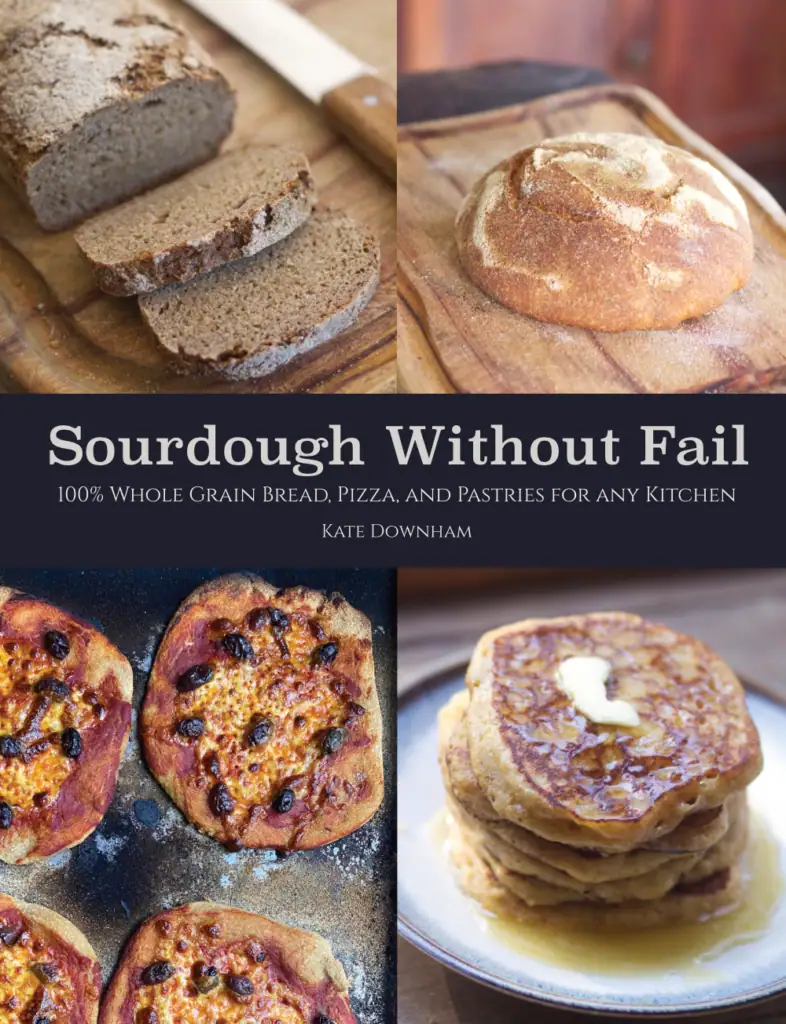
    Sourdough without fail: 100% whole grain sourdough breads, pizza, and pastries for any kitchen fresh milled flour sourdough book cover
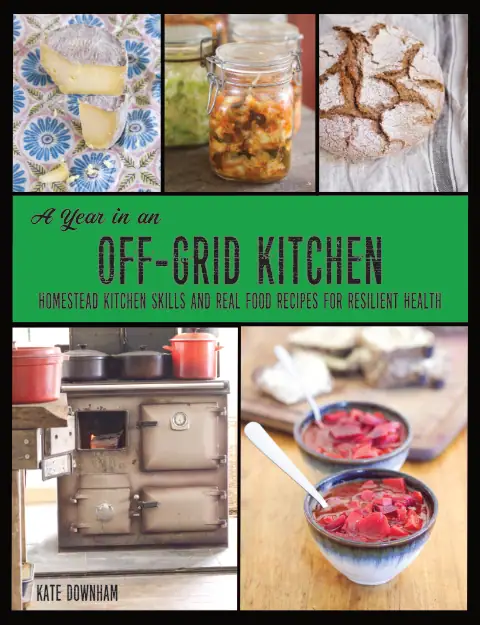
    a year in an off grid kitchen by kate downham off grid homesteading book cover
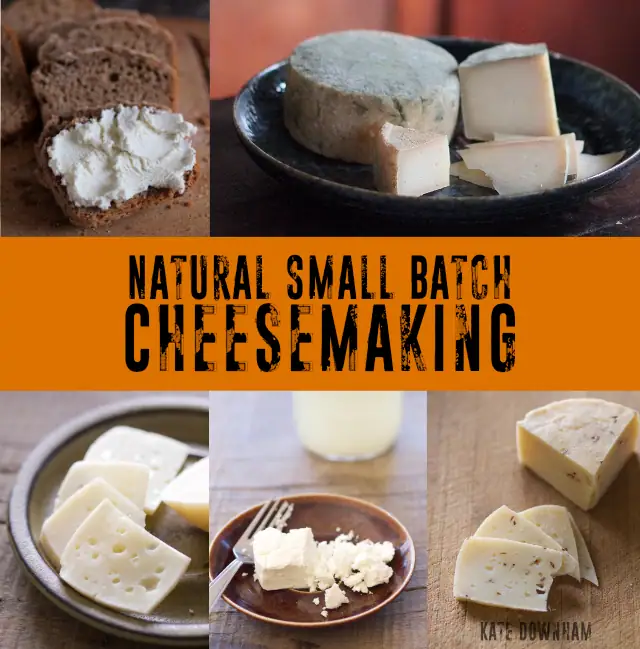
    natural small batch cheesemaking natural cheesemaking book cover
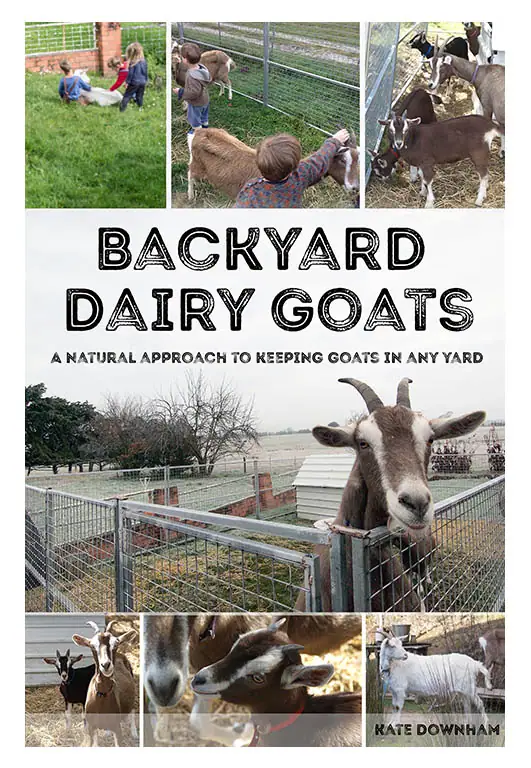
    backyard dairy goats homesteading book cover

    More Resources for Off-Grid Living

    off grid solar dehydrator
    garden master course
    diy wood fired pizza oven
    the $50 and up underground house
    natural swimming pools

    Categories

    • All blog posts
    • Homestead Recipes
    • Natural Cheesemaking
    • Self Sufficiency & Homesteading
    • Whole Grain Sourdough Baking

    Recent Posts

    • How to Scale Cheesemaking Recipes Up or Down: Rennet, Culture, and MoreJune 15, 2026
    • Easy Leftover Vegetable or Meat Pasties (Savoury Hand Pies Recipe)June 13, 2026
    • Magic Overnight Sourdough Pizza Dough Recipe with Fresh Milled FlourMay 26, 2026
    • Cooking year-round on a wood cookstove: the dream, the reality, and the practicalities of relying on our own firewood and being off the gas gridMay 20, 2026
    • 100% Whole Grain Fresh Milled Flour Sourdough Bread for Beginners: A Step-by-Step GuideMay 4, 2026

    The Nourishing Hearthfire is reader-supported and mostly ad-free

    Buy me a coffee

    Search

    • Home
    • Books
    • Blog
    • Recipes
    • Self Sufficiency
    • Sourdough
    • Cheesemaking
    • Free Homestead Resources

    © 2026 Kate Downham – The Nourishing Hearthfire. This blog is licensed under a Creative Commons Attribution-NonCommercial-ShareAlike 4.0 International License.

    Join The Nourishing Hearthfire mailing list for thoughtful monthly emails and free ebooks
    Find us on forums and social media

    Permies: Permaculture and Homesteading Forums

    Instagram

    Facebook

    X

    Goodreads

    About

    Contact

    Privacy Policy

    Terms and Disclaimer

    The Nourishing Hearthfire

    %d