
/
/

Here are my tips for making the most nutritious and tasty bone broth, plus some thoughts on whether to add salt or vinegar to your broth.
Roasting helps to bring out the best flavours in the bones. When I am starting with raw bones, I always roast them in the oven for around 30 minutes, or until browned in places and smelling delicious, before continuing with the recipe

I find that adding some salt to the bones before roasting helps the finished broth to keep for longer. I just sprinkle a small amount of salt onto the raw bones, as if I were roasting them for a meal. I add pepper at the same time, to help with flavour and keeping qualities.
Bone broth with too much water will be a disappointment. It will be better than adding plain water to cooking, but it won’t be tasty on its own, or as the base of a simple soup.
Spread the bones evenly in your pot, to completely cover it, if you’re using chicken frames you’ll need to break them up so that there aren’t huge air gaps in the pot. Put in just enough water to cover the bones, or up to an inch higher, not more

Carrot and onion are good. I don’t add herbs, as I prefer to add them to the dish I’m cooking, rather than the stock. Don’t just throw in any old veggie scraps (feed those to a friendly goat), some vegetables will put off flavours into your stock, it’s best to just stick with onion ends and carrot peelings if you want to use scraps. A bit of celery is good too, if you have some.
Some people say to add vinegar to help draw more minerals out of the bones to create a superior stock, but others say this does not make a difference. I no longer add vinegar to my broth and find that it gels just as well as broth made with vinegar. If adding vinegar, you don’t need a huge amount, around 2 tablespoons for one chicken is fine.
Put your bones in a pot with water, put over medium-high heat and bring to the boil with the lid on. Skim off the froth from the top, then put the lid back on and leave to simmer for several hours before straining.
Beef, pork, and lamb are best slowly simmered for at least 24 hours, to bring more nourishment out of the large bones. Chicken bone broth can be ready a little earlier, after around 8 hours of simmering.
When your broth has cooked for several hours, leave it to cool slightly (but not too much, it should still be very hot to the touch) then strain your stock through a colander, and put it into suitable jars to use in meals. Broth can be frozen or pressure canned.

I freeze broth in wide mouthed glass jars or storage containers in the freezer, leaving plenty of room at the top for expansion. Don’t ever use jars that taper at the top, they will break in the freezer.
To pressure can bone broth, put the strained hot broth into suitable jars, leaving 1 inch headspace. Put the lids on and screw the bands on using only the strength in your fingers. Place into hot (but not boiling) water in the pressure canner, seal, and vent in the usual way, then allow it to can for 20 minutes at 10psi, adjusting for altitude if necessary.

Join The Nourishing Hearthfire for real food recipes, traditional skills, and monthly inspiration for your hearth and homestead.
We respect your inbox. Unsubscribe anytime.

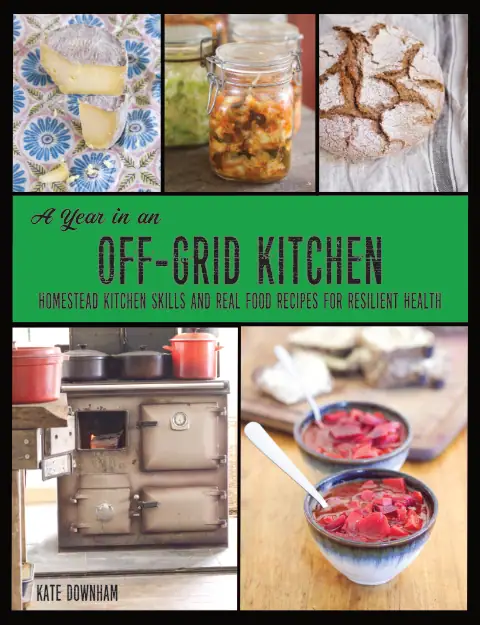
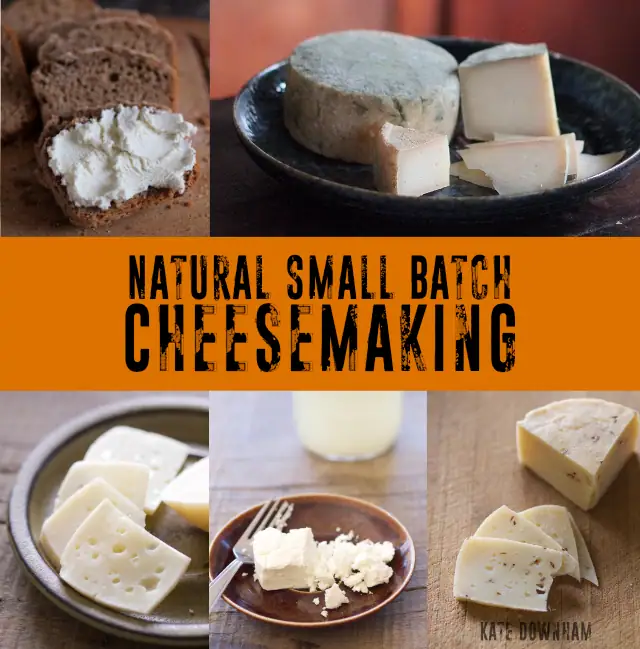
Kate Downham has been growing, preserving, and cooking real food since 2007. She is the author of four books on homestead skills: A Year in an Off-Grid Kitchen, Natural Small Batch Cheesemaking, Backyard Dairy Goats, and Sourdough Without Fail.
Off-grid with her family of nine in the Tasmanian forest, Kate milks her own goats, makes all their cheese, mills all her own grain, and bakes fresh sourdough bread daily.









The Nourishing Hearthfire is reader-supported and mostly ad-free
Leave a Reply