How to cook with tallow, how to render it, how to store it (and why)

Many events in recent years have caused me reflect on the expectations of the industrial food system and modern lifestyles, and how rewarding it is to return to simpler ways. Olive oil is in short supply this year, and this offers another opportunity to create better alternatives for cooking that can be produced on a homestead or by local farmers.

Most of the olive oil in supermarkets is adulterated with seed oils, so is not the healthy fat that many people imagine it to be. Real olive oil also should not be heated above 180ºC (350ºF), so it is not an ideal all-purpose cooking fat, even if it can be found.

Animal fats, such as lard and tallow, are usually local and small-scale by nature – so local that most of the time you will need to render it in your own kitchen (a simple process, see my method below). The saturated fats and cholesterol found in tallow are needed for hormone function, memory, neurological health, kidney, liver, and lung health. The healthiest fats are those from animals that are raised naturally outdoors – animals raised in this way are often raised by small farmers, so it’s possible to directly ask questions and make sure the animals aren’t being fed any weird additives and other stuff.

Most recipes I see use liquid oils such as olive oil or seed oils as the main cooking fat. I can understand the temptation for food writers to use ingredients that people are familiar with and can find in a supermarket, and to not clutter ingredients lists with a bunch of alternatives, but animal fats have so many benefits and can be used for all kinds of cooking. To create a resilient local foods system for real food sovereignty I think it’s essential to choose local animal fats as a staple cooking fat, which is why in my cookbook the recipes use lard and tallow.

Most people are used to cooking with liquid oils these days, but it can be just as easy to cook using tallow, lard, and other animal fats.

How to cook anything in tallow and lard

To cook anything in solid fats, we first need to turn it into a liquid fat by melting. This is easily done by heating it directly in the roasting dish if it’s made from cast iron, enamelled cast iron, enamelled steel, or stainless steel. Simply put your roasting dish in the hot oven or on a hot stovetop, with as much tallow as you think you’ll be using, and allow it to melt until it’s a hot liquid. This doesn’t take long. Add your vegetables, toss them around in the hot fat with a wooden spatula to coat them, sprinkle with salt, and bake. For meat, just place it on the hot fat and cook it – I get beautiful steaks and burgers every time by making sure my pan and fat are extra hot (a drop of water should violently jump up when splashed on it) – allow the meat to fully sear on one side before turning it.

If you use glass or ceramic pans for roasting, to avoid cracking them with sudden temperature changes, don’t preheat the pan, just melt the fat in a saucepan, mix the vegetables in the fat, and then add it to your pan.

Sautéing, stir frying, and deep frying are even easier – just heat your tallow in the pan and cook in it.

How to make your tallow or lard

Finding ready-made tallow and lard from healthy sources is not often possible, but making your own is really simple and affordable. If you buy beef by the quarter, half, or whole, you can probably get tallow for free just by asking the farmer or butcher in advance.

Lard and tallow either come as leaf lard or suet, or as offcut fat. Leaf lard and suet are pure fats from around the organ meats, these have a very mild flavour and can even be used in pastries. Offcut fat usually contains small amounts of meat, so can have a stronger flavour and may benefit from a bit of trimming, but is still good for most uses in the kitchen.
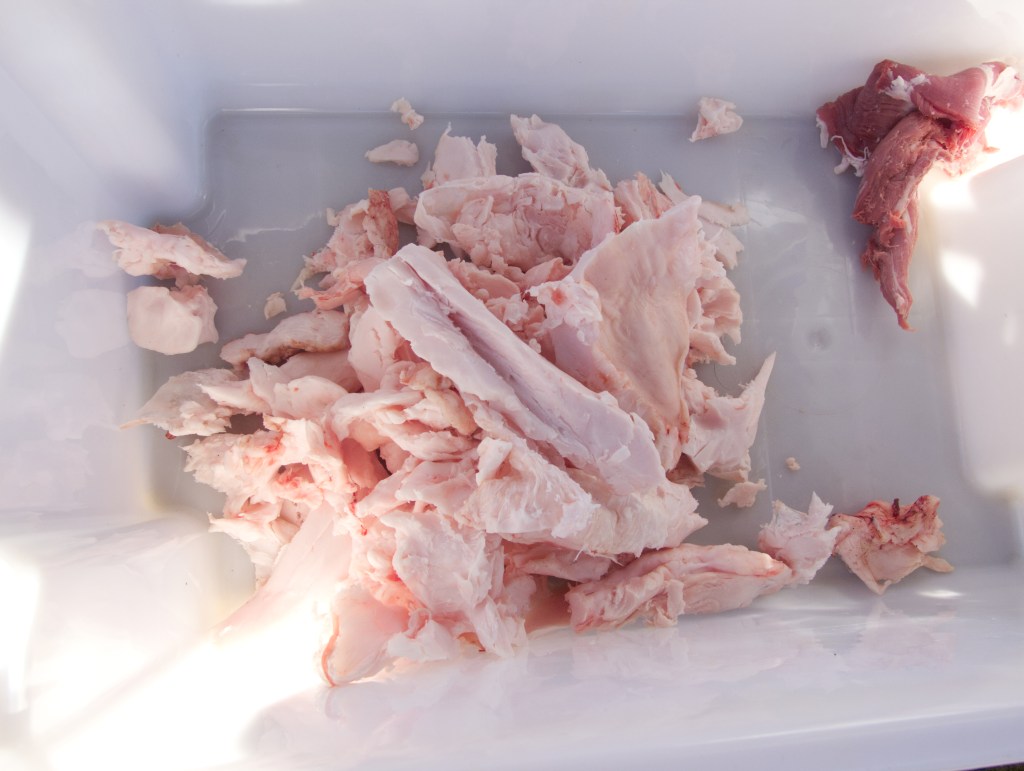
Leaf lard from homegrown pigs

To render fats, first chop it into small pieces and place in a heavy pot with a lid or in a slow cooker, Add just enough water to cover the base of the pot, then stir to coat the fat in the water. Bring the pot to the boil with the lid on, stir, and the reduce the heat to a simmer. Allow the fat to slowly render in the pot for as long as it takes, sometimes just a couple of hours, other times for a larger batch it can sometimes take a day or two. Stir the fat every now and then as it renders.

If you’re concerned with water remaining in the tallow and impacting its storage life, allow the pot to render with the lid off over a gentle heat for some of the rendering time.

As the fat renders, there will be more and more liquid fat, and the pieces of solids will shrink, and sometimes go crispy. Once all the solids are crispy (or at least empty-looking and light in weight), allow the bubbling fat to cool slightly, before carefully straining through cheesecloth or a mesh sieve into warm heat-sterilised jars. Put the lids on tightly, and for the best keeping qualities, flip the jar over onto the lid as you would for old-fashioned jam, and then flip back onto the upright side and allow to cool before storing. 

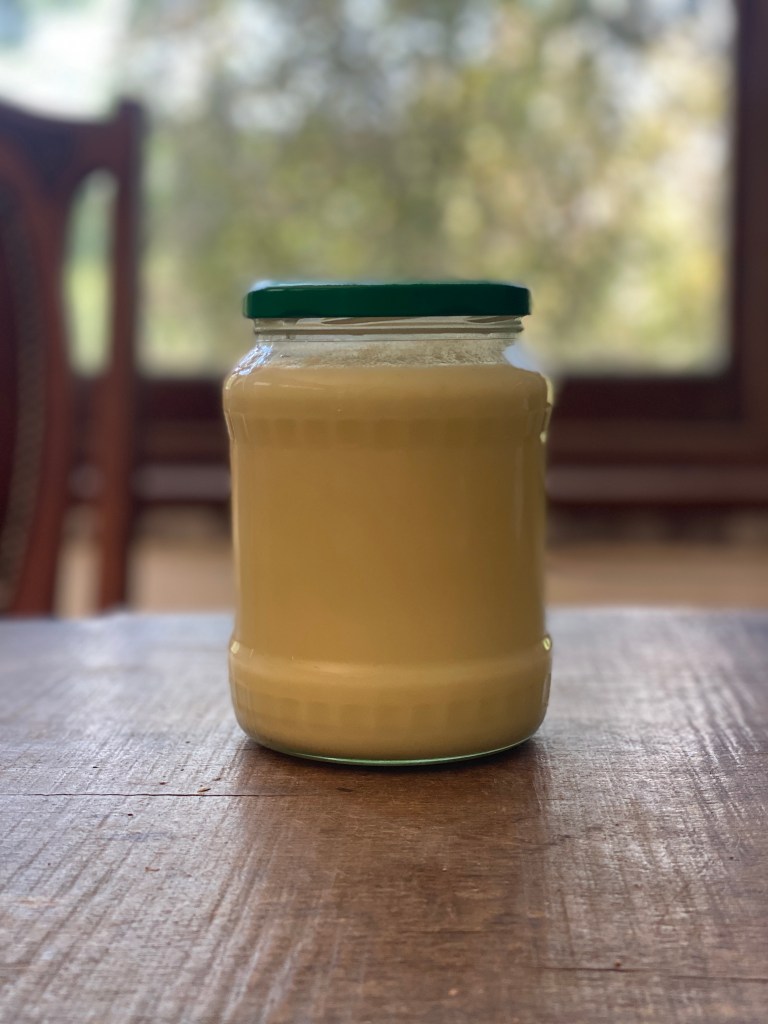
The storage life of lard and tallow depends on how well it was strained, if all the water evaporated as it cooked, and how clean the jars are. The temperature you store the lard in will also impact the storage life – the ideal situation is larder or root cellar temperatures of around 10ºC (50ºF) or lower, but room temperature is also often fine. Lard and tallow can also be stored in a fridge or freezer. 

1. Offcut beef tallow in the early stages of rendering. The fat has started to come out of the solids, but the solids still feel heavy, with plenty more fat ready to render out. Fat can be skimmed off the top at this stage, as needed, or the whole batch can be rendered, strained, and put into jars in one go. 
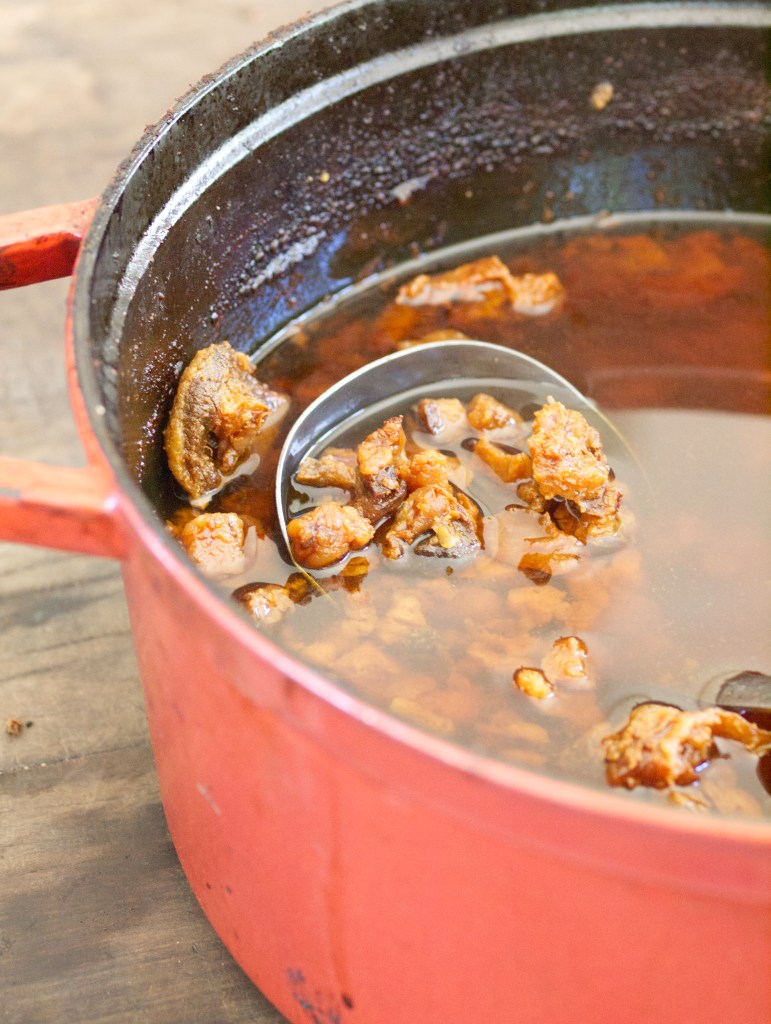
2. Rendering is complete. The solids are crisp and airy, with all fat rendered out into liquid. It’s now ready to be strained in jars. The leftover crispy bits can be fed to chickens. 

The brown colour of the fat means that this batch got a little overcooked. When this happens, it’s still fine for use as a cooking fat, and has a nice toasted flavour, but it won’t be as good in a pie crust or anywhere else that needs a neutral-tasting fat. 

To make the best possible purified tallow for the longest storage life at room temperature

Instead of straining the fat directly into jars, pour it into a large stainless steel bowl. Allow the fat to cool completely in the bowl until it is solid, then gently heat the bottom of the bowl, flip the solid mass of fat out into a new pot or bowl, so that the rounded side is now up, and scrape off any impurities that have gathered on the bottom. Melt the fat until hot again, and pour into warm jars, as you normally would. You can also do this refining process a second time.
Enter your email address here to get new recipes and blog posts from The Nourishing Hearthfire.

How to make black drawing salve

Here is how I make one of the most important natural remedies that I use.

We use black drawing salve on all kinds of bites and stings, as well as on splinters, puncture wounds, and anything that looks like it might need possible toxins or infections drawn out of it. I also find it a really helpful remedy around the homestead for wounds on animals – it’s so thick that it forms both a remedy and a bandaid in one – if you’ve ever tried to get a goat to keep a bandage on then you’ll understand what a relief it is to just have a remedy that will stick on and help to heal and protect the wound. When I use this on minor udder injuries, the wound is usually healed in 24 hours.

The bentonite clay and activated charcoal in this salve draw out toxins. The plantain and calendula help to heal, as well as drawing out infections and toxins. You also add a couple of drops of tea tree or kunzea oil to this salve to further help its healing properties, or a tablespoon of raw honey – if you’ll be adding these, then allow the salve to cool down slightly before adding them so that the honey doesn’t get cooked.

I use olive oil to make this salve, but you could use lard instead if you can keep it warm while it’s infusing.

Ingredients
1 cup (240ml) plantain infused olive oil (or a mix of plantain and calendula infused oil)
1 1/4 tablespoons beeswax
3 tablespoons bentonite clay
3 tablespoons activated charcoal

plantain ribwort weed in pasture with clover and grass

Plantain, also known as ribwort, is a common weed in pasture, lawn, and gardens. It is an excellent remedy for all kinds of bites and stings.

Calendula is easily grown from seed. The flowers are a tasty and colourful addition to salads as well as being an excellent herb for healing and preventing infection.

Method

  1. Make the infused oils:

    (a)Harvest and dry your herbs. Plantain is also known as “ribwort” and is a common weed on lawns and pastures, easily identified from its ribbed leaves. Calendula is very easy to grow. I harvest fresh herbs in dry weather and put them in thin layers on top of stainless steel cake cooling racks to air-dry.
Herbs drying on cake cooling rack

(b)Infuse the dried herbs
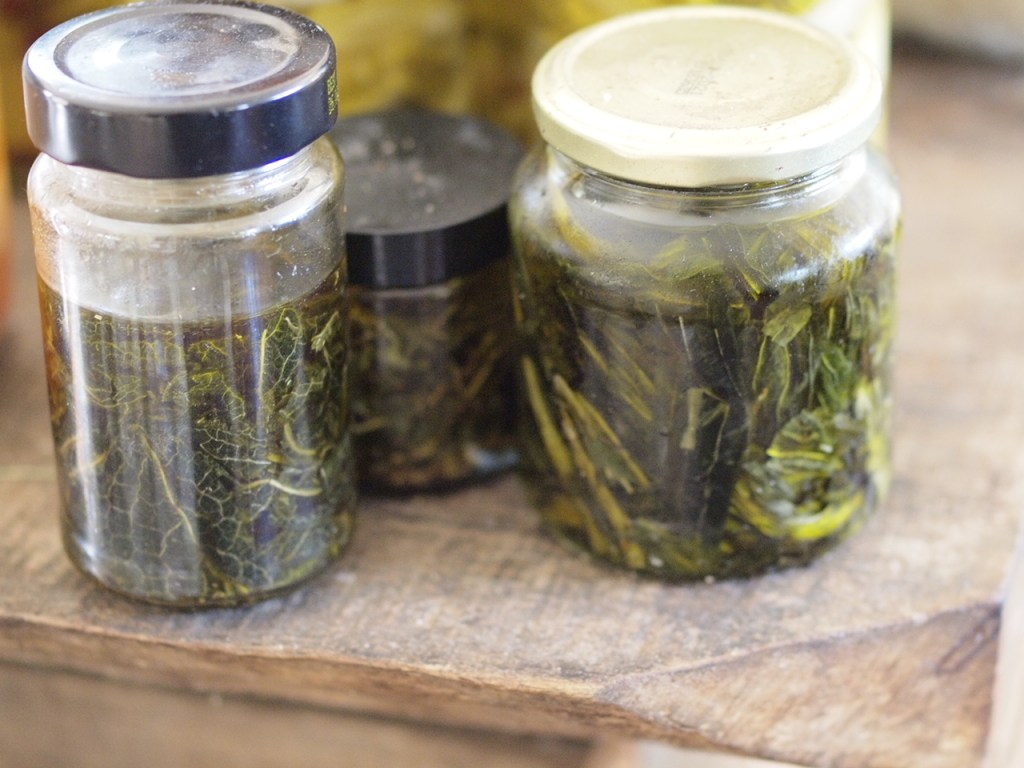
Pack dried herbs down into a jar, then fill with olive oil to just above the level of the herbs, and agitate sightly with a small wooden spoon or other implement to make sure the oil is getting to all the herbs. To make the most potent herbal remedies using this method it’s important to really pack the herbs down, and to use too many herbs and too little oil rather than the other way around.

Herbs infusing in oil

Once you have your herbs sitting in oil, you can either leave them to sit at room temperature for six weeks, or leave them in the ‘warm’ setting of a slow cooker for 8 hours. I do a mixture of these two methods, putting my herbs on the warm edge of the woodstove as much as possible, and infusing them for a full six weeks.

(c)Press the oil out from the herbs
Gently warm the oil and herbs, then pour the oil out through cheesecloth or a potato ricer into a bowl, make sure to then squeeze all of the oil out of the herbs. The infused oil can now be stored if you want to use it for salve at a later date, or you can make the salve now. The leftover oily herbs can be fed to the chickens or composted.

  1. Warm the oil and beeswax
    Take a glass liquid measuring cup and measure the infused oil. Add the beeswax (preferably in tiny pieces). Put the measuring cup into a saucepan filled with enough water to come up partly up the measuring cup, but not so full that you risk getting water into the cup. Put it on the stove over a low heat, and allow to heat until the beeswax has completely melted
  2. Mix in everything else.
    Add the bentonite and charcoal to the oil and beeswax mix. Mix until thoroughly combined, and then pour into small jars or salve containers.
homemade herbal salves

Black drawing salve next to comfrey salve.

Enter your email address here to get new recipes and blog posts from The Nourishing Hearthfire.

Root cellaring without a root cellar: Simple off-grid food storage

buckets of vegetables packed in leaves

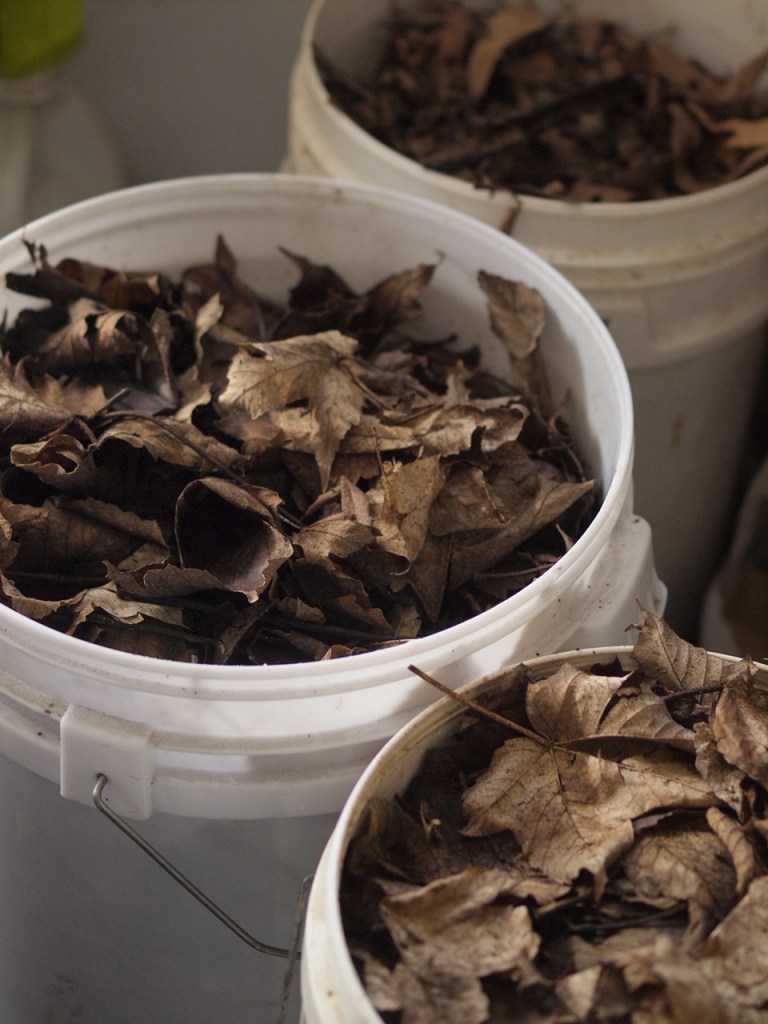
You may be wondering why I have three buckets of leaves in my laundry…

This is how I store root cellar vegetables through the winter:

1. Gather dry leaves in autumn

It can be a bit tricky here some years finding the right time when the leaves have fallen but have not become a sodden mess from autumn rains. I’ve used both maple leaves and blackwood leaves, and both work well, as long as they are dry. Any kind of fallen dry leaves will probably work. Leaves can be stored in old feedsacks in a dry place until needed.

2. Select the right vegetables in perfect condition.

Don’t store any that have cracks or bruises, or any that are missing their crowns. Suitable vegetables include beetroot, carrot, parsnip, turnip, swede/rutabaga, and other roots.

3. Pack a layer of leaves at least 1” thick in the bottom of a bucket or 55 gallon drum.

Top with a layer of roots, making sure they don’t touch. Cover with enough leaves so that you can no longer see the roots, then top with another layer of roots, repeat until you get to the top of the bucket. It’s best not to put the lid on the bucket, as this can cause condensation to drip down, but if you need to store your roots somewhere where mice might get to them then you may have to use the lid – just make sure you have an extra thick layer of leaves on the top and on the bottom if this is the case.

4. Store in a cool place. 

I use an unheated room in my house that is easily closed off from the rest of the house and does not get sunlight during the winter. The ideal temperature for root cellaring is between 0ºC and 10ºC (32ºF to 50ºF), but up to 15ºC (60ºF) and even a little higher will still work – it just won’t store for quite as long as it would at lower temperatures.

The benefits of root cellaring, even if you don’t grow all your own vegetables:

Food security

By storing vegetables for weeks or months, it means we have more food in the house, for longer, so we are not affected by supply disruptions and other issues that seem to be happening frequently these days. It also means we don’t have to go food shopping as often.

Saving money

When we don’t grow enough vegetables of our own, I buy vegetables in bulk directly from the farm and it works out less than half the price of buying in the shops.

Extending the season of local vegetables

There is a “hungry gap” in many places when the local farms run out of many storage vegetables before the new season vegetables are ready. For growing our own vegetables, root cellaring means I can get the vegetables out of the ground and use the space for a green manure crop or other crop earlier than I could otherwise, or I can pull them out before they bolt to seed in the springtime and still have root vegetables on the table for a few more weeks. By root cellaring, I can keep storage vegetables around for just that little bit longer. Beetroots seem to keep the best out of everything I have tried, but all root vegetables will keep in this way for some time.

Other vegetables, and how to store them without electricity

potato clamp

• Potatoes don’t need to be packed in leaves – just store them in hessian bags, paper sacks, or cardboard boxes and keep them in a very dark, fairly cool place. In climates with mild winters, potatoes can be stored outdoors in a “clamp” – just put straw or hay on the ground, heap with dry, undamaged potatoes, cover with a thick layer of straw or hay, and then cover with dirt.

• Onions and garlic also don’t need leaves – just keep them loose in an airy, dry, fairly cool place. They like to be hung up high if possible. For our homegrown garlic, I plait it and hang it up when I can, or store it loose in a single layer in a box. For the onions that I buy, I keep them in netted bags, hung up from the edges of shelves.

sauerkraut and kimchi in fido jars

• Fermenting is an excellent way to store vegetables while increasing the nutritional value – either grate or shred vegetables such as cabbage and turnip and mix with salt for them to make their own brine, these vegetables, along with most other vegetables can be preserved whole or in slices in a salty brine. Make sure you use enough salt to ensure that they keep well – between 2% and 3% of the vegetable weight is usually a good amount. Keep in a cool place. Many fermented vegetables will keep for a year or more. See my instructions for fermenting vegetables here: https://thenourishinghearthfire.com/2016/04/18/7-secrets-to-making-successful-sauerkraut-every-time/

• As well as being fermented, cabbages will keep for a month or two loose on a slatted shelf (the outside layer of leaves might start to go bad, but the insides will be fine), for longer storage, the stems can be planted in soil or damp sand.

• Pumpkin/winter squash likes to be kept fairly dry and a little bit warmer than root cellar vegetables, at around 10ºC to 13ºC (50ºF to 55ºF). I am still learning and experimenting with how to best grow and store this tasty vegetable, so feel free to comment with any tips that you have for storing it well, or growing and storing any vegetables well for that matter.

Enter your email address here to get new recipes and blog posts from The Nourishing Hearthfire.

Simple baked cheesecake

To celebrate the launch of my new book Natural Small Batch Cheesemaking, I’m sharing an easy recipe for cheesecake.

Cheesecake is one of my favourite foods, but not something I used to make very often until I created this recipe. The recipe I’m sharing today is from A Year in an Off-Grid Kitchen, and could not be simpler. It features the easiest cheese to make at home – a simple whole milk ricotta. Or you can use whatever soft cheese you have around the house, as long as it is drained well and is not too salty.

I usually make this without a crust so that it comes together in minimal time, but if you prefer, you can bake this in your favourite cheesecake crust.

This recipe scales up or down well – just weigh your ricotta and then adjust the amount of eggs and honey to suit – use 1 large egg and 60g (3 tablespoons) honey for every 200g (7oz) ricotta.

Ingredients 

170g (1/2 cup) honey 

650g (23oz) well-drained salted ricotta

3 large eggs, whisked

(Optional) zest of 1 medium lemon, or a dash of vanilla

Method 

Preheat the oven to around 180ºC (350ºF). 

If your honey has crystallised, gently melt it until it’s runny. 

Thoroughly mix the honey with all the remaining ingredients using a fork or whisk until evenly blended. Place in a greased 9” (23cm) pie pan or cake tin. 

Bake for around an hour, until golden and set. The middle will puff up while it bakes, and then sink down once it’s removed from the oven. 

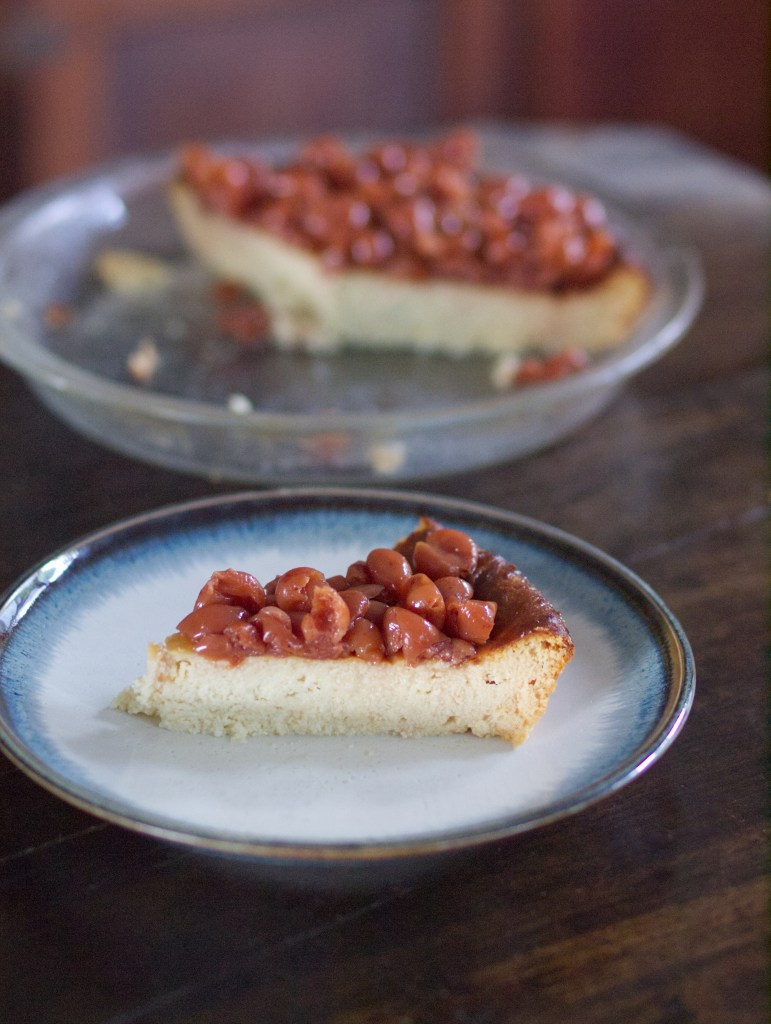
Serve on its own, or topped with jam, bottled fruits, or fresh berries. 

My new book Natural Small Batch Cheesemaking is now available from several places online, and can also be ordered into any local shop.

Enter your email address here to get new recipes and blog posts from The Nourishing Hearthfire.

Homemade French Onion Soup

The secret to a great French onion soup is the quality of the bone broth – it should be lovingly made at home from beef bones which have been first roasted to create extra flavour before being slowly simmered for 24 hours or longer, or until the broth is so infused with flavour and minerals that it smells delicious on its own when hot, and sets like a jelly when cold.

Allowing plenty of time for the onions to slowly caramelise also helps to bring out the best of a few simple ingredients. The caramelising can be happening in the background while other kitchen tasks are being done, making this an easy hands-off meal for the most part. Sometimes I run the onions through the slicing bit of my food processor to make the preparation extra quick.

The classic presentation for French onion soup is to serve it in ovenproof bowls, with a slice of crusty bread on the top, covered with cheese and briefly baked or broiled to melt the cheese. I just make toasted cheese sandwiches with my usual everyday homemade bread and serve these on the side.

This soup reheats well. I often make a bigger batch and serve it for a few meals.

Makes around 8 serves. 

bowl of french onion soup with toasted cheese sandwiches

Ingredients

12 tablespoons butter (180g)

3 pounds onions (1.35kg), thinly sliced into half moons

Optional 1 cup red wine (or a splash of brandy, or extra broth)

8 to 9 cups (2 litres) beef bone broth

Salt, to taste

Method

Melt the butter in a large stewpot over medium heat. Mix through the onions and allow them to cook, stirring every now and then, until very fragrant, dark golden-brown, and soft. This can take anywhere between 30 and 60 minutes.

Once the onions are ready, stir through the wine for a few seconds, then add the broth. Put the lid on the pot and allow it to simmer for 20 minutes, before adding salt, to taste.

Serve with some combination of crusty bread and melty cheese, such as toasted cheese sandwiches.

If you want to know how to make the cheese for this meal, check out my cheese book on Kickstarter. The Kickstarter ends in 4 days and is a great opportunity to order books directly from me at a reduced price and get extra bonus ebooks. Here’s the link: https://www.kickstarter.com/projects/706848724/make-your-own-cheese-natural-small-batch-cheesemaking-book?ref=dm283q

If you’d like to learn about my favourite way to use whey leftover from cheesemaking, Norwegian whey cheese, check out my guest post at Practical Self Reliance here: https://practicalselfreliance.com/gjetost-recipe/

Enter your email address here to get new recipes and blog posts from The Nourishing Hearthfire.

My cheese book is now live on Kickstarter!

https://www.kickstarter.com/projects/706848724/make-your-own-cheese-natural-small-batch-cheesemaking-book?ref=7ho2mj

Make your own cheese at home, using natural ingredients

Anyone can make their own cheese. Whether you’re in the middle of a city, or on a homestead, you can make delicious cheeses in your home kitchen.

Making your own home dairy products was an essential skill in the past, and a skill that continues to create resilience and reduce food costs in the face of supply disruptions and uncertainty.

Natural Small Batch Cheesemaking is the book I wish had existed when I started making cheese. Many cheesemaking books present recipes to be followed in exact ideal conditions which can be hard to achieve on a homestead. I’ve gone beyond this, making cheeses in less-than-ideal conditions, sharing the results, and explaining why each part of the cheesemaking process is done and how to make this work in home kitchen and homestead conditions.

I’ve included heaps of information on storing, handling, and working with the seasonal conditions of milk. Instructions for making your own rennet from animals and plants are included, along with information about how to prepare and use several different homemade cheese cultures.

There’s a section on cheesemaking equipment, and how to get started with the absolute basics, most of which can already be found in a typical home kitchen.

If you’re not sure where to begin, or how to fit cheesemaking into your life, there’s helpful information included about the best cheese recipes to get started with, and how to grow your cheese skills from there, along with figuring out which cheeses will work best with your lifestyle.

“Understanding the cheesemaking process” is a large part of the book where we look at every step of the cheesemaking process in depth, why each step is done, and what each step achieves, so that you can confidently come up with your own cheese varieties.

The ideal conditions for aging cheeses are discussed, along with various ways to achieve this at home. I also discuss many ways to work with rinds: working with natural moulds, encouraging (and discouraging) different types of mould, and natural options for making cheese without mould.

Many cheese styles are covered in the book, from the best kinds for beginners to start with, through to advanced cheesemaking.

Also included are recipes for other homemade dairy products: how to make the best thick and tasty yoghurt, kefir, cultured cream, butter, and ice cream.

Natural Small Batch Cheesemaking is the ideal cheese book for homesteaders. 8×8” in size and around 140 pages, designed for practical use with every cheese recipe on a single-page spread and clearly written instructions to help you make your own beautiful cheeses at home.

https://www.kickstarter.com/projects/706848724/make-your-own-cheese-natural-small-batch-cheesemaking-book?ref=7ho2mj

Creating a cheese book for the rest of us: Natural Small Batch Cheesemaking

When I first started making cheese I thought I was failing at it. The recipes said to stir constantly for a full 45 minutes or so, and in my busy kitchen I just could not do that.

The more I perfected my own style of making cheese, the more I began to think back about how things were done in the past: was the busy peasant really stirring for that whole time? Or did she, like me, also have many responsibilities in the kitchen and on the homestead.

Early on I also began to question the use of all these tiny expensive packets of ingredients. Why did the mozzarella recipe tell me to dilute citric acid with water? Couldn’t vinegar be used in the same way? I experimented, and it worked, and paved the way to more experimentation, and learning how things used to be done.

I think a lot of books are written from a specialist perspective: someone that has focused on just one thing, written about it in isolation, without providing any guidance for those who do not have the same perfect conditions. I like to think of my book as being written by a generalist: Yes, I am making all my family’s cheese, it’s an important part of my homestead and I love it, but I am also fermenting, baking, canning, preserving, gardening, butchering, caring for animals, building infrastructure, and all the other tasks that make for a diverse homestead.

I don’t ask you to stand there stirring for 45 minutes, because I know that it’s not possible for many people. I don’t ask for weird little packets of stuff grown in labs, because I know it’s possible to create great cheese without these. I’ve read between the lines of many cheese traditions and figured out a way to do this that’s perfect for the busy homesteader, and also suitable for the complete beginner. I’ve created a book that anyone can pick up and learn from, and once you’ve learned the basics, you’ll still be referring to it again and again as I’ve provided a lot of depth, and presented it in a way that isn’t overwhelming.

You can learn to make cheese even if you don’t have your own dairy animals, and my small batch recipes are perfect for learning – there’s less time to wait before you get to taste them, and they’re naturally made from smaller amounts of milk. Most cheese books are using between eight and twenty litres (two to five gallons) of milk and this can be a very expensive experiment for anyone that is learning. Most of my recipes can be made from four litres of milk or less. These recipes are perfect for anyone, whether you have a small herd of goats or a single house cow, or if you’re buying your milk.

If you’re interested in learning more, please feel free visit the Kickstarter page about my book and click “notify me on launch”: https://www.kickstarter.com/projects/706848724/make-your-own-cheese-natural-small-batch-cheesemaking-book?ref=7ho2mj.

The Kickstarter launches on the 15th August at 5pm USA mountain time (16th, 9am Australian eastern time), I’ll send out another quick post once it is live.

I’ve priced the book really affordably and provided a lot of bonuses that are only available while the Kickstarter is live. Also, if you back it in the first couple of days you’ll also get access to this extra earlybird bundle of ebooks and magazines.

For more details about the earlybird bundle, see here: https://permies.com/t/223565/Earlybird-bundle-cheese-book-kickstarter

Yoghurt without fail

Keeping yoghurt warm in a pot at the edge of the woodstove, one of the tricks I’ll discuss in this post.

Yoghurt with a taste similar to what we might find in a grocery shop was something I gave up on for a long time. I made only room temperature viili for years, thinking that a good Greek or Bulgarian style of yoghurt was beyond me. At some point I decided I preferred the taste of this style of yoghurt enough to find ways to make it work, and now I make yoghurts far tastier and healthier than anything I can find for sale. In this article you’ll find my recipe, along with extra tips to make really good yoghurt every time.

How to make yoghurt

Heat milk in a saucepan until it reaches 82ºC (180ºF) or higher, hold it at or above that temperature for half an hour, if possible, and then let it cool to around 40ºC (104ºF). 

Pour into jars, then stir through around 5 tablespoons (75ml) of yoghurt for every quart (litre) of milk.

Keep your culturing yoghurt at 40ºC (104ºF) for the next 6 hours or more (I find that 12 to 18 hours is best).

How to keep yoghurt warm during culturing

A couple of ways to keep yoghurt warm are: 

• fermenting it in an insulated food jar such as a thermos.

• surrounding a normal jar with hot water in an esky (cooler) or on the edge of a woodstove dying down for the night.

I use the latter method, as it means I don’t have to mess around with transferring yoghurt from one jar to another once it’s ready – I culture it in the same jar that I use for storage.

There are special non-electric insulated yoghurt fermenters available, where you fill it with hot water, place your jar of yoghurt inside, seal, and leave to culture, but I find the size of these limiting, as they will only hold a specific size of jar, and from my experience they aren’t that great at keeping the heat in.

There are also electrical gadgets, such as Instant pot and specialty yoghurt makers, but I avoid relying on electricity as much as possible so these are not things I have tried.

• In real life, the temperature does tend to drop over time, so it’s sometimes easier to start culturing it at a slightly higher temperature (up to 46ºC or 115ºF), and leave it culturing for twelve hours or more rather than six. Some of the helpful yoghurt bacteria will still be active in the lower temperatures, and the heat-loving bacteria will still have some time to grow during the earlier, warmer stages of culturing.

In winter I leave my yoghurt jar overnight in a pot of warm water on the edge of the woodstove as it cools down, and then refill the pot with hot tap water in the morning to give it more time to culture at high temperatures. I find that yoghurt tastes the best after around 18 hours of culturing in this way during winter.

Tips for making thick yoghurt

• Experiment with using milk from different animals or different sources. One of the goats here gives very creamy milk that makes excellent thick yoghurt, my other goats give milk that makes a thinner yoghurt. If I were mixing all the milk together I would not have noticed this. Full fat cows milk generally makes lovely thick yoghurt, and milk from a Jersey cow or other cow that gives extra creamy milk will make even thicker, lovelier yoghurt.

• Winter milk makes thicker yoghurt than summer milk. Sometimes it helps to just accept that winter is the time for thick yoghurt and in summer you might want to stain it through cheesecloth if you want it to be thicker.

• Yoghurt will be thicker if it is first heated above 82ºC (180ºF), and then left to cool to the culturing temperature. If you can heat it up slowly, or hold it at the goal temperature for half an hour, this will help to create thicker yoghurt. The high temperature changes the protein structures in the milk, to help create a thicker yoghurt.

• Allowing the milk to cool down and then reheating to 82ºC also can help make for thicker yoghurt.

• You can evaporate some of the liquid out of the milk, by leaving the pot on the heat with the lid off once it’s reached temperature – just observe the level of the milk you start off with, and then remove and allow the pot to cool once it’s reduced by ¼ to ½.

• For thick Greek yoghurt, allow your yoghurt to continue culturing at warm room temperature until the whey begins to separate. Pour it into cheesecloth and allow the curds to continue dripping whey until it’s as thick as you’d like it to be, anywhere between two and twelve hours.

Tips for reliable yoghurt culturing

• Yoghurt is best made at least once per week, to keep the culture fresh. It is worth keeping a small amount of yoghurt tucked away in the freezer, just in case your yoghurt gets contaminated or abandoned.

• Cultures that contain acidophilus seem to be more reliable home kitchen conditions

• If in doubt, add more yoghurt to start it off, rather than less. Some recipes advise using only two tablespoons for a litre (quart) of milk, but I always use 5 tablespoons and it doesn’t hurt it, it just makes the milk get colonised more quickly while the temperature is warm.

• To keep your yoghurt culture as active and pure as possible and avoid having to buy new culture, it’s a good idea to keep everything as sterile as possible: Heat and cool your milk in a pot with the lid on, heat-sterilise your jars, don’t leave them open to the air any longer than you have to, and be very careful with any jar of yoghurt that you’ll be using as a starter for your next batch – pour the yoghurt out rather than reaching in with a spoon (unless the spoon is heat sterilised). For even better results, make an extra smaller jar of yoghurt that you can use as your culture, and then it doesn’t matter what happens to your jar of eating yoghurt.

Enter your email address here to get new recipes and blog posts from The Nourishing Hearthfire.

How Homemade Dairy can Transform your Homestead

homemade goat cheeses on plate

Self reliance

I sometimes get asked “how do you live without a fridge”, or “how do you get by without having to go grocery shopping all the time” and my answer every time is the same thing: We raise dairy animals and make the most of the milk they produce. When we have dairy, we have the key to self reliance.

When you have milk coming into the kitchen fresh every day, there is no need for refrigeration. Milk is often the most common item people will regularly rush out to the grocery store for, and home-produced dairy, especially when combined with cooking from scratch, gardening, chickens, and bulk good storage gives us much more resilience in the face of any crazy stuff that might happen.

Frugality

Keeping to a budget and noting down everything we spend, I can clearly see that the months with fewer shopping trips are the months when it’s been easiest to stay within budget. Going out frequently for milk, yoghurt, cheese, and other dairy products not only means we’re exposed to a bunch of tempting foods on the shelves at the same time, but also means more fuel costs for the car, more of a sense of our food coming from the grocery store rather than our own land, and more time away from our home, when we could have been working in the garden or doing something else productive.

If you have a taste for high quality cheeses, these can drain the food budget very quickly. When you make your own cheese, even if its not from your own dairy animals, you can create fantastic cheeses that will make you ignore the expensive gourmet cheeses on store shelves.

Homemade yoghurt and other cultured milks are even more affordable to make at home – yoghurt is often around four times more expensive than milk, but can be made very easily at home with nothing more than milk and some leftover yoghurt to use as culture.

Focus

Dairy animals need care every day, and once you’re outside caring for them, it’s easy to fit in other homestead chores, feel more like “real” homesteading, and have a more productive homestead overall. There is nothing like the feeling of bringing in fresh milk every day, and I like the rhythm and stability that dairy animals give to our lives: No matter what is happening around us, I know that every morning begins with milking.

Food and health

Dairy foods are simply delicious. The cheeses I make are tastier and healthier than any cheeses that I can buy, and we can eat as much of them as we like. There is not much that gives a feeling of abundance than having shelves full of many varieties of delicious homemade cheeses at varying stages of aging – some are food for now, others are food for later, all are absolutely delicious and truly make a meal. Cheese is a staple food in my house and can easily become a staple food in your home too.

Next on the blog I’ll be sharing some helpful information about making great yoghurt every time: this is something that I had trouble with for many years and I’m excited to be sharing my tips with you all soon.

Enter your email address here to get new recipes and blog posts from The Nourishing Hearthfire.

German one pot beef and vegetable stew

Beef and vegetable stew in bowls

This hearty one pot stew, based on the German dish Pichelsteiner, is my favourite meal to make with beef osso bucco (sliced bone-in beef shin).

The meat is first seared, and then slow cooked with the vegetables to tender perfection. The onions melt into the broth as the meat falls off the bone to form a sturdy broth that is full of deep flavour from simple, natural ingredients.

A meal to savour and enjoy again and again. Serve on its own, preferably with a slice of good rye bread on the side.

Makes around 16 serves. Leftovers reheat well.

Beef and vegetable stew with bread

Ingredients

Tallow or lard, for searing

Beef osso bucco from 1/4 of a cow (around 1.5kg to 2kg/3 to 5 pounds), or 1kg (2 pounds) boneless stewing beef

1kg (2 pounds) rump steak, round steak, or stewing beef

4 or 5 medium onions, chopped

a few grinds of black pepper

a mixture of carrots and turnips (or potatoes, or cabbage), as much as will fit in your pot

bone broth to cover (or water if you don’t have bone broth)

salt, to taste

optional cider vinegar, to taste

a large cabbage, chopped

optional handful or three of fresh parsley, chopped

Method

Heat a small amount of tallow in an eight litre (2 gallon) pot. When the fat is hot, sear both sides of the meat in batches. 

Remove the meat from the pot and add a little more tallow, if needed, along with the onions. Sauté the onions until they are tender and fragrant, maybe starting to develop a little colour. Add the meat back into the pot, and top the pot up with as many chopped turnips and carrots as will fit, before covering the meat and vegetables with broth or water.

Bring to the boil with the lid on, reduce heat, and simmer on the stovetop, in a slow cooker, or in the oven for at least two hours, until the meat is very tender and easily falls of the bones. Taste the broth and add some salt, and maybe a splash of cider vinegar.

Remove the meat from the pot and cut or break it into bite-sized pieces. Remove the marrow from the bones and add this back into the stew. Return the meat to the broth. Top with chopped cabbage, and return to a simmer, cooking for 10 or 20 minutes, until the cabbage is tender.

Stir through the optional parsley, adjust seasonings with salt and cider vinegar, and serve on its own, or with bread.

Enter your email address here to get new recipes and blog posts from The Nourishing Hearthfire.