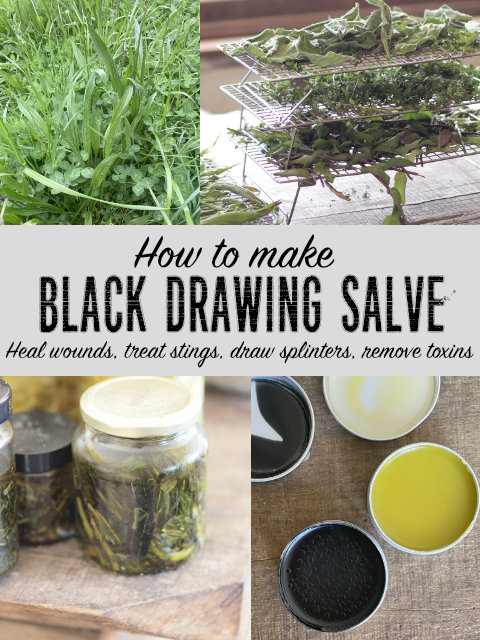
Here is how I make one of the most important natural remedies that I use.
We use black drawing salve on all kinds of bites and stings, as well as on splinters, puncture wounds, and anything that looks like it might need possible toxins or infections drawn out of it. I also find it a really helpful remedy around the homestead for wounds on animals – it’s so thick that it forms both a remedy and a bandaid in one – if you’ve ever tried to get a goat to keep a bandage on then you’ll understand what a relief it is to just have a remedy that will stick on and help to heal and protect the wound. When I use this on minor udder injuries, the wound is usually healed in 24 hours.
The bentonite clay and activated charcoal in this salve draw out toxins. The plantain and calendula help to heal, as well as drawing out infections and toxins. You also add a couple of drops of tea tree or kunzea oil to this salve to further help its healing properties, or a tablespoon of raw honey – if you’ll be adding these, then allow the salve to cool down slightly before adding them so that the honey doesn’t get cooked.
I use olive oil to make this salve, but you could use lard instead if you can keep it warm while it’s infusing.
Ingredients
1 cup (240ml) plantain infused olive oil (or a mix of plantain and calendula infused oil)
1 1/4 tablespoons beeswax
3 tablespoons bentonite clay
3 tablespoons activated charcoal

Plantain, also known as ribwort, is a common weed in pasture, lawn, and gardens. It is an excellent remedy for all kinds of bites and stings.

Calendula is easily grown from seed. The flowers are a tasty and colourful addition to salads as well as being an excellent herb for healing and preventing infection.
Method
- Make the infused oils:
(a)Harvest and dry your herbs. Plantain is also known as “ribwort” and is a common weed on lawns and pastures, easily identified from its ribbed leaves. Calendula is very easy to grow. I harvest fresh herbs in dry weather and put them in thin layers on top of stainless steel cake cooling racks to air-dry.

(b)Infuse the dried herbs
Pack dried herbs down into a jar, then fill with olive oil to just above the level of the herbs, and agitate sightly with a small wooden spoon or other implement to make sure the oil is getting to all the herbs. To make the most potent herbal remedies using this method it’s important to really pack the herbs down, and to use too many herbs and too little oil rather than the other way around.
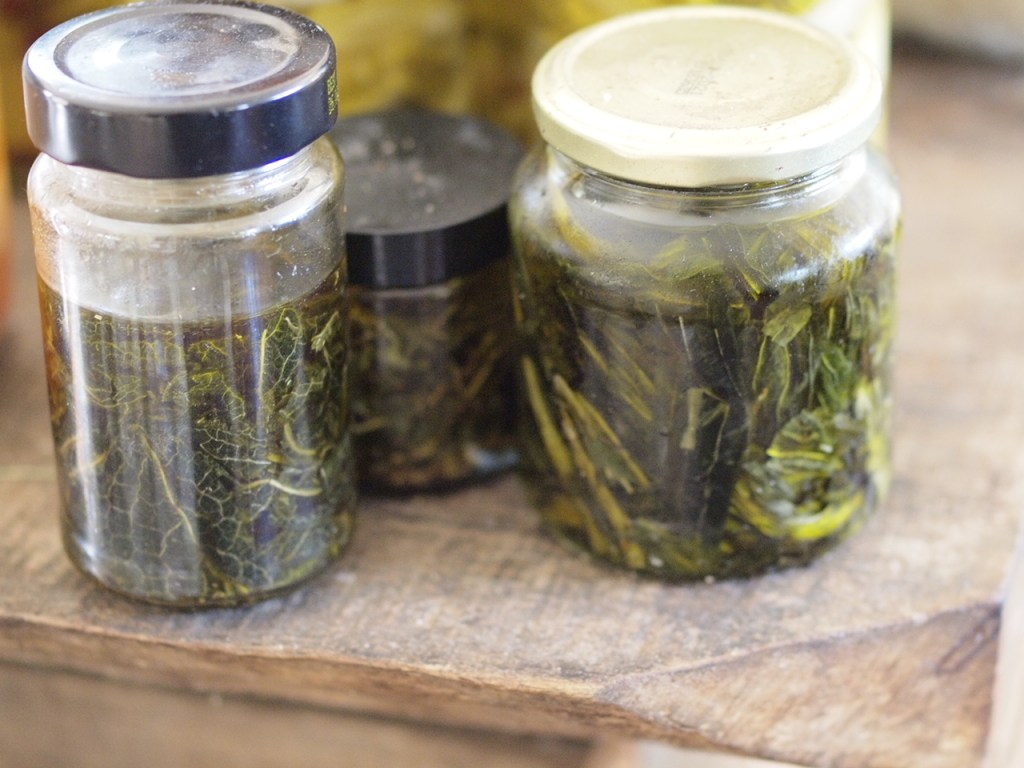
Once you have your herbs sitting in oil, you can either leave them to sit at room temperature for six weeks, or leave them in the ‘warm’ setting of a slow cooker for 8 hours. I do a mixture of these two methods, putting my herbs on the warm edge of the woodstove as much as possible, and infusing them for a full six weeks.
(c)Press the oil out from the herbs
Gently warm the oil and herbs, then pour the oil out through cheesecloth or a potato ricer into a bowl, make sure to then squeeze all of the oil out of the herbs. The infused oil can now be stored if you want to use it for salve at a later date, or you can make the salve now. The leftover oily herbs can be fed to the chickens or composted.
- Warm the oil and beeswax
Take a glass liquid measuring cup and measure the infused oil. Add the beeswax (preferably in tiny pieces). Put the measuring cup into a saucepan filled with enough water to come up partly up the measuring cup, but not so full that you risk getting water into the cup. Put it on the stove over a low heat, and allow to heat until the beeswax has completely melted - Mix in everything else.
Add the bentonite and charcoal to the oil and beeswax mix. Mix until thoroughly combined, and then pour into small jars or salve containers.

Black drawing salve next to comfrey salve.

 thenourishinghearthfire.com