Reflections on homesteading and self sufficiency, and our journey over the past two years

Around two years ago I wrote a big update about what we were up to, and our homesteading plans for the next year or so. There have been so many changes and reflections since then, so here is an update some changes here, and on our progress with self reliance and growing food on old logging land.

Changes

New baby
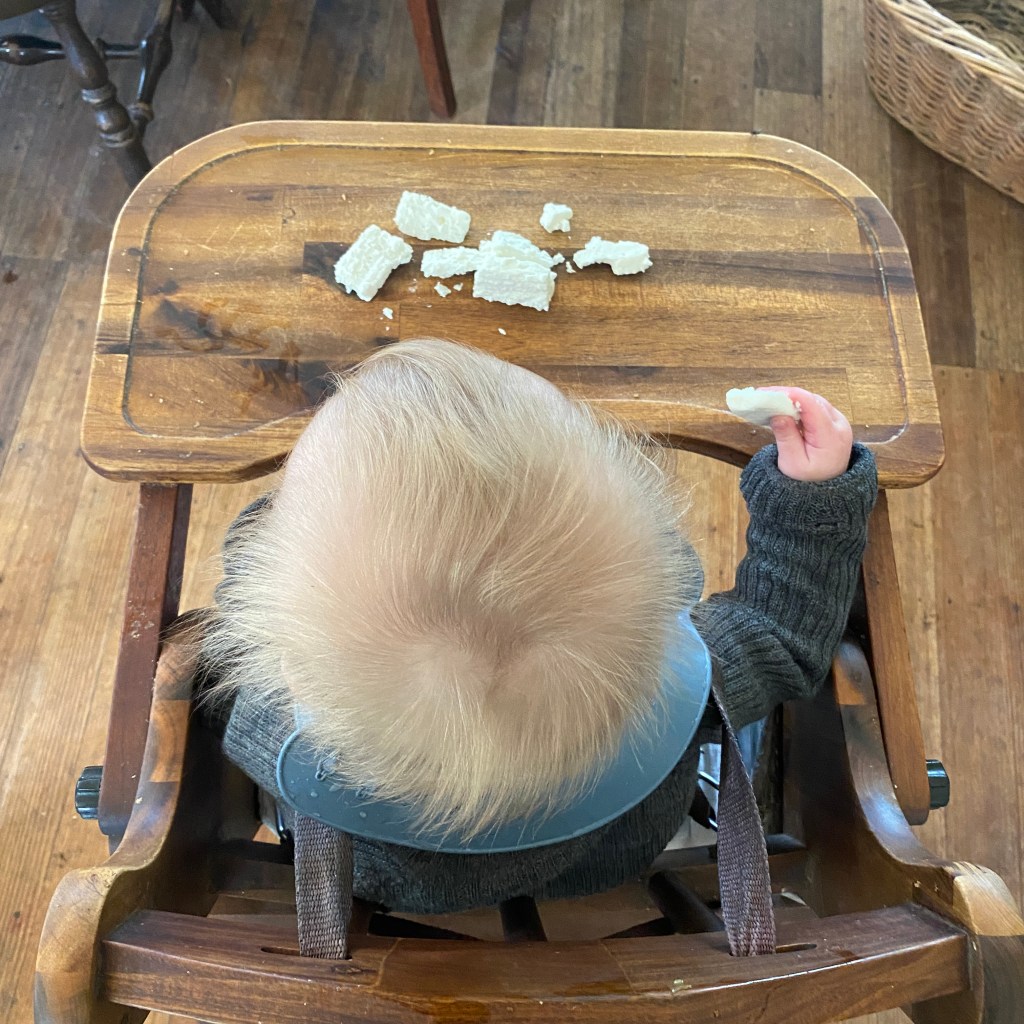
Born in April 2024. She is beautiful and healthy and loves homemade cheese.
No hay, no cow
Every year in my memory, hay has been easy to find, and relatively cheap, so I had figured we could rely on bought hay to feed a cow while we worked on transforming parts of our land into pasture. With dry weather in the springtime, and possibly also from the media constantly bombarding everyone talking about how dry it is going to be here for the next few years, hay was extremely scarce, and I’d never seen anything like this before. If hay could be found, $20 for a square bale was considered cheap, $30 being the usual price, and round bales were extremely hard to find. Even lucerne, which is irrigated and has never changed in price much in the past is was selling for $45 a square bale.

I am glad that we had the sense to attempt to secure a years’ supply of hay before we found a cow. Not getting a cow was a bit of a setback, but nowhere near as bad as it would have been if we had a cow and found that we couldn’t feed her.

The hay supply problems have really brought home the importance of being self reliant in animal feed. I was reading the “5 Acres and a Dream” book a while ago and admire that animal feed self sufficiency has always been one of their top priorities. Animal feed is often taken for granted, but in times like these, it reminds me to never take anything for granted. Animal feed self reliance has become a bigger priority for us.

I’ve stopped selling food at markets
I liked the idea of helping to create a local food system and a cash-only business, but found it was interfering with actual self sufficiency, and it was annoying my family.

I can’t drive, so to get to the larger market, I would have to get all the children up, and my husband would drive all of us to the market, and they would sit in the van playing board games and reading while I had my stall. The market organisers started getting fussy about wanting all stallholders to stay until the official end of the market, even if my stall had sold out, or if the market was really slow, making it a much longer day that it could have been. In winter the goats were nowhere to be found before daylight and wouldn’t come when they were called, and sometimes I was also running late, so I was having to go to the market without milking, and then do the milking when we got back from the market at 2pm. The goat’s milk supply decreased.

My heart was not in it, and I started feeling happy whenever I had a reasonable excuse to not be at the market – one month I was sick, the next month there was a problem with one of our dogs, the month after something else, and the way I was feeling about going to that market was starting to feel like the way I felt when I used to have a 9-5 job. I enjoy baking, but I don’t enjoy standing around for 5 hours dealing with customers.

The smaller market closer to home I kept going to for a while longer, but felt frustrated a lot of the time because most of the people going to it were not going there to support a localised economy, but going to it as a social event while they continued relying on food from the supermarket. In the end I decided I’d rather be homesteading, so I decided to stop going to that market as well.

Producing enough sauerkraut and kimchi for the market also was making me less appreciative of the vegetables that we were growing ourselves: when I am making larger amounts of ferments, what we were producing in the garden seemed like a drop in the ocean compared to the amount of vegetables I needed to bring in for the fermenting business, and when there are bulk carrots and cabbages in the larder left over from the kimchi making, it’s sensible to eat those first, before they go bad, before we harvest the roots growing in the garden, so the roots in the garden kept getting left until later and not appreciated as much as they should have been.

The whole market experience reminded me of an episode of “The Good Life” when Tom discovers that he’s actually really good at pottery, and has a bunch of people wanting to buy his crafts, in the end, he decides his heart is in self sufficiency, and that the pottery business was sidetracking him from where he really wanted to be.

Changes of plans bringing inspiration

After experiencing the issues with the hay and the market stall, I began to see more where my heart really is. Sometimes it might be important to remind myself of what I don’t want to be doing, before I can understand once again where I really want to be. Self sufficiency has been what propelled me to start this life, and the thought of creating a self-sustaining system that feeds us, feeds our animals, and grows the soil is what sends shivers of excitement down my spine.

With the market stuff, I lost sight of this focus for a short time. Getting debt-free, and having a cash income that doesn’t rely on the internet are both good goals to have, and can help towards the goal of self sufficiency, but where my heart really is, is in not relying on money at all, and providing for our own needs, and that is how I want to live my life.

Self sufficiency priorities for the year ahead

Potatoes
For many years here I grew all our own potatoes, and they were a big staple food for my family. In 2023, when my husband started getting inflammation reactions to potatoes, they became less of a priority, I focused on other crops, did not give the potatoes the attention they deserved, and for the first year in many we didn’t not grow all the potatoes that we needed. Last year, I started with new seed potatoes, and we’ve had all the potatoes we need, plus some to use for this year’s seed potatoes

I planted them a bit close together last time I think, with around 2 feet between rows it doesn’t give much space for hilling them up. This year I’ll either plant in rows spaced 3 feet apart, or put a double row down the middle of our 5 feet wide garden beds.

Fermenting vegetables
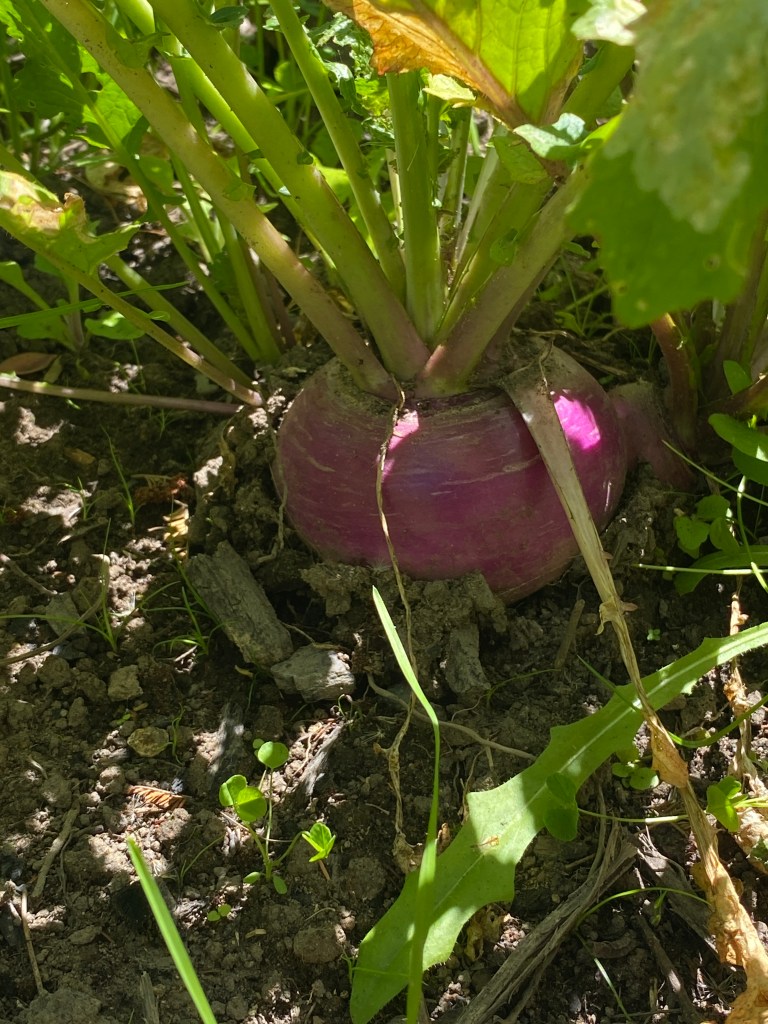
Turnips and daikon radish are easily-grown fermenting crops, and we are growing lots of these. I am getting better at growing carrots every year too. Cabbages I am not going to bother with much this year. I’ve recently heard that zucchini put through a mandolin can be used for kimchi, so this is something I’m keen on trying too.
Vegetables in general
Vegetables are a more efficient use of a small amount of land when compared to grains. I still grow grains in the garden, but mainly for the purpose creating organic matter to feed the soil.

Animals
We’ve slowly been replacing our hybrid brown laying hens with Australorps and mongrels, with the hope of having more broody hens and chicks, and hens that thrive on homemade feed. Last year none of them went broody, so we are planning to get some sikie bantam hens to hatch the eggs.

We’ve started keeping pigs every year again. For a while we had a breeding sow and a young boar, but that didn’t work out, so for now we will rely on buying piglets from other homesteaders. Maybe we will have things better set up later on and will be able to keep some breeding pigs in future, but it’s not something I want to do again unless we’ve got a better rotational system set up and are growing more of their food.

Dairy self sufficiency was going really well last year but has recently suffered a big setback that I don’t want to go into detail about. This is always a big priority for us so we will find a way through it, and I’ll go more into detail about this when things are looking more settled than they are now.

A new system in the top garden
Two years ago I was working with 75cm (30”) beds, with each section of the garden containing eight of these beds, which were part of a four year rotation. While this was good for confusing pests and having more diversity in the garden, it was easy for weeds to creep in from the paths, harder to delegate garden work, harder to harvest, and harder to irrigate where it was needed.

Last year I observed the patterns of the irrigation sprinklers and divided the garden up into twelve ‘fields’ made up of 3 150cm (60”) by 5 to 6 metre (19’) long beds, with paths in between. Each of these fields can be irrigated by one sprinkler. The paths are sown to clover, which can be used to feed the garden beds, and provide living roots in the soil year-round for mycorrhizal fungi, while keeping weed pressure down.

If sheep sorrel and other weeds continue being a problem, the new field system can be scratched over by chickens, one field at a time, and we can also focus our weeding efforts on one area at a time.

Although not quite as diverse as the old system, this new system is still not a monoculture. It’s done on a tiny scale, I grow companion plants with my main crops, and I have perennials around the edges of the garden, along with the clover on the paths. It’s been a lot easier to manage than the old system.

Animal feed
Hay and grain in large quantities continues to mostly be something that is more easily done on a larger scale than ours for now, but I am figuring out ways to produce more of it here, even if it takes a few years. This year we got an acre and a bit cleared, which we sowed to pasture and are in the process of fencing off from wallabies. I am also planting more tagasaste and other trees to use for animal feed.

Reflections on self sufficiency priorities

Reflecting on my post in mid-2023, I wonder if I was approaching things in the wrong way. I think we can achieve a lot more self sufficiency if we produce more of what we are already producing well, and rely more on that. It might sound simple to say this, but in practise it is easy to just eat what we are used to eating and to want to produce that, rather than focusing on being more self sufficient with our current situation, even if it’s not 100%. So far we’ve been replacing some butter by drinking more goats milk and eating more goats cheese. We had five does in milk last year. I made cheese every day or two, and I also made a lot of gjetost. Once we got out of the habit of having butter and gjetost together, the bread is fine with gjetost alone and a glass of milk, and we don’t go through as much butter this way.

It feels awesome to be more self sufficient and to be grateful for what we do have.

I still am dreaming of cows, pasture, workhorses, field crops, sheep, and more, and maybe we’ll get some of that (or all) in time. The way I am approaching this is to be a bit slower about it, to be more observant of the land, to keep our true goals in mind, and to use the land we have wisely, dedicating more space to staples like turnips, carrots, and potatoes, and less to experimental crops.

Successes and failures last season


Over the years I’ve been encouraging the dandelions with the biggest tastiest leaves to flower and spread. This success turned one failure into not as much of a failure.

With the 2024 busy spring planting season taken up by focusing on larger crops that needed to be planted on time and tending garden areas further away, I didn’t stay on top of succession planting of greens. Once the overwintered mustard greens and kale all bolted to seed, and the earliest plantings of salad and stir fry greens were finished, we didn’t have much left in the garden to eat.

While some of the chicken tractor beds sat idle, the dandelions thrived, providing us with lots of nutritious greens. There are so many dandelions now that if I can get over the outrage of ripping perfectly good dandelion plants out of the ground I’ll be able to harvest the roots to cut up finely, roast, and make into roasted dandelion tea.

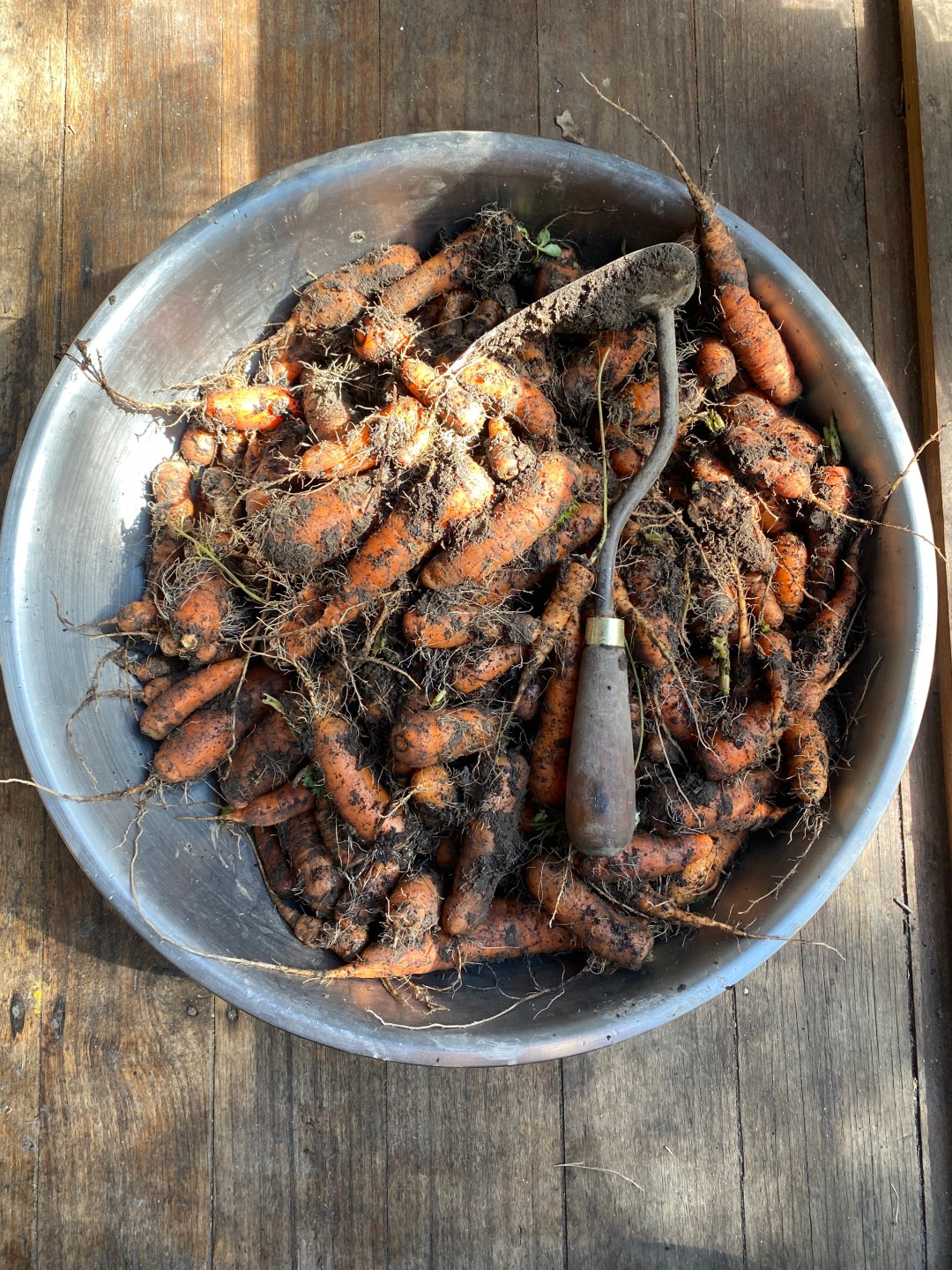
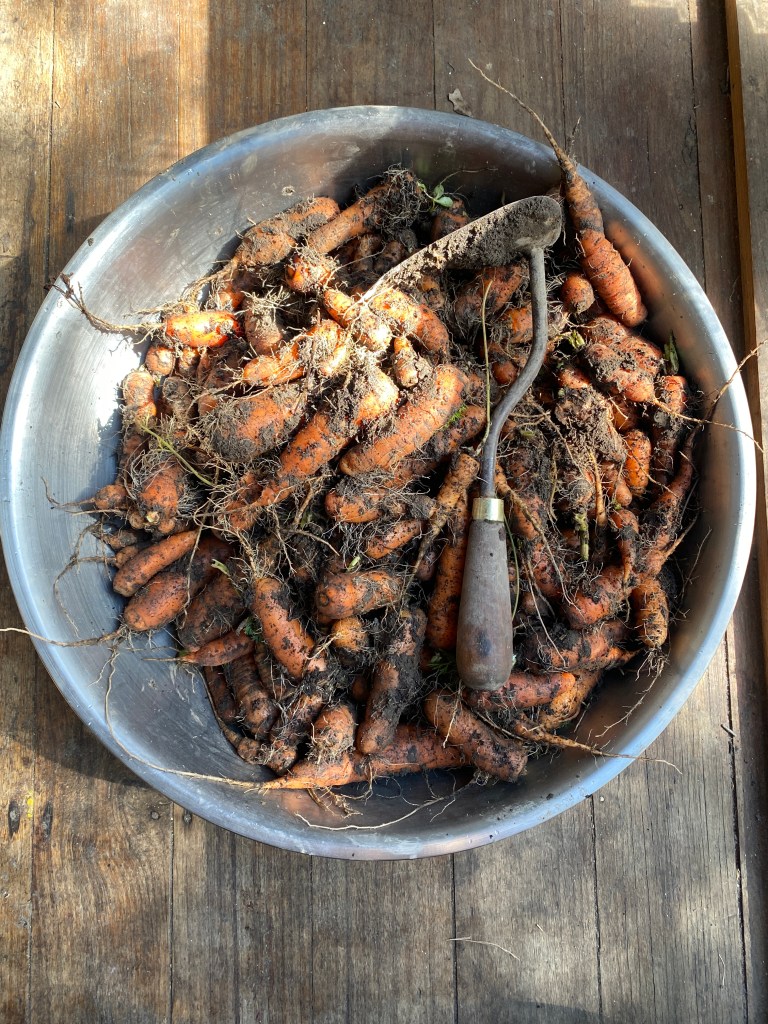
Our root crops went a lot better than the previous year because I’ve stayed on top of weeding and thinning, and not felt bad every time I cull perfectly good carrot seedlings to let the other ones have more space to grow.
The garden is feeding us
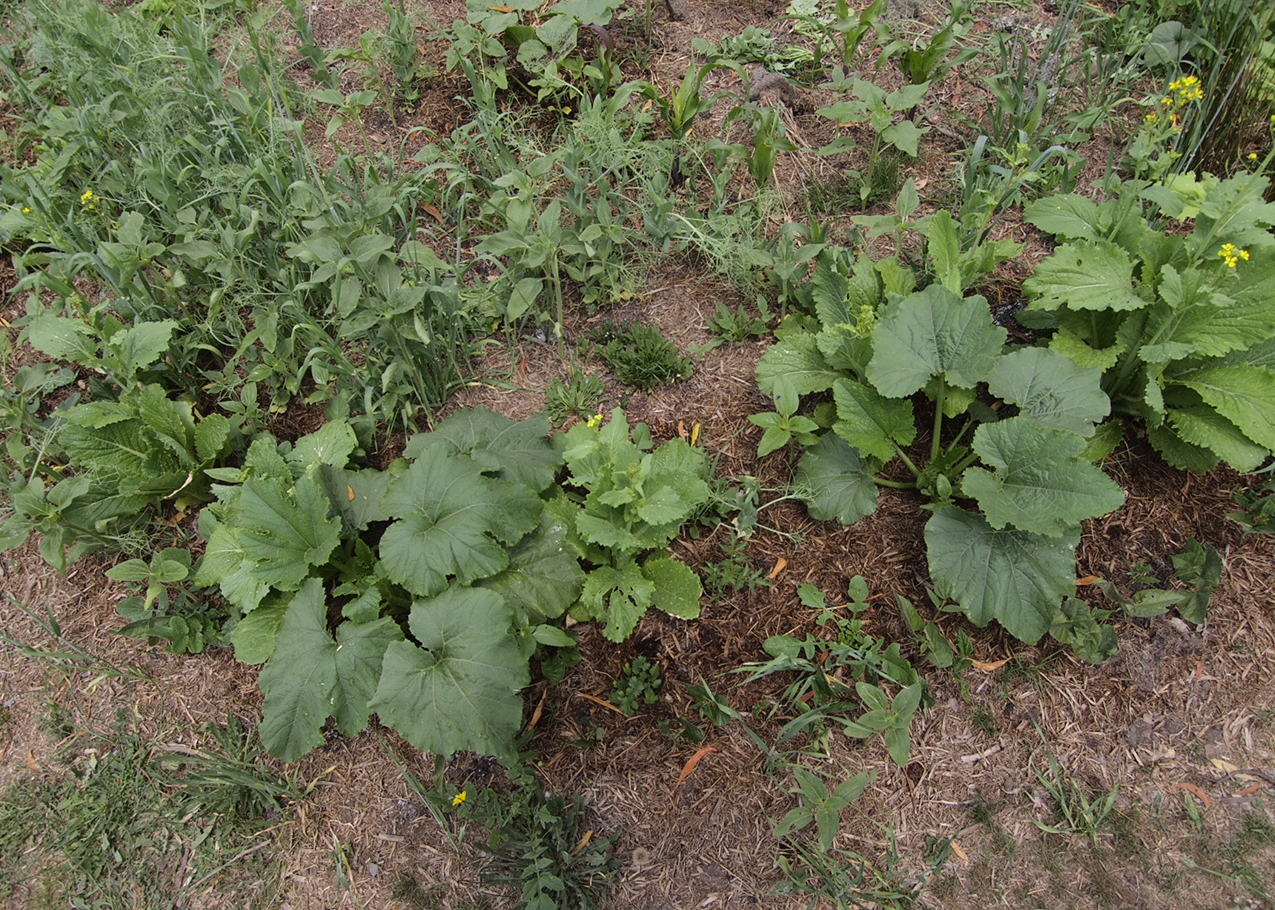
I felt anxious here and there over last spring. There was so much overgrown, so much to plant, urgent fence repairs needed to stop naughty goats, clearing took longer than expected, and some things got delayed. After our failures the year before with not producing much in the way of potatoes or roots, it brought a lot of joy to be harvesting turnips, broad beans, snow peas, new potatoes, followed by garlic, beans, tomatoes, zucchini, carrots, pumpkins, mustard greens, salads, swedes, and lots more potatoes and turnips.

It’s hard to find balance between not pushing myself enough, and feeling stressed and worried that there’s not enough being done. It’s something I need to work on, and I’m getting better with it over time.

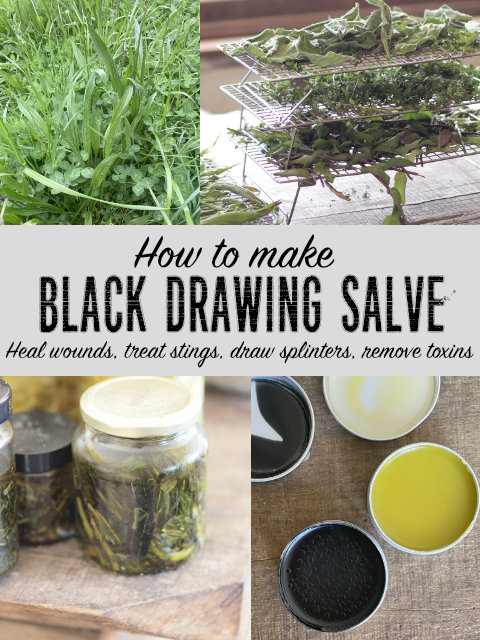
How to make black drawing salve

Here is how I make one of the most important natural remedies that I use.

We use black drawing salve on all kinds of bites and stings, as well as on splinters, puncture wounds, and anything that looks like it might need possible toxins or infections drawn out of it. I also find it a really helpful remedy around the homestead for wounds on animals – it’s so thick that it forms both a remedy and a bandaid in one – if you’ve ever tried to get a goat to keep a bandage on then you’ll understand what a relief it is to just have a remedy that will stick on and help to heal and protect the wound. When I use this on minor udder injuries, the wound is usually healed in 24 hours.

The bentonite clay and activated charcoal in this salve draw out toxins. The plantain and calendula help to heal, as well as drawing out infections and toxins. You also add a couple of drops of tea tree or kunzea oil to this salve to further help its healing properties, or a tablespoon of raw honey – if you’ll be adding these, then allow the salve to cool down slightly before adding them so that the honey doesn’t get cooked.

I use olive oil to make this salve, but you could use lard instead if you can keep it warm while it’s infusing.

Ingredients
1 cup (240ml) plantain infused olive oil (or a mix of plantain and calendula infused oil)
1 1/4 tablespoons beeswax
3 tablespoons bentonite clay
3 tablespoons activated charcoal

plantain ribwort weed in pasture with clover and grass

Plantain, also known as ribwort, is a common weed in pasture, lawn, and gardens. It is an excellent remedy for all kinds of bites and stings.

Calendula is easily grown from seed. The flowers are a tasty and colourful addition to salads as well as being an excellent herb for healing and preventing infection.

Method

  1. Make the infused oils:

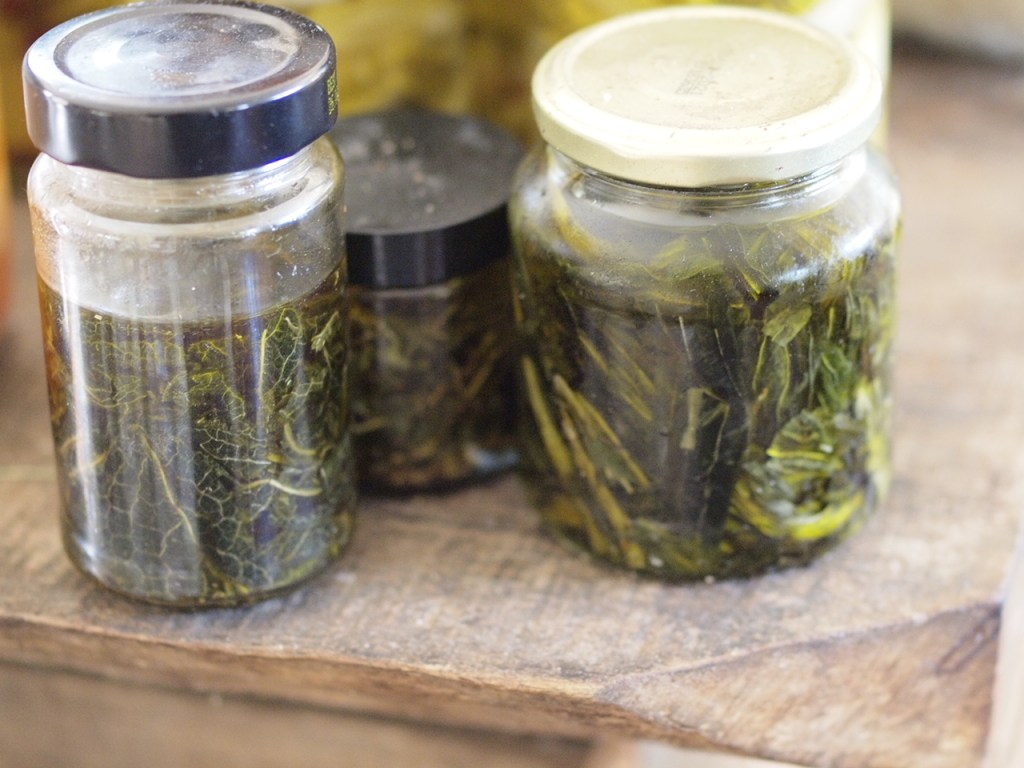
    (a)Harvest and dry your herbs. Plantain is also known as “ribwort” and is a common weed on lawns and pastures, easily identified from its ribbed leaves. Calendula is very easy to grow. I harvest fresh herbs in dry weather and put them in thin layers on top of stainless steel cake cooling racks to air-dry.
Herbs drying on cake cooling rack

(b)Infuse the dried herbs
Pack dried herbs down into a jar, then fill with olive oil to just above the level of the herbs, and agitate sightly with a small wooden spoon or other implement to make sure the oil is getting to all the herbs. To make the most potent herbal remedies using this method it’s important to really pack the herbs down, and to use too many herbs and too little oil rather than the other way around.

Herbs infusing in oil

Once you have your herbs sitting in oil, you can either leave them to sit at room temperature for six weeks, or leave them in the ‘warm’ setting of a slow cooker for 8 hours. I do a mixture of these two methods, putting my herbs on the warm edge of the woodstove as much as possible, and infusing them for a full six weeks.

(c)Press the oil out from the herbs
Gently warm the oil and herbs, then pour the oil out through cheesecloth or a potato ricer into a bowl, make sure to then squeeze all of the oil out of the herbs. The infused oil can now be stored if you want to use it for salve at a later date, or you can make the salve now. The leftover oily herbs can be fed to the chickens or composted.

  1. Warm the oil and beeswax
    Take a glass liquid measuring cup and measure the infused oil. Add the beeswax (preferably in tiny pieces). Put the measuring cup into a saucepan filled with enough water to come up partly up the measuring cup, but not so full that you risk getting water into the cup. Put it on the stove over a low heat, and allow to heat until the beeswax has completely melted
  2. Mix in everything else.
    Add the bentonite and charcoal to the oil and beeswax mix. Mix until thoroughly combined, and then pour into small jars or salve containers.
homemade herbal salves

Black drawing salve next to comfrey salve.

Enter your email address here to get new recipes and blog posts from The Nourishing Hearthfire.

Easy ways to preserve tomatoes off the grid

Tasty organic tomatoes, ready to preserve for the winter months

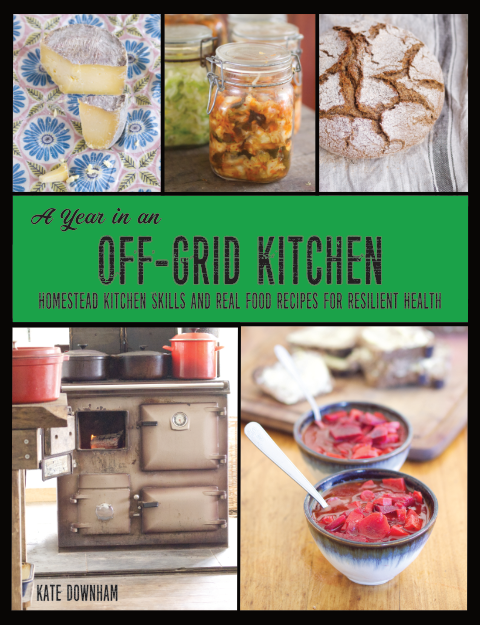
In A Year in an Off-Grid Kitchen I included recipes for five of my favourite ways to preserve tomatoes with water bath canning – as tomato passata, tomatoes in brine, pizza sauce, salsa, and tomato relish. I’ve recently tried a couple of different methods that I’d like to share here.

Fermenting tomatoes

I’ve been intrigued about fermenting tomatoes for a while, ever since reading Shannon Stonger’s Traditionally Fermented Foods. it seems like such a simple and low energy way to preserve tomatoes, and perfect for preserving the garden harvest as it makes it to the kitchen, because you don’t need a huge amount of tomatoes to justify boiling up the canner, you can just preserve one jar at a time. Tomato season is a busy time on the homestead, and having a way to just quickly preserve things without much fuss is very welcome!

I tested this recipe out, left them alone for nearly a year, and they were still good to eat after that long. Tomatoes are a bit naughty in the jar and have a habit of rising above the fermenting weight (which is why in the photo you can see lots of tomatoes trying to jump out of the jar!), even then in my Fido jar, they were still really good to eat. I definitely recommend checking out Shannon’s fermenting book for more tasty fermenting recipes.

Fermented tomatoes

How to ferment tomatoes:

Pack whole, firm tomatoes up to the ‘shoulders’ of a fermenting jar – I use Fido jars, but mason jars can work too if you remember to ‘burp’ them once a day for the first week or two, or until the bubbling stops.

Add around 3 tablespoons unrefined salt, plus an optional tablespoon of fresh whey or sauerkraut juice for every litre (quart) jar.

Top with non-chlorinated water to above the level of the tomatoes

Weigh the tomatoes down with a fermenting weight, or with a cabbage leaf weighed down with a boiled rock or other heat-sterilised heavy thing.

Put the lid on and leave it at around 23ºC (73ºF) for a week or two, or until the bubbling dies down, then move to root cellar, larder, or fridge conditions of around 15ºC (59ºF) or lower where they will store for up to a year.

Use these fermented tomatoes anywhere that you’d normally add tomatoes – salads, soups, stews, sauces, and more. This is a great low energy way to preserve tomatoes.

Drying tomatoes

One of my favourite tomato varieties to grow is Principe Borghese, In my garden, this is a resilient variety that fruits very early, produces an abundance of tasty red cherry tomatoes that are great either raw or cooked, and it seems pretty resistant to pests. Last tomato season here was rainier and colder than usual, and I grew both this and “Gold Nugget” which is the earliest fruiting tomato that I know of, and Principe Borghese was the first to have ripe fruit, and was very plentiful. It’s also grown well for me in dry warm summers.

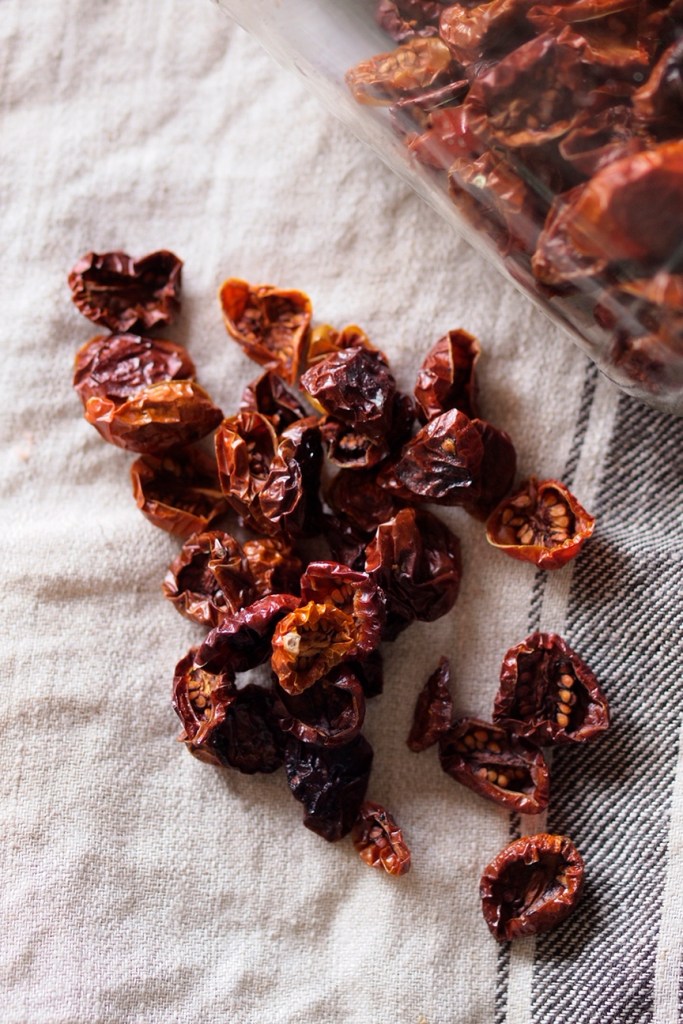
Principe Borghese is well-known as a good tomato for drying, but I’ve never grown it for that reason, just for all the reasons above. Last season I experimented with drying them in the wood stove.

Crispy dried tomatoes

How to dry tomatoes:

Slice them in half. Place them cut-side up on a baking sheet. Put them in a very low oven with the door ajar – I dried mine at the bottom of the top oven of the wood stove as it died down for the night, and also in the warming oven all day. Once the tomatoes have mostly dried out on that side, flip them over and dry the other side.

Once the tomatoes are fully dry, they will be crispy and full of flavour.

Tomatoes can also be dried in a solar dehydrator in a similar way – just dry cut-side up until that side is almost dry, then flip over and dry until crisp.

Tomatoes with more flesh and less juice and seeds, such as Amish Paste, Roma, Principe Borghese, and other sauce-type tomatoes are the best choices for drying, but any tomato can be dried in this way.

Store dried tomatoes an airtight container such as a glass jar with lid. If kept dry, they will keep well for a year or more.

Dried tomatoes are great smashed up and sprinkled on salads, on top of pizza, or added to stews, soups, sauces, and more.

For more recipes and ideas for cooking and preserving homegrown tomatoes, see my book A Year in an Off-Grid Kitchen

A Year in an Off-Grid Kitchen: Homestead Kitchen Skills and Real Food Recipes for Resilient Health

Enter your email address here to get new blog posts from The Nourishing Hearthfire.

My favourite leafy greens to grow for survival, self reliance, and taste

Some of my friends and readers are ordering seeds at the moment, so I thought I’d share some of my favourite varieties of greens to grow. The varieties below are all fairly easy to find at the moment from online seed sellers, and all are open pollinated, so if you end up liking them as much as I do, you can save seeds from them too.

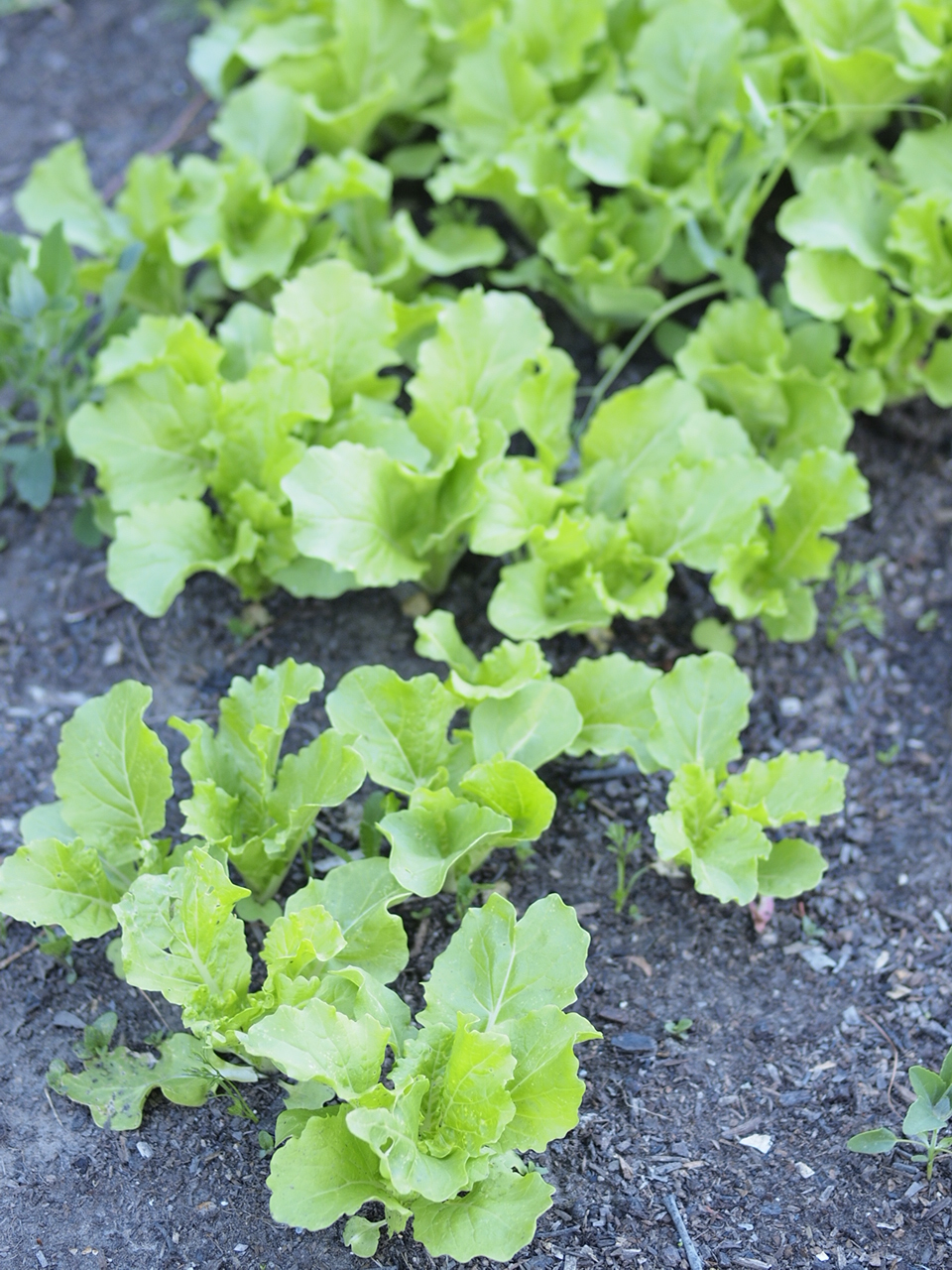
Tokyo bekana in early stages of growth. This is an all-purpose green that’s great used raw, fermented, or cooked.

Tokyo bekana in early stages of growth. This is an all-purpose green that’s great used raw, fermented, or cooked.

Why grow greens?

Greens yield a lot of nutrition in a small amount of space, and take a short time to yield.

Greens can be a good staple food in a survival diet – just have some calories from stored grains or homegrown potatoes, a source of fat and protein such as bacon or goats milk, and you basically have all that you need.

To make it on to my list, all of these greens have to be easy to grow, produce some food even on poor soil, not bolt to seed right away, and be easy to prepare and cook.

All of these greens will produce in soil that is not that great, but for larger, tastier leaves I try to add some organic matter in the form of compost or manure, along with minerals to adjust the soil pH when needed. Keeping them watered in dry weather will also help.

My favourite greens

Green wave mustard greens – the earliest green

These are the earliest cooking green to be ready. I direct sow mustard greens as early as possible, and they start growing in the earliest days of spring, with small leaves ready to pick in a few weeks. As the season progresses, they have larger leaves that are easier to harvest and just as tasty as the small leaves. If you want your greens ready even earlier, you could probably start the seeds in soil blocks or trays indoors and then transplant them.

Mustard greens bolt towards the end of spring, but not before producing many tasty and nutritious meals. The flowerheads can be cooked like tiny broccoli.

My main focus for these greens is as an early spring crop, but they can also be sowed towards the end of summer, to grow quickly and provide a crop in autumn, as they are ready around 6 weeks after sowing in warm weather.

For the spring crop, I usually sow at least 25 metres (80 feet) of row to feed our family of eight.

Mustard greens have a strong bite to them when raw, and almost all wildlife ignore them. As a cooking green, just leave them whole, or chop up, there’s no need to remove the stems. Either, boil, steam, or stir fry. My favourite use for these is to first fry up bacon, stir fry the greens in the bacon fat, and then stir the crispy bacon back in. They are also good in many soups, stews, and stir fries, or just cooked like spinach as a side vegetable to any meal.

Red Russian kale – all-round staple

I start this any time from the earliest days of spring through to the middle of summer. The smallest leaves are good to add to springtime salads, and by the later days of spring the leaves are getting large and ready to use in all kinds of cooked dishes.

Kale can either be direct sown, or started in trays or soil blocks. Kale self seeded really well for me last year, so that this year I had many tiny seedlings popping up around the garden, ready to be grown to full size or transplanted.

The standard advice where I live (Tasmania, cold zone 8b) is to start kale off after the summer solstice, and to use it as an autumn/winter crop, but I find that the weather in spring grows these much better than the dry days of summer, so I sow most of mine in spring, and it just keeps growing through the summer, into autumn and winter.

If you don’t have much irrigation water, Red Russian kale is perfect to grow if planted when rains are naturally falling in spring – the roots sink right down, and it survives through the summer, looking a little sad in the driest times, but then picking up again in autumn when the rains come.

I am trying to put kale pretty much everywhere in the garden – in the garden beds, as well as under fruit trees and in far-off corners. It is such a great staple green for us. As a minimum, I’d probably want to grow around 40 metres (130 feet) of row for our family, and I even feel as though this is not enough… I don’t think it’s possible to have too much kale growing!

Kale stands through the frost right through the winter here, it will bolt to seed the following spring. The flowerheads can be used like broccoli, and the tiny leaves on the towering plants can be used in salads or cooked. The yellow flowers can be eaten in salad, or let them develop into seed for planting.

Red Russian kale is tender enough to use in salads if the stems are removed. My main use for it is as a cooking green, where the stems can be left on, or taken off. The leaves can be cooked whole, or chopped up. I serve it in the same ways as I would for mustard greens, above, but it also can be made into crispy kale ‘chips’ by coating it in some fat and salt, and then baking it at around 180ºC (350ºF) in a single layer until crisp (around 10-15 minutes) – my easy way of doing this is to add it to the vegetables towards the end of a roast, stir it through to coat in the fat and salt from the vegetables, then move to the top of the roast pan to crisp up.

Tokyo Bekana – another adaptable staple green

Tokyo Bekana is a kind of loose-leaf Chinese cabbage. This can be planted any time from spring through to early autumn. Early spring plantings tend to bolt fairly quickly once it’s ready to eat, so it’s best to plant this in succession, with several plantings over the season.

I’d usually plant around 12 metres (40 feet) of row for every succession planting, so maybe around 36 to 48 metres (120-160 feet) or more over the whole season. It’s a fast-growing green in the summer (ready in around 6 weeks after sowing) and can be snuck in as a ‘catch crop’ every time there’s a bit of space in the garden.

The leaves of Tokyo Bekana are mild enough to use as a lettuce substitute in salads, and they can also be fermented, or cooked in any of the ways I cook mustard greens. Just keep the leaves whole, or chop them up, no need to remove stems.

Freckles – the lazy gardener’s lettuce

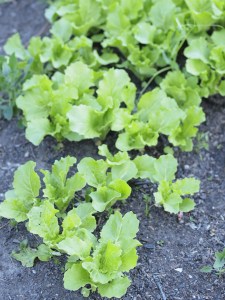
After trying many different lettuce varieties over the years, if I had to choose from only one to plant from now onwards, I would choose freckles, also known as “flashy trouts back” after it’s beautiful spotted leaves.

Freckles grows beautifully either direct sown or started in trays. I’ve even transplanted trays that have been left unplanted much longer than ideal, and it’s still grown well.

In summers when I haven’t had much irrigation water, once established, freckles has handled the lack of water better than other lettuces, and hasn’t bolted or gone bitter in the heat. Areas that have afternoon shade are the best for growing lettuce in summer.

Freckles grows quickly and doesn’t seem to be bothered much by slugs and snails.

The taste of freckles is a mixture of red and green lettuce taste – like having a good mixed salad but with only one kind of lettuce to harvest.

Like any lettuce, freckles is best grown in succession, as lettuces do bolt to seed eventually (freckles seems a bit slower to bolt than others though), so make a new planting of it every month in between early spring and early autumn and you’ll never run out of lettuce.

I use lettuce a lot in polycultures and in between larger plants such as cabbage, zucchini, and kale, where it seems to thrive below the taller plants while not harming anything.

Dandelion and other edible weeds

I like to encourage my favourite edible weeds at the edges of my garden, under fruit trees, and pretty much everywhere. For dandelions, I taste the leaves in spring and choose the ones with the biggest, tastiest leaves, I don’t overharvest from these ones, I keep an eye on them, and once they go to seed I take their wishing flower/fairy clock seedhead and blow or sprinkle the seeds in areas where they are most wanted.

Dandelions have a deep taproot which brings up nutrients from deep in the soil, not competing with common garden vegetables, and excellent to have around fruit trees and pastures.

I prefer dandelions as a cooked green, but the mild-tasting ones also go well raw in salads or pesto in spring.

Mallow is a good cooking green, the leaves can be a bit annoying to harvest compared to giant kale leaves, but it’s worth having around.

Sow thistle is a bit like spinach. My children love it. The leaves are a reasonable size, and it can be used either raw or cooked.

Wild rocket seems to pop up every year once established, the leaves are quite small but it has a lovely taste and is so easy to grow.

For more recipes and ideas for cooking with homegrown greens, see my book A Year in an Off-Grid Kitchen

Enter your email address here to get new blog posts from The Nourishing Hearthfire.

The joy of gardening in circles with chickens

Chook dome and circular garden bed

Recently planted circular garden bed, and homemade geodesic chook dome

I first found out about this way of mandala gardening from Linda Woodrow’s “The Permaculture Home Garden”. She provides a design for a complete system that involves fruit trees, wild animal habitat, annual vegetable beds, and chook fodder plantings, with chickens being rotated around in a homemade chook dome. It all fits together so beautifully, with each element benefiting another, and it inspires me to grow food in this way.

I am in a colder climate (zone 8b/9a) with less sun in winter, with limited flat land, and am working on my own way of doing this that’s suited to my land and climate. Linda Woodrow doesn’t provide much information about which chook fodder perennials to grow in colder climates so I’ve just been using the entire circular bed to grow annual vegetables at this stage, usually for pumpkin, sunflower, grains, or potatoes. I would like to try out growing some chicken fodder plants but am not sure how the ones most suited to my climate (siberian pea tree, tagasaste) would go with being kept as a small shrub rather than tree. The chook fodder perennials fix nitrogen, produce mulch, feed the soil, and provide habitat for insect predators and pollinators.

One thing I like a lot about this system is if life gets busy and things get unharvested or weeds get out of hand, I just move the chickens on to that bed, and the the bolted and weedy plants turn into chook food and mulch. After two weeks the chickens have left me with a mulched, fertilised, weed-free bed, with also some tasty eggs to eat – it is almost too easy, and I’m thinking of terracing some of my land to fit in more chook dome spots for this reason.

Circular polyculture garden bed

A polyculture garden bed, with zucchini, beans, Asian greens, tomatoes, cucumber, and more around the edges, and pumpkin, corn, and sunflower in the middle

The soil has improved a lot in the spots where the chook domes have been. It’s been really inspiring to see it turn from a boring compacted lawn into a thriving garden that is feeding us and the chickens.

Every time the chook dome is moved, it gives a doable piece of garden to get planted. The mulch is often moved to one side of the bed by the chickens, so I first rake that out over the whole bed, and then I broadfork it. On a new bed over compacted soil I will usually broadfork it in two or four separate sessions, but once the soil underneath is getting a nicer structure, I can easily broadfork the entire bed at once.

Once the bed is broadforked, I use a hoe to create small pockets and lines in the mulch for planting. I fill these small pockets up with compost and plant them with seedlings or seeds. The spacing between the pockets will depend on each individual plant, I try to mix the plants up so that I don’t have blocks of a single plant, and this means the spacing can be very close because different plants are sending roots to different places. I can also plant with succession in mind, so that I can grow fast-growing Asian greens and lettuces right next to small seedlings of zucchini and tomatoes, and once the zucchini and tomatoes are starting to take over, the greens are ready to harvest, and I’ve made use of space that is often wasted.

One challenge I have experienced has been with my climate – it’s best if the chooks are moved every two weeks, but in winter there’s not much that can be planted once they have been moved, and in late spring there is so much to plant that it doesn’t feel like they can be moved quickly enough sometimes. One thing that’s happened a couple of times has been when I’ve moved the dome, not gotten around to planting the previous bed, and then moved the chooks back on to the previous bed for a day to get rid of the weeds before moving them on to a third bed – this way I end up with two beds ready to plant at the same time. A winter solution is to move the chickens into a greenhouse over the winter, or in mild climates to keep them in one spot with lots of mulch added.

The kind of tarp I use on top of the dome helps a lot with chicken comfort in extremes of weather – one side is silver and reflects heat, and the other side absorbs heat, so I have the silver side outside in summer, and inside in winter. In colder climates than mine this wouldn’t work, but I’ve tried it here and the chickens are happy.

The chickens can also help to make compost – just throw in way more mulch than you need, and anything else you want composted, and the chickens will scratch it up, and mix it with their manure, and once the chook dome is moved, you just need to shovel that out onto a spot in between the beds, water it, and it turns into compost.

With lots of mulch around there are usually slugs and snails – the chickens help to keep the population down, and the pond and rocks in Linda Woodrow’s design attract lizards that eat the snail eggs.

I am working on producing more of my own mulch for the chickens, from grains grown in the beds, as well as perennials grown around the edges of the garden. I’m also still figuring out the best plants and combinations of plants that thrive in this system in my climate.

Zucchini, tomato, chinese cabbage, sunflower, and more

Zucchini, tomato, chinese cabbage, and more

Enter your email address here to get new blog posts from The Nourishing Hearthfire.

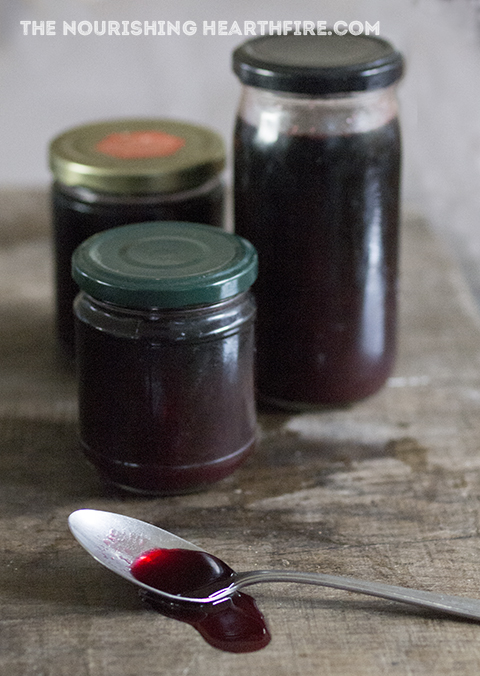
Spiced Elderberry Oxymel (a herbal cold and flu medicine)

OLYMPUS DIGITAL CAMERA

Here is a simple way to make a healthy medicine for the cold months ahead. I can’t say enough good things about elderberries, and this way of preserving them for the winter can be used either as a daily boost to health to prevent colds and flus, or as something taken when you are sick to relieve the symptoms and get rid of the cold or flu quickly. This recipe is cheap to make, using stuff that’s always in my kitchen.

You will need:
Elderberries
Optional spices (see step 3)
Raw apple cider vinegar
Raw honey

1. First you will need to find an elderberry tree in fruit. I found these in the first month of autumn and in the garden of an old homestead we were visiting. Sometimes trees are on the side of the road, or branches are hanging over someone’s fence. Elder trees are beautiful to look at and many people have them growing in their garden as ornamentals that don’t end up being harvested. They’re supposed to be quite easy to grow, and the leaves and branches are good goat food.

14837696670_8bd85ded78_z

Photo credit: here

2. Carefully harvest the bunches of fruits off the trees, gather as much as you’re likely to use. I started with around 2 litres of loosely packed bunches and ended up with around 1300ml of oxymel.

3. Wash the berries and gently strip the berries from the twigs into a cooking pot, it doesn’t matter if a few small twigs get in too. Mix in a small amount of water (for around 1200ml of berries at this stage I added half a cup). Add some spices now if you wish, I added 1/2 inch of grated fresh ginger, a pinch of ground cloves, 1/2 teaspoon ground nutmeg and 1 teaspoon cinnamon.

4. Bring the berries to the boil with the lid on, then remove the lid and continue to cook, while squashing the berries with a wooden spoon to extract the juice and evaporate some of the water. Do this for 10-20 minutes, being careful to not evaporate too much of the liquid, until it looks like you’ve squashed the berries as much as they can be squashed.

5. Filter the juice through a fine mesh sieve, then continue to squash the berries into the sieve to extract the last of the juice. Pour the juice into a measuring cup or jar to see how much you have. I ended up with 400ml of juice. Allow the juice to cool down to a blood-warm temperature.

6. When you can put some of the juice on the inside of your wrist without it hurting, pour the juice into a mixing bowl and add the same volume of raw cider vinegar and raw honey, so that you have 1 part elderberry juice, 1 part cider vinegar, and 1 part honey.

7. Pour into sterilised jars and store in a fairly cold and dry place. Take 1 tablespoon at a time, either on its own or mixed with water. It’s also good mixed with boiling water as a hot drink.

Enter your email address here to get new recipes and blog posts from The Nourishing Hearthfire.

Peas

OLYMPUS DIGITAL CAMERA

“I am very good at hide and seek and so are peas, that’s why I’m so good at finding them”

Enter your email address here to get new recipes and blog posts from The Nourishing Hearthfire.

Strategies to move away from cities: Market gardening in small spaces

8426173326_da8d6b0976_z

Photo credit: here

One of the things many folks struggle with when wanting to move to rural areas is income. Since the increased mechanisation of farming less people are needed to work in mainstream farming operations, and there aren’t many jobs available in these areas. People in cities often feel trapped in them, under the assumption that they need a typical ‘job’ in the country in order to move there.

For most people, a move to the country will involve needing to find a local source of income. Market gardening offers us the opportunity to create our own secure jobs in rural areas.
Continue reading