How to make real pasta without a pasta machine

Making pasta at home is easier and cheaper than you may think. In this post I’ll share my method and thoughts on homemade pasta.

Why make pasta at home?

Dry pasta is pretty much empty calories, wrapped up in plastic. Homemade egg pasta is a really tasty way to eat eggs that even picky eaters enjoy, and because it’s so rich in nutrition from the eggs, sauces can be really simple to make a nourishing and filling meal.

Every week when we have enough eggs from our hens, we make pasta every Monday. This helps me with meal planning because it means there’s less days when I have to figure out completely what I’m making, but there’s still enough variety in pasta that we never get sick of it – sometimes it’s carbonara, other times pesto, sometimes a creamy cheesy sauce, sometimes garlic butter and greens, sometimes it’s oriental noodles with bacon and vegetables, sometimes just lots of butter and grated homemade cheese, if you think of any possible pasta or noodle dish, it can be made with homemade pasta, and that gives a huge amount of variety.

How to make pasta

1. Start with eggs.

Crack eggs into a small bowl, sniff each one to make sure it’s not off, fish out any bits of shell, and put them in a mixing bowl. Use around 2 eggs per hungry person.

2. Mix in flour and salt. 

Use around half a teaspoon of salt for every five eggs. For flour, the amount you’ll need will depend on the kind of flour you’re using. I don’t measure. I just beat the eggs with a wooden spoon, mix in as much flour as I can mix with the spoon, and then keep adding flour, mixing with my hands. If the dough still seems sticky, keep adding more flour, kneading it in with your knuckles. Break the dough apart, and if it’s still sticky inside, sprinkle the sticky sides with more flour and knead that in with your knuckles. The trick to adding flour is to just add a small amount at a time, and keep adding until the dough is very stiff. I use 100% wholemeal wheat flour from my grain mill, but other kinds of wheat and spelt flour will work too.

3. Rest

Allow the dough to rest for at least half an hour, covered with a tea towel or plate. A longer rest is fine too.

4. Roll out and cut

Divide the dough into manageable pieces. Use a rolling pin or a clean glass bottle to roll each piece as thin as it will go, or as thin as you have patience for, dusting the dough with flour to prevent it from sticking. Use a butter knife to cut into strips, or your choice of pasta shapes. When you’ve cut some pasta shapes, spread them out on a tea towel (dish towel) to dry out. Keep in a single layer if possible, as they can get stuck together if you stack them too high.

5. Cook

This next bit happens really quickly once the water is boiling, so make sure you have the sauce ready, along with all the bowls, cutlery, drinks, telling everyone it’s nearly ready, and so on. Bring a large pot of salted water to a rolling boil over high heat. Add the pasta, and bring it back to the boil. Once it’s boiling, cook for three minutes. Drain in a colander. You can either mix the pasta into the sauce, or put the pasta in bowls and top with the sauce, whichever you prefer.
Enter your email address here to get new recipes and blog posts from The Nourishing Hearthfire.

Simple baked cheesecake

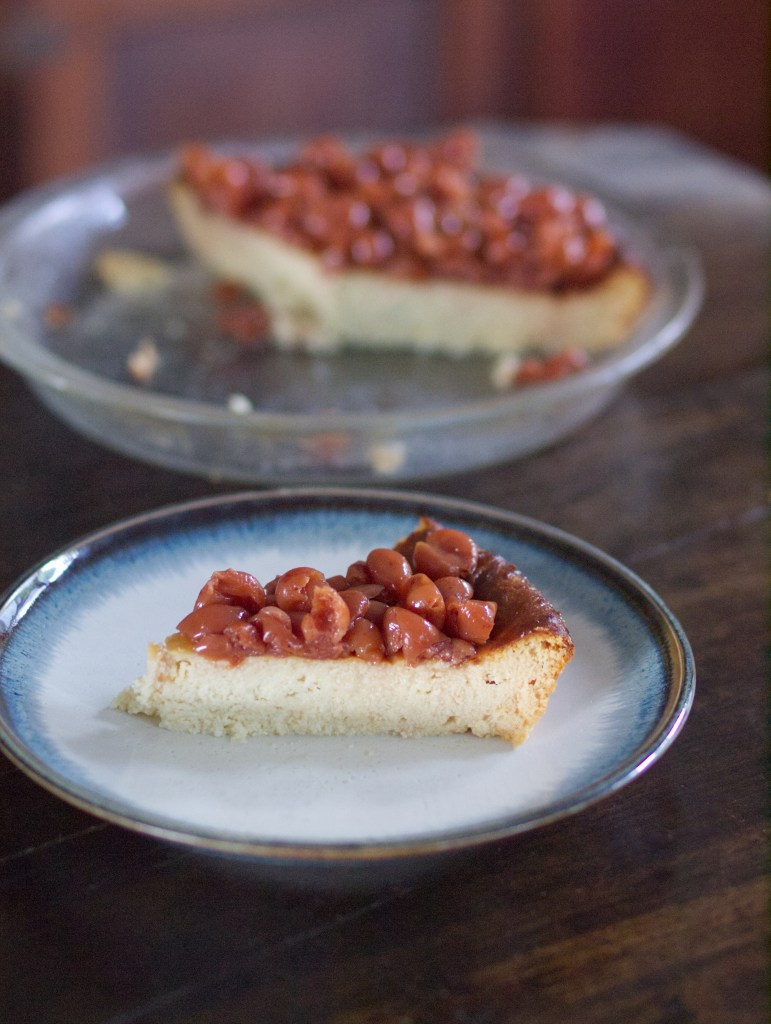
To celebrate the launch of my new book Natural Small Batch Cheesemaking, I’m sharing an easy recipe for cheesecake.

Cheesecake is one of my favourite foods, but not something I used to make very often until I created this recipe. The recipe I’m sharing today is from A Year in an Off-Grid Kitchen, and could not be simpler. It features the easiest cheese to make at home – a simple whole milk ricotta. Or you can use whatever soft cheese you have around the house, as long as it is drained well and is not too salty.

I usually make this without a crust so that it comes together in minimal time, but if you prefer, you can bake this in your favourite cheesecake crust.

This recipe scales up or down well – just weigh your ricotta and then adjust the amount of eggs and honey to suit – use 1 large egg and 60g (3 tablespoons) honey for every 200g (7oz) ricotta.

Ingredients 

170g (1/2 cup) honey 

650g (23oz) well-drained salted ricotta

3 large eggs, whisked

(Optional) zest of 1 medium lemon, or a dash of vanilla

Method 

Preheat the oven to around 180ºC (350ºF). 

If your honey has crystallised, gently melt it until it’s runny. 

Thoroughly mix the honey with all the remaining ingredients using a fork or whisk until evenly blended. Place in a greased 9” (23cm) pie pan or cake tin. 

Bake for around an hour, until golden and set. The middle will puff up while it bakes, and then sink down once it’s removed from the oven. 

Serve on its own, or topped with jam, bottled fruits, or fresh berries. 

My new book Natural Small Batch Cheesemaking is now available from several places online, and can also be ordered into any local shop.

Enter your email address here to get new recipes and blog posts from The Nourishing Hearthfire.

Homemade French Onion Soup

The secret to a great French onion soup is the quality of the bone broth – it should be lovingly made at home from beef bones which have been first roasted to create extra flavour before being slowly simmered for 24 hours or longer, or until the broth is so infused with flavour and minerals that it smells delicious on its own when hot, and sets like a jelly when cold.

Allowing plenty of time for the onions to slowly caramelise also helps to bring out the best of a few simple ingredients. The caramelising can be happening in the background while other kitchen tasks are being done, making this an easy hands-off meal for the most part. Sometimes I run the onions through the slicing bit of my food processor to make the preparation extra quick.

The classic presentation for French onion soup is to serve it in ovenproof bowls, with a slice of crusty bread on the top, covered with cheese and briefly baked or broiled to melt the cheese. I just make toasted cheese sandwiches with my usual everyday homemade bread and serve these on the side.

This soup reheats well. I often make a bigger batch and serve it for a few meals.

Makes around 8 serves. 

bowl of french onion soup with toasted cheese sandwiches

Ingredients

12 tablespoons butter (180g)

3 pounds onions (1.35kg), thinly sliced into half moons

Optional 1 cup red wine (or a splash of brandy, or extra broth)

8 to 9 cups (2 litres) beef bone broth

Salt, to taste

Method

Melt the butter in a large stewpot over medium heat. Mix through the onions and allow them to cook, stirring every now and then, until very fragrant, dark golden-brown, and soft. This can take anywhere between 30 and 60 minutes.

Once the onions are ready, stir through the wine for a few seconds, then add the broth. Put the lid on the pot and allow it to simmer for 20 minutes, before adding salt, to taste.

Serve with some combination of crusty bread and melty cheese, such as toasted cheese sandwiches.

If you want to know how to make the cheese for this meal, check out my cheese book on Kickstarter. The Kickstarter ends in 4 days and is a great opportunity to order books directly from me at a reduced price and get extra bonus ebooks. Here’s the link: https://www.kickstarter.com/projects/706848724/make-your-own-cheese-natural-small-batch-cheesemaking-book?ref=dm283q

If you’d like to learn about my favourite way to use whey leftover from cheesemaking, Norwegian whey cheese, check out my guest post at Practical Self Reliance here: https://practicalselfreliance.com/gjetost-recipe/

Enter your email address here to get new recipes and blog posts from The Nourishing Hearthfire.

Yoghurt without fail

Keeping yoghurt warm in a pot at the edge of the woodstove, one of the tricks I’ll discuss in this post.

Yoghurt with a taste similar to what we might find in a grocery shop was something I gave up on for a long time. I made only room temperature viili for years, thinking that a good Greek or Bulgarian style of yoghurt was beyond me. At some point I decided I preferred the taste of this style of yoghurt enough to find ways to make it work, and now I make yoghurts far tastier and healthier than anything I can find for sale. In this article you’ll find my recipe, along with extra tips to make really good yoghurt every time.

How to make yoghurt

Heat milk in a saucepan until it reaches 82ºC (180ºF) or higher, hold it at or above that temperature for half an hour, if possible, and then let it cool to around 40ºC (104ºF). 

Pour into jars, then stir through around 5 tablespoons (75ml) of yoghurt for every quart (litre) of milk.

Keep your culturing yoghurt at 40ºC (104ºF) for the next 6 hours or more (I find that 12 to 18 hours is best).

How to keep yoghurt warm during culturing

A couple of ways to keep yoghurt warm are: 

• fermenting it in an insulated food jar such as a thermos.

• surrounding a normal jar with hot water in an esky (cooler) or on the edge of a woodstove dying down for the night.

I use the latter method, as it means I don’t have to mess around with transferring yoghurt from one jar to another once it’s ready – I culture it in the same jar that I use for storage.

There are special non-electric insulated yoghurt fermenters available, where you fill it with hot water, place your jar of yoghurt inside, seal, and leave to culture, but I find the size of these limiting, as they will only hold a specific size of jar, and from my experience they aren’t that great at keeping the heat in.

There are also electrical gadgets, such as Instant pot and specialty yoghurt makers, but I avoid relying on electricity as much as possible so these are not things I have tried.

• In real life, the temperature does tend to drop over time, so it’s sometimes easier to start culturing it at a slightly higher temperature (up to 46ºC or 115ºF), and leave it culturing for twelve hours or more rather than six. Some of the helpful yoghurt bacteria will still be active in the lower temperatures, and the heat-loving bacteria will still have some time to grow during the earlier, warmer stages of culturing.

In winter I leave my yoghurt jar overnight in a pot of warm water on the edge of the woodstove as it cools down, and then refill the pot with hot tap water in the morning to give it more time to culture at high temperatures. I find that yoghurt tastes the best after around 18 hours of culturing in this way during winter.

Tips for making thick yoghurt

• Experiment with using milk from different animals or different sources. One of the goats here gives very creamy milk that makes excellent thick yoghurt, my other goats give milk that makes a thinner yoghurt. If I were mixing all the milk together I would not have noticed this. Full fat cows milk generally makes lovely thick yoghurt, and milk from a Jersey cow or other cow that gives extra creamy milk will make even thicker, lovelier yoghurt.

• Winter milk makes thicker yoghurt than summer milk. Sometimes it helps to just accept that winter is the time for thick yoghurt and in summer you might want to stain it through cheesecloth if you want it to be thicker.

• Yoghurt will be thicker if it is first heated above 82ºC (180ºF), and then left to cool to the culturing temperature. If you can heat it up slowly, or hold it at the goal temperature for half an hour, this will help to create thicker yoghurt. The high temperature changes the protein structures in the milk, to help create a thicker yoghurt.

• Allowing the milk to cool down and then reheating to 82ºC also can help make for thicker yoghurt.

• You can evaporate some of the liquid out of the milk, by leaving the pot on the heat with the lid off once it’s reached temperature – just observe the level of the milk you start off with, and then remove and allow the pot to cool once it’s reduced by ¼ to ½.

• For thick Greek yoghurt, allow your yoghurt to continue culturing at warm room temperature until the whey begins to separate. Pour it into cheesecloth and allow the curds to continue dripping whey until it’s as thick as you’d like it to be, anywhere between two and twelve hours.

Tips for reliable yoghurt culturing

• Yoghurt is best made at least once per week, to keep the culture fresh. It is worth keeping a small amount of yoghurt tucked away in the freezer, just in case your yoghurt gets contaminated or abandoned.

• Cultures that contain acidophilus seem to be more reliable home kitchen conditions

• If in doubt, add more yoghurt to start it off, rather than less. Some recipes advise using only two tablespoons for a litre (quart) of milk, but I always use 5 tablespoons and it doesn’t hurt it, it just makes the milk get colonised more quickly while the temperature is warm.

• To keep your yoghurt culture as active and pure as possible and avoid having to buy new culture, it’s a good idea to keep everything as sterile as possible: Heat and cool your milk in a pot with the lid on, heat-sterilise your jars, don’t leave them open to the air any longer than you have to, and be very careful with any jar of yoghurt that you’ll be using as a starter for your next batch – pour the yoghurt out rather than reaching in with a spoon (unless the spoon is heat sterilised). For even better results, make an extra smaller jar of yoghurt that you can use as your culture, and then it doesn’t matter what happens to your jar of eating yoghurt.

Enter your email address here to get new recipes and blog posts from The Nourishing Hearthfire.

Simple Flapjacks

Flapjacks is a bit of a confusing name for this delicious slice. Some people use that word for pancakes, and other people know all about this delicious crunchy oaty buttery treat.

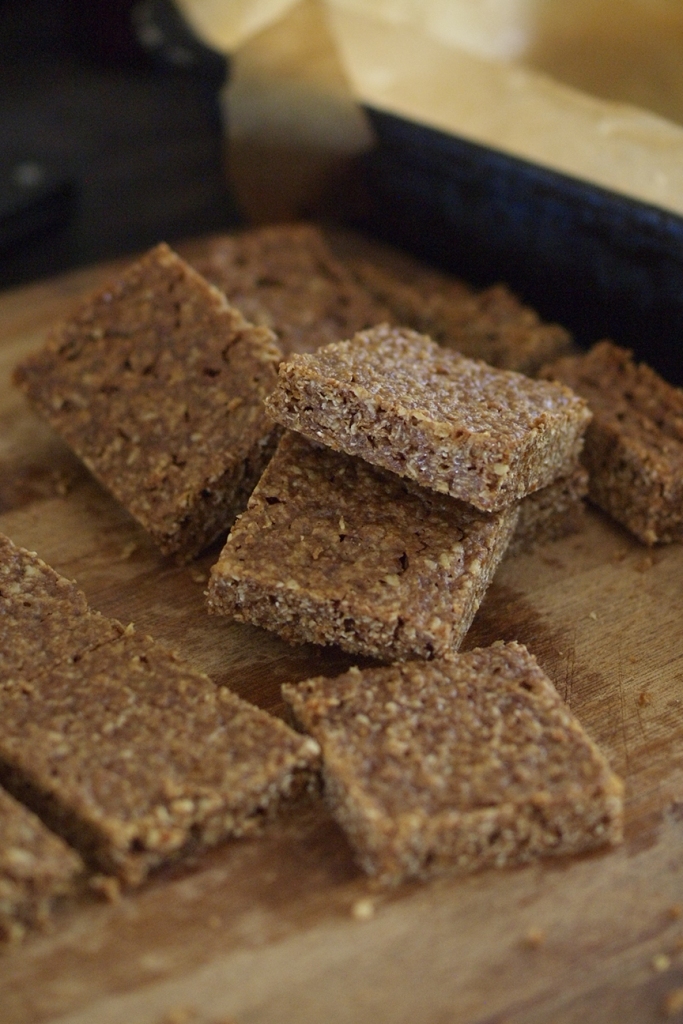
oat flapjacks on wooden chopping board
Flapjacks

This has been a favourite recipe for many years. At picnics it disappears very quickly, at my market stall I get complaints if I do not bring it along. When I want to make something really quick and simple for a treat, this is often what I turn to. Just three ingredients and some very easy steps.

Ingredients

450g (16oz) oats (either rolled oats, quick oats, or oats milled on the medium setting of a grain mill)

350g (12oz) salted butter

250g (9oz) coconut sugar or rapadura

Method

Melt butter. Thoroughly mix all ingredients together in a large bowl.

Press mixture into a lined pan around 10”x15” (26x40cm) in size.

Bake for around half an hour at around 180ºC, until bubbling and caramelised.

Allow to fully cool, then cut into slices. Can be stored in a tin for a couple of weeks if needed.

Enter your email address here to get new recipes and blog posts from The Nourishing Hearthfire.

Pickled garlic scapes

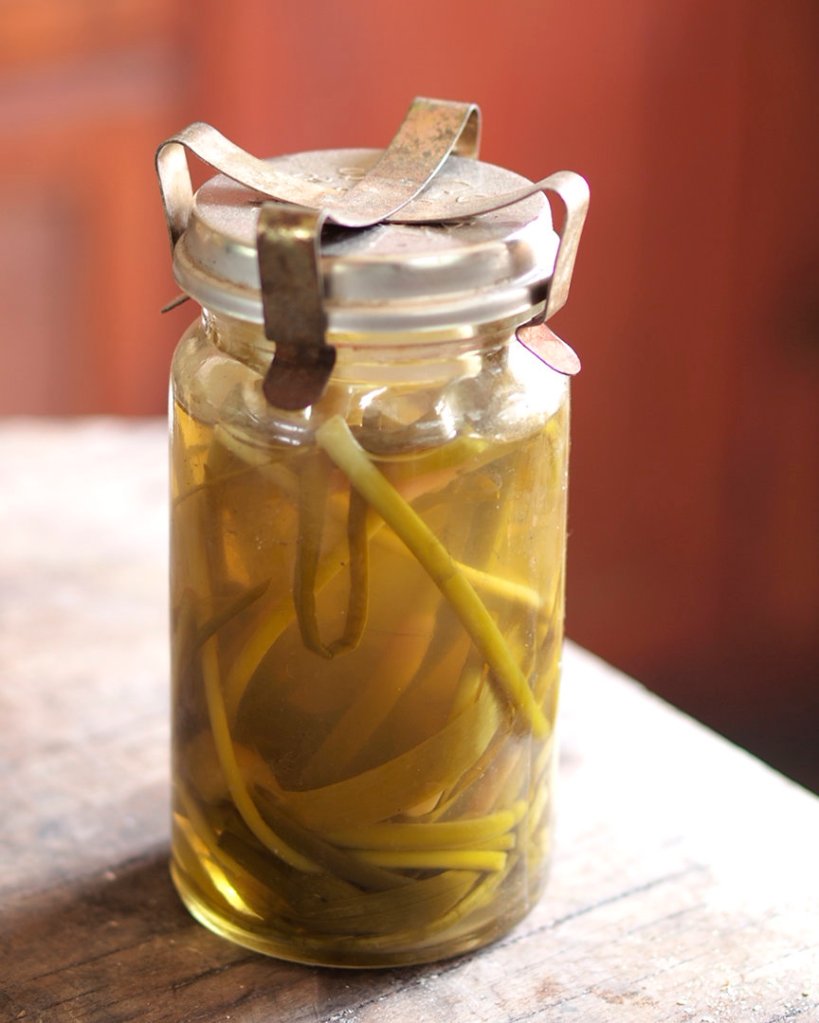
jar of pickled garlic scrapes

When growing garlic, the flower stalks (also called garlic scapes) are removed soon after they appear, to direct the plant’s energy towards growing a bigger bulb. These garlic scrapes are really tasty, and I use them in any recipe that normally calls for garlic. They can also be pickled or fermented to preserve them for later.

This recipe uses the ‘hot jar, hot lid, upside down’ method that is used in many parts of Europe and Australia. If you live at a high elevation or strictly follow USDA methods, then you would water bath can or pressure can this instead.

Ingredients:

2 parts vinegar***

1 part water***

salt, to taste

garlic scapes, as many as you want

Method:

Carefully sterilise some jars with boiling water or in a low oven. Keep them hot in the oven while you do everything else. Sterilise lids in boiling water.

Heat the vinegar, water and salt until boiling. Mix through the garlic scrapes and allow to boil for another minute or two.

Quickly transfer the hot garlic scapes and hot pickling liquid to the hot jars. Seal in the usual way, then turn your jars upside down for two minutes before putting the right way up again. Alternatively, water bath can your jars for 10 minutes.

These will store for a year or more at room temperature.

***the amount to use is all relative to how much garlic you are preserving – if you’re preserving just one pint jar of them, then 300ml vinegar (1 1/4 cups) to 150ml (2/3 cup) water would be the right amount to use, if you’re preserving a lot of garlic at once, just scale this up or down, and feel free to use this pickling liquid for other vegetables too.

Enter your email address here to get new recipes and blog posts from The Nourishing Hearthfire.