How to make real pasta without a pasta machine

Making pasta at home is easier and cheaper than you may think. In this post I’ll share my method and thoughts on homemade pasta.

Why make pasta at home?

Dry pasta is pretty much empty calories, wrapped up in plastic. Homemade egg pasta is a really tasty way to eat eggs that even picky eaters enjoy, and because it’s so rich in nutrition from the eggs, sauces can be really simple to make a nourishing and filling meal.

Every week when we have enough eggs from our hens, we make pasta every Monday. This helps me with meal planning because it means there’s less days when I have to figure out completely what I’m making, but there’s still enough variety in pasta that we never get sick of it – sometimes it’s carbonara, other times pesto, sometimes a creamy cheesy sauce, sometimes garlic butter and greens, sometimes it’s oriental noodles with bacon and vegetables, sometimes just lots of butter and grated homemade cheese, if you think of any possible pasta or noodle dish, it can be made with homemade pasta, and that gives a huge amount of variety.

How to make pasta

1. Start with eggs.

Crack eggs into a small bowl, sniff each one to make sure it’s not off, fish out any bits of shell, and put them in a mixing bowl. Use around 2 eggs per hungry person.

2. Mix in flour and salt. 

Use around half a teaspoon of salt for every five eggs. For flour, the amount you’ll need will depend on the kind of flour you’re using. I don’t measure. I just beat the eggs with a wooden spoon, mix in as much flour as I can mix with the spoon, and then keep adding flour, mixing with my hands. If the dough still seems sticky, keep adding more flour, kneading it in with your knuckles. Break the dough apart, and if it’s still sticky inside, sprinkle the sticky sides with more flour and knead that in with your knuckles. The trick to adding flour is to just add a small amount at a time, and keep adding until the dough is very stiff. I use 100% wholemeal wheat flour from my grain mill, but other kinds of wheat and spelt flour will work too.

3. Rest

Allow the dough to rest for at least half an hour, covered with a tea towel or plate. A longer rest is fine too.

4. Roll out and cut

Divide the dough into manageable pieces. Use a rolling pin or a clean glass bottle to roll each piece as thin as it will go, or as thin as you have patience for, dusting the dough with flour to prevent it from sticking. Use a butter knife to cut into strips, or your choice of pasta shapes. When you’ve cut some pasta shapes, spread them out on a tea towel (dish towel) to dry out. Keep in a single layer if possible, as they can get stuck together if you stack them too high.

5. Cook

This next bit happens really quickly once the water is boiling, so make sure you have the sauce ready, along with all the bowls, cutlery, drinks, telling everyone it’s nearly ready, and so on. Bring a large pot of salted water to a rolling boil over high heat. Add the pasta, and bring it back to the boil. Once it’s boiling, cook for three minutes. Drain in a colander. You can either mix the pasta into the sauce, or put the pasta in bowls and top with the sauce, whichever you prefer.

Enter your email address here to get new recipes and blog posts from The Nourishing Hearthfire.

Creating a cheese book for the rest of us: Natural Small Batch Cheesemaking

When I first started making cheese I thought I was failing at it. The recipes said to stir constantly for a full 45 minutes or so, and in my busy kitchen I just could not do that.

The more I perfected my own style of making cheese, the more I began to think back about how things were done in the past: was the busy peasant really stirring for that whole time? Or did she, like me, also have many responsibilities in the kitchen and on the homestead.

Early on I also began to question the use of all these tiny expensive packets of ingredients. Why did the mozzarella recipe tell me to dilute citric acid with water? Couldn’t vinegar be used in the same way? I experimented, and it worked, and paved the way to more experimentation, and learning how things used to be done.

I think a lot of books are written from a specialist perspective: someone that has focused on just one thing, written about it in isolation, without providing any guidance for those who do not have the same perfect conditions. I like to think of my book as being written by a generalist: Yes, I am making all my family’s cheese, it’s an important part of my homestead and I love it, but I am also fermenting, baking, canning, preserving, gardening, butchering, caring for animals, building infrastructure, and all the other tasks that make for a diverse homestead.

I don’t ask you to stand there stirring for 45 minutes, because I know that it’s not possible for many people. I don’t ask for weird little packets of stuff grown in labs, because I know it’s possible to create great cheese without these. I’ve read between the lines of many cheese traditions and figured out a way to do this that’s perfect for the busy homesteader, and also suitable for the complete beginner. I’ve created a book that anyone can pick up and learn from, and once you’ve learned the basics, you’ll still be referring to it again and again as I’ve provided a lot of depth, and presented it in a way that isn’t overwhelming.

You can learn to make cheese even if you don’t have your own dairy animals, and my small batch recipes are perfect for learning – there’s less time to wait before you get to taste them, and they’re naturally made from smaller amounts of milk. Most cheese books are using between eight and twenty litres (two to five gallons) of milk and this can be a very expensive experiment for anyone that is learning. Most of my recipes can be made from four litres of milk or less. These recipes are perfect for anyone, whether you have a small herd of goats or a single house cow, or if you’re buying your milk.

If you’re interested in learning more, please feel free visit the Kickstarter page about my book and click “notify me on launch”: https://www.kickstarter.com/projects/706848724/make-your-own-cheese-natural-small-batch-cheesemaking-book?ref=7ho2mj.

The Kickstarter launches on the 15th August at 5pm USA mountain time (16th, 9am Australian eastern time), I’ll send out another quick post once it is live.

I’ve priced the book really affordably and provided a lot of bonuses that are only available while the Kickstarter is live. Also, if you back it in the first couple of days you’ll also get access to this extra earlybird bundle of ebooks and magazines.

For more details about the earlybird bundle, see here: https://permies.com/t/223565/Earlybird-bundle-cheese-book-kickstarter

German one pot beef and vegetable stew

Beef and vegetable stew in bowls

This hearty one pot stew, based on the German dish Pichelsteiner, is my favourite meal to make with beef osso bucco (sliced bone-in beef shin).

The meat is first seared, and then slow cooked with the vegetables to tender perfection. The onions melt into the broth as the meat falls off the bone to form a sturdy broth that is full of deep flavour from simple, natural ingredients.

A meal to savour and enjoy again and again. Serve on its own, preferably with a slice of good rye bread on the side.

Makes around 16 serves. Leftovers reheat well.

Beef and vegetable stew with bread

Ingredients

Tallow or lard, for searing

Beef osso bucco from 1/4 of a cow (around 1.5kg to 2kg/3 to 5 pounds), or 1kg (2 pounds) boneless stewing beef

1kg (2 pounds) rump steak, round steak, or stewing beef

4 or 5 medium onions, chopped

a few grinds of black pepper

a mixture of carrots and turnips (or potatoes, or cabbage), as much as will fit in your pot

bone broth to cover (or water if you don’t have bone broth)

salt, to taste

optional cider vinegar, to taste

a large cabbage, chopped

optional handful or three of fresh parsley, chopped

Method

Heat a small amount of tallow in an eight litre (2 gallon) pot. When the fat is hot, sear both sides of the meat in batches. 

Remove the meat from the pot and add a little more tallow, if needed, along with the onions. Sauté the onions until they are tender and fragrant, maybe starting to develop a little colour. Add the meat back into the pot, and top the pot up with as many chopped turnips and carrots as will fit, before covering the meat and vegetables with broth or water.

Bring to the boil with the lid on, reduce heat, and simmer on the stovetop, in a slow cooker, or in the oven for at least two hours, until the meat is very tender and easily falls of the bones. Taste the broth and add some salt, and maybe a splash of cider vinegar.

Remove the meat from the pot and cut or break it into bite-sized pieces. Remove the marrow from the bones and add this back into the stew. Return the meat to the broth. Top with chopped cabbage, and return to a simmer, cooking for 10 or 20 minutes, until the cabbage is tender.

Stir through the optional parsley, adjust seasonings with salt and cider vinegar, and serve on its own, or with bread.

Enter your email address here to get new recipes and blog posts from The Nourishing Hearthfire.

Simple Flapjacks

Flapjacks is a bit of a confusing name for this delicious slice. Some people use that word for pancakes, and other people know all about this delicious crunchy oaty buttery treat.

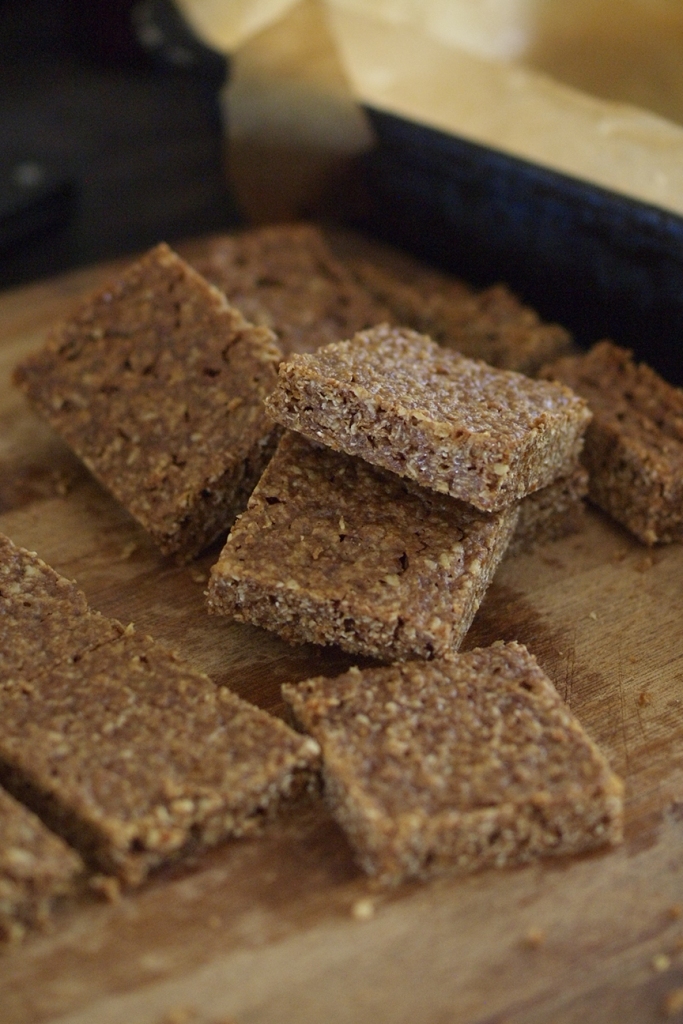
oat flapjacks on wooden chopping board
Flapjacks

This has been a favourite recipe for many years. At picnics it disappears very quickly, at my market stall I get complaints if I do not bring it along. When I want to make something really quick and simple for a treat, this is often what I turn to. Just three ingredients and some very easy steps.

Ingredients

450g (16oz) oats (either rolled oats, quick oats, or oats milled on the medium setting of a grain mill)

350g (12oz) salted butter

250g (9oz) coconut sugar or rapadura

Method

Melt butter. Thoroughly mix all ingredients together in a large bowl.

Press mixture into a lined pan around 10”x15” (26x40cm) in size.

Bake for around half an hour at around 180ºC, until bubbling and caramelised.

Allow to fully cool, then cut into slices. Can be stored in a tin for a couple of weeks if needed.

Enter your email address here to get new recipes and blog posts from The Nourishing Hearthfire.

Quinces: How to prepare, cook, and preserve them

Quinces are an easily-grown fruit that’s often ignored in modern diets. Not many people know how to properly prepare them, and they can seem a bit fiddly and slow to cook compared to other fruits.

I think it’s definitely worth learning to prepare and cook quince – they are like no other fruit, and there’s something deeply warming about the way they taste on a cold autumn day. 

My favourite way to cook them is to slowly simmer them in a spiced syrup. I make a large batch, we either eat them over the course of a few days, or water bath can them to store for later.

I also enjoy making quince jam – delicious on top of toast, porridge, and rice pudding. I’ll also share the recipe for this here.

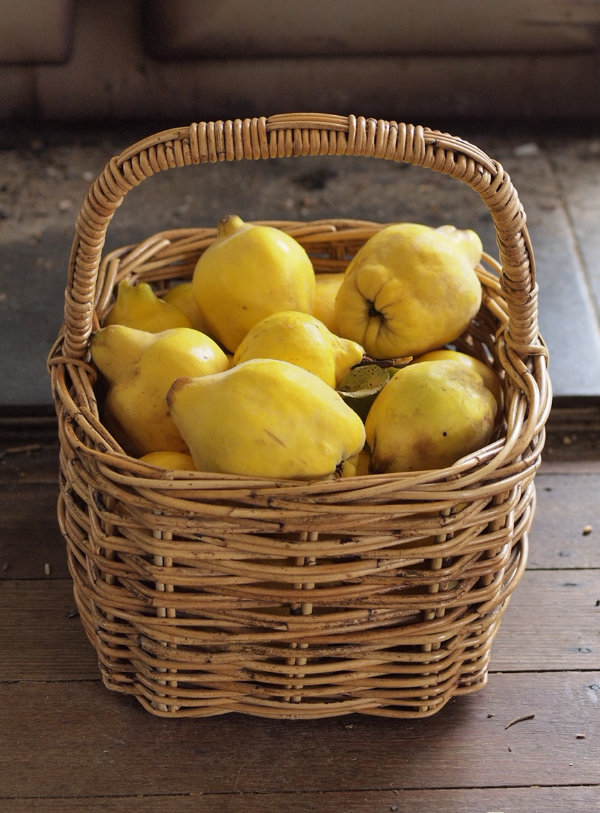
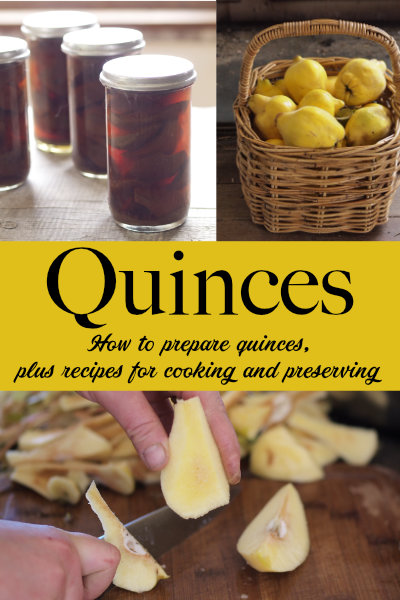
Quinces in basket

How to find quinces

If you live anywhere where apples and pears grow, you can probably find quinces. They are part of the pome fruit family, related to apples and pears. Dwarf pear trees for home gardens are actually grafted onto quince rootstock, as they are so closely related.

Quinces are ready for a brief season in mid to late autumn. There are several different varieties, and they’re usually ripe in the second and third months of autumn. Ripe quinces have yellow skin and pale flesh, which turns red or pink when cooked.

Quince can be hard to find in shops. Look for roadside fruit stands, and buckets out the front of houses with fruit trees.

How to prepare quince

Get a very big bowl or pot and put 4 litres (1 gallon) of water in it, along with 2 tablespoons cider vinegar and a teaspoon of salt. This acid water will help prevent the quinces from browning while you’re cutting up more of them.

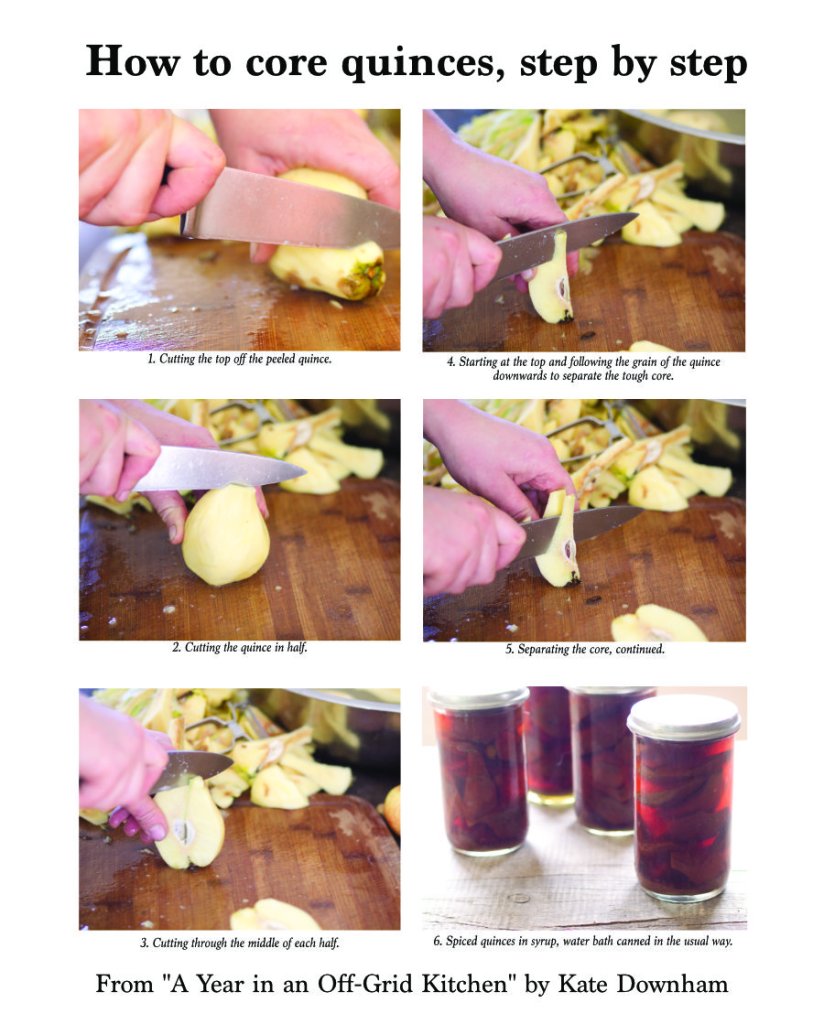
Peel each quince and put in the acid water. Once they’re all peeled, cut the top off each one, then cut each one in half, and then in half again, to form four wedges. 

Now it’s time to remove the cores. Begin by using the knife right at the edge of the quince quarter, starting at the top, where the stem was. As you work your way downwards, allow the knife to follow the grain of the quince, so that you’re skimming along as close to the gritty and tough core as possible – this is something that is picked up over time. If you get a bit of gritty core in with the quinces, it’s not the end of the world, if you skim off too much, then that’s just some extra scraps for the goats and not for you. 

After coring, put the quince pieces back in the acid water again and leave them until you’re ready to cook. Peel and core the rest of the quinces and add them back to the acid water too. 

how to core quinces

How to cook quince in spiced syrup

In a 5 litre (5 quart) pot, prepare a syrup for poaching with 2 1/2 litres (10 cups) water, 800g coconut sugar (4 1/2 cups) or honey (2 1/3 cups), and some optional spices – I like to add 10 smashed cardamon pods, 1 cinnamon stick, and 2 star anise. Bring to a simmer on the stove and keep warm. These quantities will give enough syrup to cook between 4 and 5 kilograms (9 to 11 pounds) of quince.

Once all the quince is prepared, put them in the hot poaching liquid, adding more water and honey if it needs it. Quinces shrink a little while they’re poaching, so it’s fine to have them fit quite snugly together, but there should still be some extra syrup at first, and any extra can be used for poaching another batch of quinces, or making baked syrup dumplings, so it’s better to have too much syrup rather than not enough. 

Gently simmer over a medium-low heat for at least forty minutes, or up to a few hours if the heat is low enough. Quinces are best when they’re cooked slowly. I prefer to cook mine in the oven, as it’s a more gentle all-over heat, rather than the harsh heat that sometimes happens on top of my stove, but you can cook on a stovetop too if you keep the heat very low. 

When cooked, the quinces will be soft, and will have changed colour. They can fall apart quite easily, so handle them gently. 

Now you have a big pot full of cooked quince, ready to serve as a dessert, or add to cakes and pies. Quince in syrup can keep in the larder with the lid on for around a week, or you can put the quinces and syrup into preserving jars, seal in the usual way, and process in a boiling water bath for 40 minutes.

How to make quince jam

Quince makes a delicious jam, perfect with porridge, rice pudding, scones, pancakes, or toast. 

Ingredients

2kg (5 pounds) quinces

1 litre (quart) to 1.5 litres (1.5 quarts) water

1.2kg (2.6 pounds) honey

Method

If you don’t usually make jams, see my blog post here or my book for in depth information about the process.

Prepare quinces in the usual way by following the instructions above. Cut into very small pieces (or use a grater).

Heat 1 litre (1 quart) water in a large heavy-bottomed pot until boiling. Add the quince and stir.

Cook until the quince is very soft and can easily be mashed with a wooden spoon. As the quince cooks, it should fluff up a little and absorb water, so add water, a small amount at a time if it is needed, to form a thick sauce, keeping in mind that the honey will water it down further.

Add the honey, bring back to the boil, and continue to cook, uncovered, stirring every so often, until it passes the “plate test” (see my jam post or book for more on that)

Put your jam in jars in the usual way, Australian hot jar/hot lid/upside down works for this if this is what you normally use, or can in a boiling water bath for 10 minutes.

How to store quince

Quince can be stored for two or three months by selecting the very best, unbruised, undamaged quinces and placing them in layers in a 5 gallon bucket, with each quince surrounded by dry autumn leaves. Store in a cool place, such as an unheated room, a root cellar, or outdoors in the shade.

Quince jam and bottled quinces in spiced syrup will store for one year in a cool, dry place.

a year in an off-grid kitchen cookbook cover
For more seasonal cooking skills, tips, and recipes see my cookbook A Year in an Off-Grid Kitchen: Homestead Kitchen Skills and Real Food Recipes for Resilient Health
Canned quinces, quinces in basket, preparing quinces

Enter your email address here to get new recipes and blog posts from The Nourishing Hearthfire.

Introducing… A Year in an Off Grid Kitchen!

I’ve been quiet on this blog for the past few months, because I’ve been working on something very big…

I’ve been busy creating a cookbook that teaches the kitchen skills that are most important on a homestead, as well as a huge amount of adaptable everyday homestead recipes.

When the the panic buying, empty shelves, and restrictive rations hit earlier this year, it was not a problem for my family, because we knew these skills, and knew how to feed ourselves without the supermarket system. With the help of this book, you can learn these skills too.

I’ve created a Kickstarter in order to pre-sell enough copies to cover the printing costs. Running a Kickstarter means we can cut out the middleman, so I’m able to offer you a better price than the future retail one, while also being able to offer extra ebooks and other goodies.

Here’s the link to the Kickstarter: https://www.kickstarter.com/projects/706848724/real-food-cookbook-a-year-in-an-off-grid-kitchen?ref=b91p7r

There’s also an earlybird offer of extra stuff for people who back the Kickstarter in the first 48 hours, including the best natural home cleaning book I’ve read, plus documentaries on rocket ovens, hugelkultur, and more. You can find out more about the earlybird offer here: https://permies.com/t/151135/Earlybird-bundle-Grid-Kitchen-Kickstarter