How to make real pasta without a pasta machine

Making pasta at home is easier and cheaper than you may think. In this post I’ll share my method and thoughts on homemade pasta.

Why make pasta at home?

Dry pasta is pretty much empty calories, wrapped up in plastic. Homemade egg pasta is a really tasty way to eat eggs that even picky eaters enjoy, and because it’s so rich in nutrition from the eggs, sauces can be really simple to make a nourishing and filling meal.

Every week when we have enough eggs from our hens, we make pasta every Monday. This helps me with meal planning because it means there’s less days when I have to figure out completely what I’m making, but there’s still enough variety in pasta that we never get sick of it – sometimes it’s carbonara, other times pesto, sometimes a creamy cheesy sauce, sometimes garlic butter and greens, sometimes it’s oriental noodles with bacon and vegetables, sometimes just lots of butter and grated homemade cheese, if you think of any possible pasta or noodle dish, it can be made with homemade pasta, and that gives a huge amount of variety.

How to make pasta

1. Start with eggs.

Crack eggs into a small bowl, sniff each one to make sure it’s not off, fish out any bits of shell, and put them in a mixing bowl. Use around 2 eggs per hungry person.

2. Mix in flour and salt. 

Use around half a teaspoon of salt for every five eggs. For flour, the amount you’ll need will depend on the kind of flour you’re using. I don’t measure. I just beat the eggs with a wooden spoon, mix in as much flour as I can mix with the spoon, and then keep adding flour, mixing with my hands. If the dough still seems sticky, keep adding more flour, kneading it in with your knuckles. Break the dough apart, and if it’s still sticky inside, sprinkle the sticky sides with more flour and knead that in with your knuckles. The trick to adding flour is to just add a small amount at a time, and keep adding until the dough is very stiff. I use 100% wholemeal wheat flour from my grain mill, but other kinds of wheat and spelt flour will work too.

3. Rest

Allow the dough to rest for at least half an hour, covered with a tea towel or plate. A longer rest is fine too.

4. Roll out and cut

Divide the dough into manageable pieces. Use a rolling pin or a clean glass bottle to roll each piece as thin as it will go, or as thin as you have patience for, dusting the dough with flour to prevent it from sticking. Use a butter knife to cut into strips, or your choice of pasta shapes. When you’ve cut some pasta shapes, spread them out on a tea towel (dish towel) to dry out. Keep in a single layer if possible, as they can get stuck together if you stack them too high.

5. Cook

This next bit happens really quickly once the water is boiling, so make sure you have the sauce ready, along with all the bowls, cutlery, drinks, telling everyone it’s nearly ready, and so on. Bring a large pot of salted water to a rolling boil over high heat. Add the pasta, and bring it back to the boil. Once it’s boiling, cook for three minutes. Drain in a colander. You can either mix the pasta into the sauce, or put the pasta in bowls and top with the sauce, whichever you prefer.
Enter your email address here to get new recipes and blog posts from The Nourishing Hearthfire.

Root cellaring without a root cellar: Simple off-grid food storage

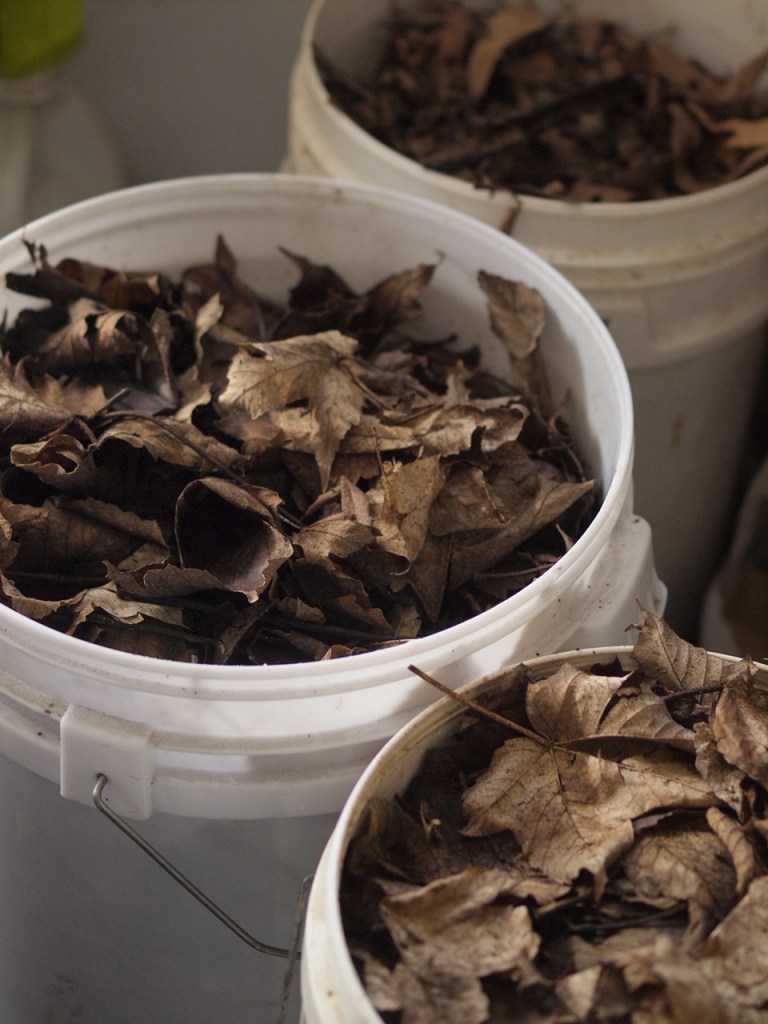
buckets of vegetables packed in leaves

You may be wondering why I have three buckets of leaves in my laundry…

This is how I store root cellar vegetables through the winter:

1. Gather dry leaves in autumn

It can be a bit tricky here some years finding the right time when the leaves have fallen but have not become a sodden mess from autumn rains. I’ve used both maple leaves and blackwood leaves, and both work well, as long as they are dry. Any kind of fallen dry leaves will probably work. Leaves can be stored in old feedsacks in a dry place until needed.

2. Select the right vegetables in perfect condition.

Don’t store any that have cracks or bruises, or any that are missing their crowns. Suitable vegetables include beetroot, carrot, parsnip, turnip, swede/rutabaga, and other roots.

3. Pack a layer of leaves at least 1” thick in the bottom of a bucket or 55 gallon drum.

Top with a layer of roots, making sure they don’t touch. Cover with enough leaves so that you can no longer see the roots, then top with another layer of roots, repeat until you get to the top of the bucket. It’s best not to put the lid on the bucket, as this can cause condensation to drip down, but if you need to store your roots somewhere where mice might get to them then you may have to use the lid – just make sure you have an extra thick layer of leaves on the top and on the bottom if this is the case.

4. Store in a cool place. 

I use an unheated room in my house that is easily closed off from the rest of the house and does not get sunlight during the winter. The ideal temperature for root cellaring is between 0ºC and 10ºC (32ºF to 50ºF), but up to 15ºC (60ºF) and even a little higher will still work – it just won’t store for quite as long as it would at lower temperatures.

The benefits of root cellaring, even if you don’t grow all your own vegetables:

Food security

By storing vegetables for weeks or months, it means we have more food in the house, for longer, so we are not affected by supply disruptions and other issues that seem to be happening frequently these days. It also means we don’t have to go food shopping as often.

Saving money

When we don’t grow enough vegetables of our own, I buy vegetables in bulk directly from the farm and it works out less than half the price of buying in the shops.

Extending the season of local vegetables

There is a “hungry gap” in many places when the local farms run out of many storage vegetables before the new season vegetables are ready. For growing our own vegetables, root cellaring means I can get the vegetables out of the ground and use the space for a green manure crop or other crop earlier than I could otherwise, or I can pull them out before they bolt to seed in the springtime and still have root vegetables on the table for a few more weeks. By root cellaring, I can keep storage vegetables around for just that little bit longer. Beetroots seem to keep the best out of everything I have tried, but all root vegetables will keep in this way for some time.

Other vegetables, and how to store them without electricity

potato clamp

• Potatoes don’t need to be packed in leaves – just store them in hessian bags, paper sacks, or cardboard boxes and keep them in a very dark, fairly cool place. In climates with mild winters, potatoes can be stored outdoors in a “clamp” – just put straw or hay on the ground, heap with dry, undamaged potatoes, cover with a thick layer of straw or hay, and then cover with dirt.

• Onions and garlic also don’t need leaves – just keep them loose in an airy, dry, fairly cool place. They like to be hung up high if possible. For our homegrown garlic, I plait it and hang it up when I can, or store it loose in a single layer in a box. For the onions that I buy, I keep them in netted bags, hung up from the edges of shelves.

sauerkraut and kimchi in fido jars

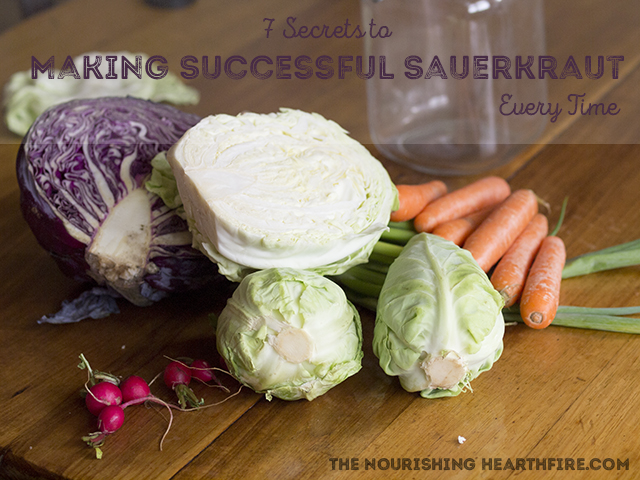
• Fermenting is an excellent way to store vegetables while increasing the nutritional value – either grate or shred vegetables such as cabbage and turnip and mix with salt for them to make their own brine, these vegetables, along with most other vegetables can be preserved whole or in slices in a salty brine. Make sure you use enough salt to ensure that they keep well – between 2% and 3% of the vegetable weight is usually a good amount. Keep in a cool place. Many fermented vegetables will keep for a year or more. See my instructions for fermenting vegetables here: https://thenourishinghearthfire.com/2016/04/18/7-secrets-to-making-successful-sauerkraut-every-time/

• As well as being fermented, cabbages will keep for a month or two loose on a slatted shelf (the outside layer of leaves might start to go bad, but the insides will be fine), for longer storage, the stems can be planted in soil or damp sand.

• Pumpkin/winter squash likes to be kept fairly dry and a little bit warmer than root cellar vegetables, at around 10ºC to 13ºC (50ºF to 55ºF). I am still learning and experimenting with how to best grow and store this tasty vegetable, so feel free to comment with any tips that you have for storing it well, or growing and storing any vegetables well for that matter.

Enter your email address here to get new recipes and blog posts from The Nourishing Hearthfire.

Yoghurt without fail

Keeping yoghurt warm in a pot at the edge of the woodstove, one of the tricks I’ll discuss in this post.

Yoghurt with a taste similar to what we might find in a grocery shop was something I gave up on for a long time. I made only room temperature viili for years, thinking that a good Greek or Bulgarian style of yoghurt was beyond me. At some point I decided I preferred the taste of this style of yoghurt enough to find ways to make it work, and now I make yoghurts far tastier and healthier than anything I can find for sale. In this article you’ll find my recipe, along with extra tips to make really good yoghurt every time.

How to make yoghurt

Heat milk in a saucepan until it reaches 82ºC (180ºF) or higher, hold it at or above that temperature for half an hour, if possible, and then let it cool to around 40ºC (104ºF). 

Pour into jars, then stir through around 5 tablespoons (75ml) of yoghurt for every quart (litre) of milk.

Keep your culturing yoghurt at 40ºC (104ºF) for the next 6 hours or more (I find that 12 to 18 hours is best).

How to keep yoghurt warm during culturing

A couple of ways to keep yoghurt warm are: 

• fermenting it in an insulated food jar such as a thermos.

• surrounding a normal jar with hot water in an esky (cooler) or on the edge of a woodstove dying down for the night.

I use the latter method, as it means I don’t have to mess around with transferring yoghurt from one jar to another once it’s ready – I culture it in the same jar that I use for storage.

There are special non-electric insulated yoghurt fermenters available, where you fill it with hot water, place your jar of yoghurt inside, seal, and leave to culture, but I find the size of these limiting, as they will only hold a specific size of jar, and from my experience they aren’t that great at keeping the heat in.

There are also electrical gadgets, such as Instant pot and specialty yoghurt makers, but I avoid relying on electricity as much as possible so these are not things I have tried.

• In real life, the temperature does tend to drop over time, so it’s sometimes easier to start culturing it at a slightly higher temperature (up to 46ºC or 115ºF), and leave it culturing for twelve hours or more rather than six. Some of the helpful yoghurt bacteria will still be active in the lower temperatures, and the heat-loving bacteria will still have some time to grow during the earlier, warmer stages of culturing.

In winter I leave my yoghurt jar overnight in a pot of warm water on the edge of the woodstove as it cools down, and then refill the pot with hot tap water in the morning to give it more time to culture at high temperatures. I find that yoghurt tastes the best after around 18 hours of culturing in this way during winter.

Tips for making thick yoghurt

• Experiment with using milk from different animals or different sources. One of the goats here gives very creamy milk that makes excellent thick yoghurt, my other goats give milk that makes a thinner yoghurt. If I were mixing all the milk together I would not have noticed this. Full fat cows milk generally makes lovely thick yoghurt, and milk from a Jersey cow or other cow that gives extra creamy milk will make even thicker, lovelier yoghurt.

• Winter milk makes thicker yoghurt than summer milk. Sometimes it helps to just accept that winter is the time for thick yoghurt and in summer you might want to stain it through cheesecloth if you want it to be thicker.

• Yoghurt will be thicker if it is first heated above 82ºC (180ºF), and then left to cool to the culturing temperature. If you can heat it up slowly, or hold it at the goal temperature for half an hour, this will help to create thicker yoghurt. The high temperature changes the protein structures in the milk, to help create a thicker yoghurt.

• Allowing the milk to cool down and then reheating to 82ºC also can help make for thicker yoghurt.

• You can evaporate some of the liquid out of the milk, by leaving the pot on the heat with the lid off once it’s reached temperature – just observe the level of the milk you start off with, and then remove and allow the pot to cool once it’s reduced by ¼ to ½.

• For thick Greek yoghurt, allow your yoghurt to continue culturing at warm room temperature until the whey begins to separate. Pour it into cheesecloth and allow the curds to continue dripping whey until it’s as thick as you’d like it to be, anywhere between two and twelve hours.

Tips for reliable yoghurt culturing

• Yoghurt is best made at least once per week, to keep the culture fresh. It is worth keeping a small amount of yoghurt tucked away in the freezer, just in case your yoghurt gets contaminated or abandoned.

• Cultures that contain acidophilus seem to be more reliable home kitchen conditions

• If in doubt, add more yoghurt to start it off, rather than less. Some recipes advise using only two tablespoons for a litre (quart) of milk, but I always use 5 tablespoons and it doesn’t hurt it, it just makes the milk get colonised more quickly while the temperature is warm.

• To keep your yoghurt culture as active and pure as possible and avoid having to buy new culture, it’s a good idea to keep everything as sterile as possible: Heat and cool your milk in a pot with the lid on, heat-sterilise your jars, don’t leave them open to the air any longer than you have to, and be very careful with any jar of yoghurt that you’ll be using as a starter for your next batch – pour the yoghurt out rather than reaching in with a spoon (unless the spoon is heat sterilised). For even better results, make an extra smaller jar of yoghurt that you can use as your culture, and then it doesn’t matter what happens to your jar of eating yoghurt.

Enter your email address here to get new recipes and blog posts from The Nourishing Hearthfire.

Building a better world… with tomatoes and goats

OLYMPUS DIGITAL CAMERA

Sometimes it’s hard to feel anything but angry about the current state of things, but there are lots of positive actions that can be done that boost personal resilience and wellbeing as well as reducing ecological footprints.

There’s a new book all about this, currently on Kickstarter here. My new book ‘Backyard Dairy Goats‘ is included as a stretch goal on it!

Preserving tomatoes at home

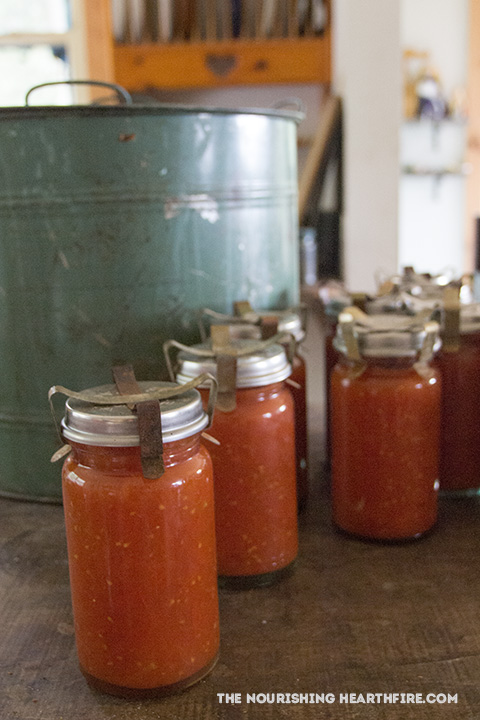
This year I did something I’d been thinking about for a long time. I bottled our entire tomato supply for the year…

I’d delayed this in the past due to annoying finicky instructions that insist on peeling the tomatoes, removing seeds, putting them through an expensive single-purpose gadget, and all kinds of stuff, but in the end I thought it was about time I tried this myself, using nothing more than a kitchen knife.

Our own garden harvest was not that big this year, for a few reasons that I’ve hopefully learned from, but rather than buying in bottled tomatoes from the other side of the world, I found a local organic grower, bought more than 30kg of sauce-grade tomatoes and bottled them all.

This is how we did it:

Step 1:
This step is only worth doing if you have too many tomatoes to fit in your pot at once. Sort through all the tomatoes and separate the damaged and super-ripe ones from the ones that can wait for a bit longer. Put the ones that can wait aside for another day (we preserved our 30kg+ of tomatoes over 3 days).

Step 2:
Wash the tomatoes, remove any leaves and stems (this is a good job for little helpers).

Step 3:
Roughly chop the tomatoes and put them in a big stainless steel pot (I used my 20 litre one).

Step 4:
Heat the chopped tomatoes over medium-high heat, smashing them up as you stir every so often. Once the tomatoes are bubbling you can either bottle them now, or reduce them for a bit. The jars I used were a bit smaller than the passata bottles I’m used to, so I chose to boil them to reduce them by around 1/4 to 1/3, to make for a more concentrated jar of tomato goodness. If you’re using plum tomatoes or paste tomatoes you’re more likely to get away with boiling them for less time, but ‘sauce tomatoes’ here just means any tomatoes that aren’t quite perfect, so they can use a bit of boiling to get rid of the extra liquid.

While you’re waiting for the tomatoes to heat up or reduce, sterilise your jars and lids and keep them warm.

Step 5:
If you’re concerned about the tomatoes not being acidic enough on their own to store safely, then add a tablespoon of cider vinegar or lemon juice to each 500-600ml jar, or 2 tablespoons to larger jars.

Put the hot tomatoes in the warm jars and seal them with their clips or rings, depending on which jar type you’re using. Put a big canning pot with a false bottom or canning rack on the stove (or use a tea towel or some cutlery at the bottom of a normal pot), put a small amount of warm water in it (so that the hot jars aren’t shocked by a sudden change of temperature), then carefully add your jars. Add more water, so that the jars are surrounded by water either to just above the top of the lid, or at least 3/4 of the way up.

Put the lid on the pot and bring it to the boil, or at least above 90ºC (195ºF). Hold it at this temperature for 40-45 minutes, then allow the pot to sit with the lid off for 5 minutes. Carefully remove the jars using a jar lifter and allow them to cool on the bench before storing.

Fill up the next batch of jars for the pot and repeat until you’ve run out of hot tomatoes, making sure that the water in the pot at the beginning is around the same temperature as the jars. You can do this over two or more days, as long as the tomatoes are brought to the boil and kept hot for a while before bottling, and put into hot sterilised jars.

The result:
Bottling my own tomatoes at home has reduced the amount of far-away foods in our diet, reduced our tomato costs by half, made us more resilient, reduced waste, and they taste better than factory-bottled ones. It was an enjoyable time with family, with all of us appreciating the process and the results.

Cutting up a pig without a saw

how to

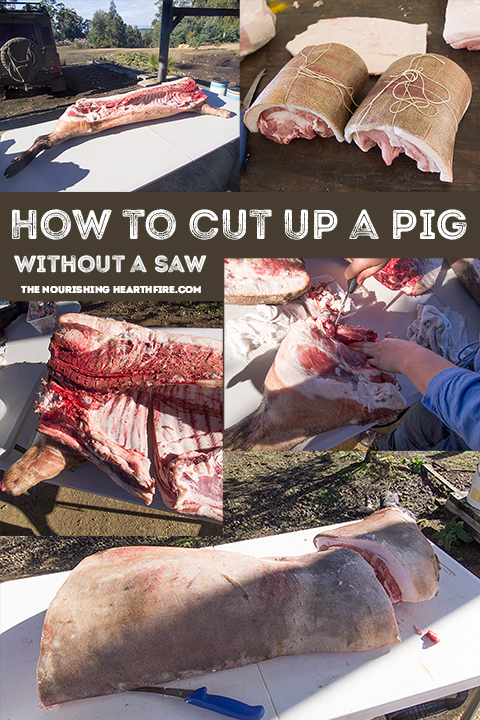
Before our pig kill (see this post) we had discussed what we wanted to do with each part of the pig. To keep costs down, we just had the mobile butcher here on one day to do the kill, hair removing, gutting, and sawing the pigs in half and leaving them to hang for a day before we would cut them up ourselves. If we wanted him to cut them into pieces he would probably have to come back another day.

We’ve never before cut pigs up ourselves, and how we handled it is a bit different to the process I’ve seen elsewhere because we didn’t have a saw. Every other instruction around is for how to do it with a saw, so I will write about how we did this using only 6” (15cm) boning knives, and maybe a firewood axe and a good aim (depending on how the spine has been cut).

Continue reading

Spiced Elderberry Oxymel (a herbal cold and flu medicine)

OLYMPUS DIGITAL CAMERA

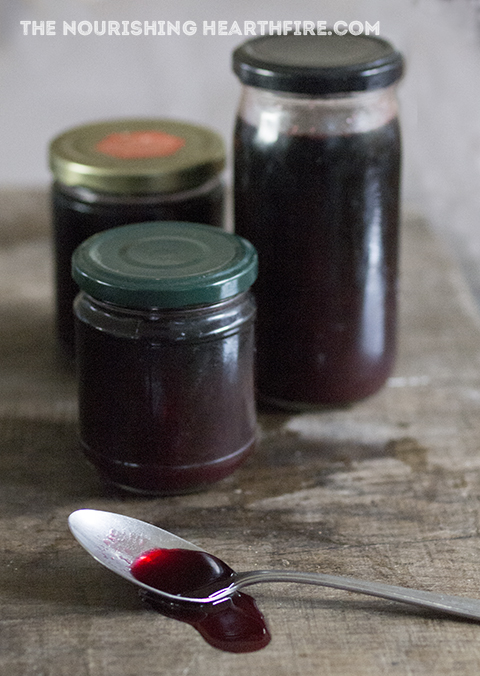
Here is a simple way to make a healthy medicine for the cold months ahead. I can’t say enough good things about elderberries, and this way of preserving them for the winter can be used either as a daily boost to health to prevent colds and flus, or as something taken when you are sick to relieve the symptoms and get rid of the cold or flu quickly. This recipe is cheap to make, using stuff that’s always in my kitchen.

You will need:
Elderberries
Optional spices (see step 3)
Raw apple cider vinegar
Raw honey

1. First you will need to find an elderberry tree in fruit. I found these in the first month of autumn and in the garden of an old homestead we were visiting. Sometimes trees are on the side of the road, or branches are hanging over someone’s fence. Elder trees are beautiful to look at and many people have them growing in their garden as ornamentals that don’t end up being harvested. They’re supposed to be quite easy to grow, and the leaves and branches are good goat food.

14837696670_8bd85ded78_z

Photo credit: here

2. Carefully harvest the bunches of fruits off the trees, gather as much as you’re likely to use. I started with around 2 litres of loosely packed bunches and ended up with around 1300ml of oxymel.

3. Wash the berries and gently strip the berries from the twigs into a cooking pot, it doesn’t matter if a few small twigs get in too. Mix in a small amount of water (for around 1200ml of berries at this stage I added half a cup). Add some spices now if you wish, I added 1/2 inch of grated fresh ginger, a pinch of ground cloves, 1/2 teaspoon ground nutmeg and 1 teaspoon cinnamon.

4. Bring the berries to the boil with the lid on, then remove the lid and continue to cook, while squashing the berries with a wooden spoon to extract the juice and evaporate some of the water. Do this for 10-20 minutes, being careful to not evaporate too much of the liquid, until it looks like you’ve squashed the berries as much as they can be squashed.

5. Filter the juice through a fine mesh sieve, then continue to squash the berries into the sieve to extract the last of the juice. Pour the juice into a measuring cup or jar to see how much you have. I ended up with 400ml of juice. Allow the juice to cool down to a blood-warm temperature.

6. When you can put some of the juice on the inside of your wrist without it hurting, pour the juice into a mixing bowl and add the same volume of raw cider vinegar and raw honey, so that you have 1 part elderberry juice, 1 part cider vinegar, and 1 part honey.

7. Pour into sterilised jars and store in a fairly cold and dry place. Take 1 tablespoon at a time, either on its own or mixed with water. It’s also good mixed with boiling water as a hot drink.

Enter your email address here to get new recipes and blog posts from The Nourishing Hearthfire.

How to Make Butter

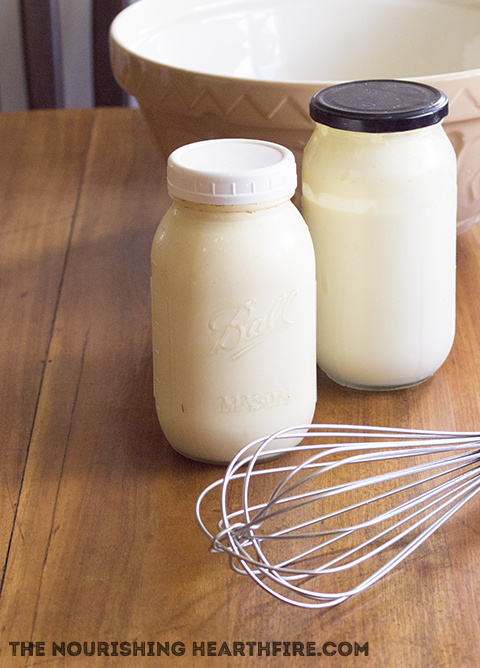
All you need to make butter is a bowl, a whisk, and some cream.

_A282281-480.jpg

The cream should have no additives, just cream, and if it’s créme fraiche for making cultured butter, then it will have cultures as well (here’s my recipe for culturing cream at home).

Put the cream in the bowl and whisk. After a fair amount of whisking it will become whipped cream. Continue whisking and whisking and the whipped cream will become more yellow. Soon after this you’ll begin to see some liquid forming. Continue whisking, more of the buttermilk will separate from the butter.

_A282284-480.jpg

You don’t have to do all the whisking at once, you can come back to it every now and then. Or you can use a stand mixer or hand mixer.

Once it looks as though all the buttermilk that’s going to come out has been released, strain the butter over a mixing bowl, reserving the buttermilk for recipes.

Put the butter in a bowl of very cold water. Knead with your hands a few times to release even more of the remaining milk.

Drain the water and replace with more very cold water. Knead again.

Remove the butter from the water, kneading as much water out of it as you can. Shape it and store it in beeswax wraps or glass jars. Enjoy!

_A312303-480.jpg

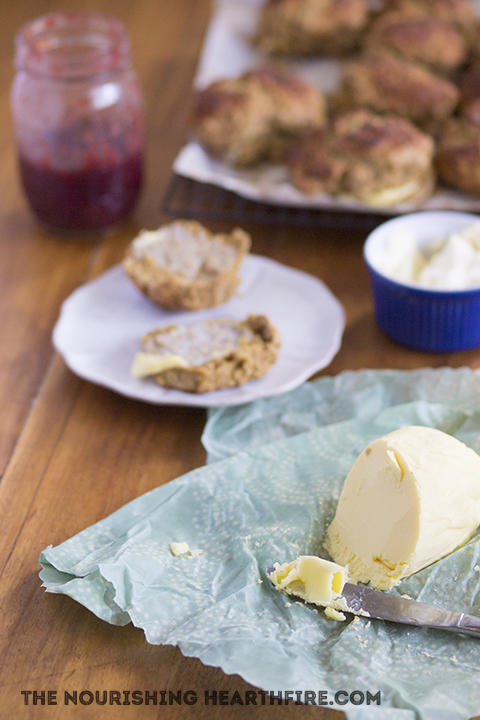
Cultured butter with buttermilk scones, créme fraiche, and honey-sweetened jam.

This post has been shared with Wonderful Wednesday, Friday Favourites, Party in your PJs,

Enter your email address here to get new recipes and blog posts from The Nourishing Hearthfire.

An easier way to make soft cheese

OLYMPUS DIGITAL CAMERA

Chévre. After fermenting for 12 hours you can see the curd has separated from the whey.

Chévre is pretty easy to make to begin with, but it usually begins with boiling water and sterilising everything in the boiling water, which adds extra time and hassle to the process.

I’ve been getting massive cravings for chèvre, so much that I even looked at soft goats cheese in the shop (before quickly moving away, knowing that I can make better stuff at home) and knew I had to make some soon, so instead of my usual method of boiling water, sterilising everything that’s going to touch the milk with the boiling water, then heating cold milk up in a saucepan to the right temperature I just added some milk kefir (around 2 tablespoons) and diluted rennet (the tiniest amount possible, a drop or less diluted in a bit of water) to a jar of fresh milk warm from the goat, moved the jar around a little to mix it in, then left it to sit for around 12 hours, before draining for around 6 hours, mixing salt through, and letting it drain for a little longer. Great cheese with less trouble than the other way.

We’ve sold the cow. I have mixed feelings about this, but it’s something we had to do, and I’m glad she has a good home with another family. I have one hard cheese aging in the makeshift cheese cave that I made from her milk, an asiago with a natural rind. I’ve never been successful with natural rinds before, mainly from forgetting to brush them every week, but this one seems to be going well, and we can probably start eating it next month.

This post is a part of Simple Homestead Blog Hop

Enter your email address here to get new recipes and blog posts from The Nourishing Hearthfire.